Tencent launches MagicDawn NDGI, brings AI rendering to mobile games
Tencent’s MagicDawn NDGI is aiming for richer lighting without frying mobile performance, and the biggest gains look set to land on 2026 Arm-powered flagships first.
Tencent Games has put MagicDawn NDGI in front of mobile developers as more than a rendering demo: it is a bet that high-end lighting can move onto phones without turning every scene into a battery test. The system, now in beta, uses on-device real-time inference to chase near-offline-quality illumination, and Tencent is pairing it with Arm hardware that is only just starting to arrive in 2026 mobile GPUs.
MagicDawn is Tencent’s frontier rendering brand and its AI-driven end-to-cloud game technology stack, and Tencent said its first global public unveiling came at GDC 2026 in San Francisco on March 13. The NDGI research title spells out the approach, Neural Dynamic GI: Random-Access Compression for Temporal Multiple Lightmaps Using Compact Neural Representations, and the method is designed to compress temporal lightmap sets while using virtual texturing for efficient runtime decompression. In practice, that points to smaller storage and memory demands, which matters on phones where every megabyte and every watt still has to justify itself in actual play.
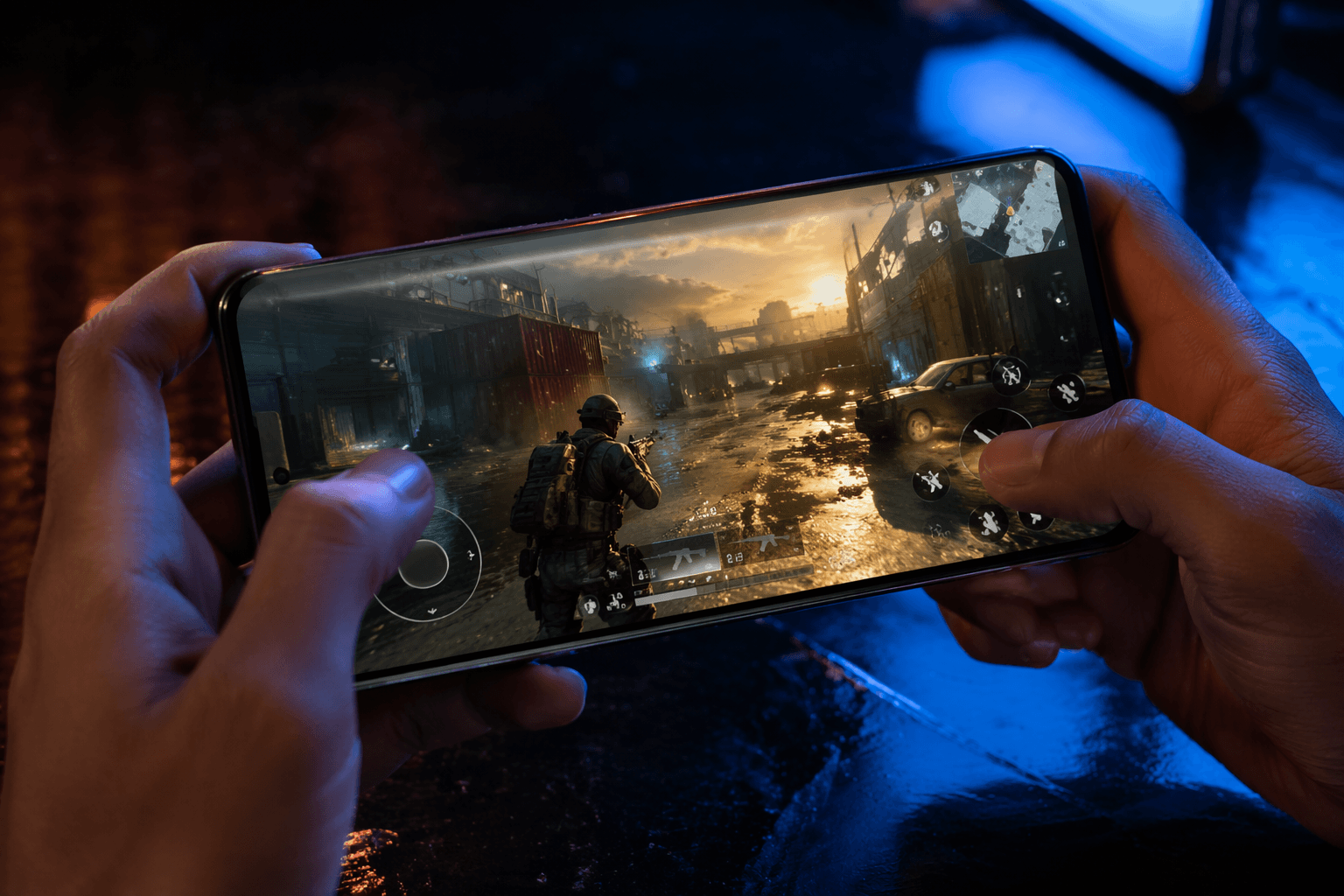
Tencent also says its cloud GI workflow can improve lighting efficiency by up to 40x in targeted scenarios, which makes MagicDawn feel like a production tool rather than a lab trick. That distinction matters because the mobile audience will notice this only if the gains survive the jump from showcase footage to live gameplay: steadier frame rates, richer shadows, and less thermal drag during long sessions. Tencent says the platform has already been proven across shipping titles, and its collaboration with Roco Kingdom added enhanced in-game lighting to an existing IP, a sign that the tech is being tuned for real content rather than a one-off tech demo.
The Arm partnership is where the player impact gets sharper. Tencent and Arm have set up a joint AI Rendering Lab, while Arm said in August 2025 that Neural Technology would add dedicated neural accelerators to Arm GPUs from 2026, beginning with Neural Super Sampling. Arm said that feature could offer a 2x resolution uplift at 4 ms per frame and reduce GPU workload by up to 50% for intensive mobile content. Arm’s Mali G1-Ultra, built on the 5th Gen Arm GPU architecture, adds a next-generation ray tracing unit and improved AI performance, so the clearest upside should show up first on premium 2026 phones built around that class of silicon.
Tencent says NDGI will be open-sourced, which could lower the barrier for other developers to ship neural rendering in mobile games and beyond. For players, that means the real question is not whether the tech looks impressive in a demo, but which devices can actually feel it, and whether the first visible upgrade is a prettier scene or simply a phone that stays cooler while the same scene runs longer.
This article was produced by Prism’s automated news system from verified source data, official records, and press releases, then run through automated quality and moderation checks before publishing. The system is built and supervised by the people who set the standards it runs under. Read our full AI policy.
Did this article answer your question?


