Travel Town daily free-energy links help players keep progressing
Travel Town’s free-energy links reward quick check-ins, and the 48-hour window makes timing just as important as the boost itself.
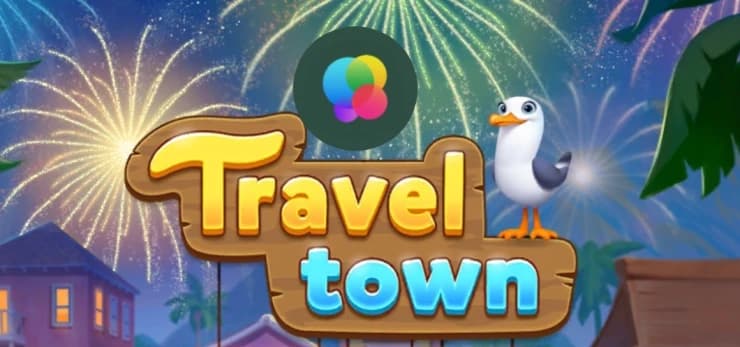
When you open Travel Town, the free-energy links are already part of the game’s daily rhythm. AppGamer says the links are distributed every day and usually expire within 48 hours, so the players who stay on top of them are the ones who keep their boards moving.
Why the daily free-energy page matters
This is more than a convenience page. In a merge game built around timers, limited actions, and steady progression, a free burst of energy can be the difference between clearing a board segment and stalling halfway through a session. That is why a daily roundup works so well for Travel Town: it saves players from hunting through social posts, community threads, or scattered reminders just to find the same reward.
The bigger story is how closely the game’s pace is tied to habits outside the app itself. Travel Town does not just ask you to log in and merge, it asks you to understand the cadence of daily refreshes, time-sensitive bonuses, and support channels that sit around the core loop. For casual mobile players, that outer layer has become part of the actual play experience.
How the links work now
AppGamer’s Travel Town codes page makes an important point: energy is no longer redeemed by codes. Instead, players now get energy through links distributed by the developers, which is exactly why the daily page has become such a useful tool.
That shift changes how you think about claiming rewards. Codes can be entered whenever they are posted, but links are tied to a short window, and AppGamer says that window is usually 48 hours. If you treat those links like a same-day pickup, you are much less likely to miss the boost.
A practical routine helps here:
- Check the free-energy page before you start a real play session.
- Claim the links when you have time to spend the energy right away.
- Make the free energy part of a focused session instead of grabbing it and walking away.
That last point matters because energy is most valuable when you can use it to push through the board, finish a merge chain, or get past a slowdown. A fast claim with no time to play does not move the session forward nearly as well as a quick pickup followed by concentrated progress.
What the official listings say about the game loop
Travel Town’s official store pages back up the idea that the game is designed around repeat progression. The Google Play listing says players can discover over 500 objects through hundreds of levels, meet 55 villagers, rebuild the town after a storm, and make in-app purchases. The Apple App Store listing describes it as a free merge-and-discover game with hundreds of levels, 55 villagers, and in-app purchases as well.
Those details matter because they show how the game’s design keeps pulling players back. Hundreds of levels, collectible objects, and a town that must be rebuilt after a storm all support a structure where incremental progress feels meaningful. Free energy links fit neatly into that system by giving players a short-term boost inside a longer-term loop.
The store pages also point to different publishing ecosystems. Google Play credits Magmatic Games LTD, while the App Store credits Moon Active, but both present the same core experience: a merge game built around discovery, progression, and repeat engagement.
The support layer around the board
Travel Town’s official support center shows just how broad that ecosystem is. The help hub includes sections for Loyalty Club, Events, Rewards, Purchases, Account & Device, Daily Support, and Gift. That list tells you the game is not just selling a board and a merge mechanic, it is running an ongoing service layer that keeps rewards, assistance, and account management visible.
The official store pages also direct players to Facebook and Instagram for exclusive offers and bonuses. That is another clue to how the game’s reward economy works: free energy is not isolated inside the app, but distributed across social and support channels that keep players coming back for more than one daily check-in. For a player, that means the fastest path to value often starts outside the game itself.
Why this kind of guide works for mobile casual games
Travel Town is a strong example of how modern casual mobile games stay sticky. The loop is not only about merging items on the board, it is also about remembering when to collect, where to look for bonuses, and how to make limited energy go further. AppGamer’s daily free-energy page turns that process into something simple and repeatable.
The scale of the audience shows why this matters. Google Play lists the game at more than 10 million downloads, with about 382,000 reviews and a 4.6-star rating, while the App Store shows 177,000 ratings and a 4.8-star average. A game that large creates a steady demand for fast, reliable help, especially when rewards vanish in a 48-hour window.
Travel Town’s free-energy links are therefore not a side note. They are part of the daily routine that keeps progression moving, and they reflect the broader design of mobile games that now depend on habits, refresh cycles, and external rewards as much as the board in front of you.
This article was produced by Prism’s automated news system from verified source data, official records, and press releases, then run through automated quality and moderation checks before publishing. The system is built and supervised by the people who set the standards it runs under. Read our full AI policy.
Did this article answer your question?


