Walking Dead, Rust Mobile and Tencent’s GTA-style game appear in digest
The digest points to three mobile games worth watching now: The Walking Dead: Aftermath is in soft launch, Rust Mobile is stacking pre-reg rewards, and Tencent's GTA-style push is gaining proof points.

Mobilegamer.biz's latest digest reads like a filter for attention, not just a list of announcements. The Walking Dead: Aftermath is already in soft launch with global pre-registration live, Rust Mobile is dangling milestone rewards up to 15 million sign-ups, and Tencent's GTA-style project sits inside a market where big open-world mobile bets are suddenly looking less theoretical. The rest of the roundup, including a new Rollic title, another Bleach mention, and this month's Apple Arcade line-up, matters because it shows which games are moving now and which ones are still just names on a slate.
Apple Arcade sets the baseline
The mention of this month's Apple Arcade line-up gives the digest a useful anchor: not every item here is a future launch, and not every bit of mobile coverage needs to be framed like a countdown clock. Apple Arcade is the part of the roundup that signals what is already playable, while the licensed games and publisher teasers show where the next wave is trying to form.
That contrast is what makes the digest feel practical for mobile players. Some entries are ready for action, some are worth a pre-registration click, and some are still too thin to demand more than a bookmark.
The Walking Dead: Aftermath is the clearest near-term play
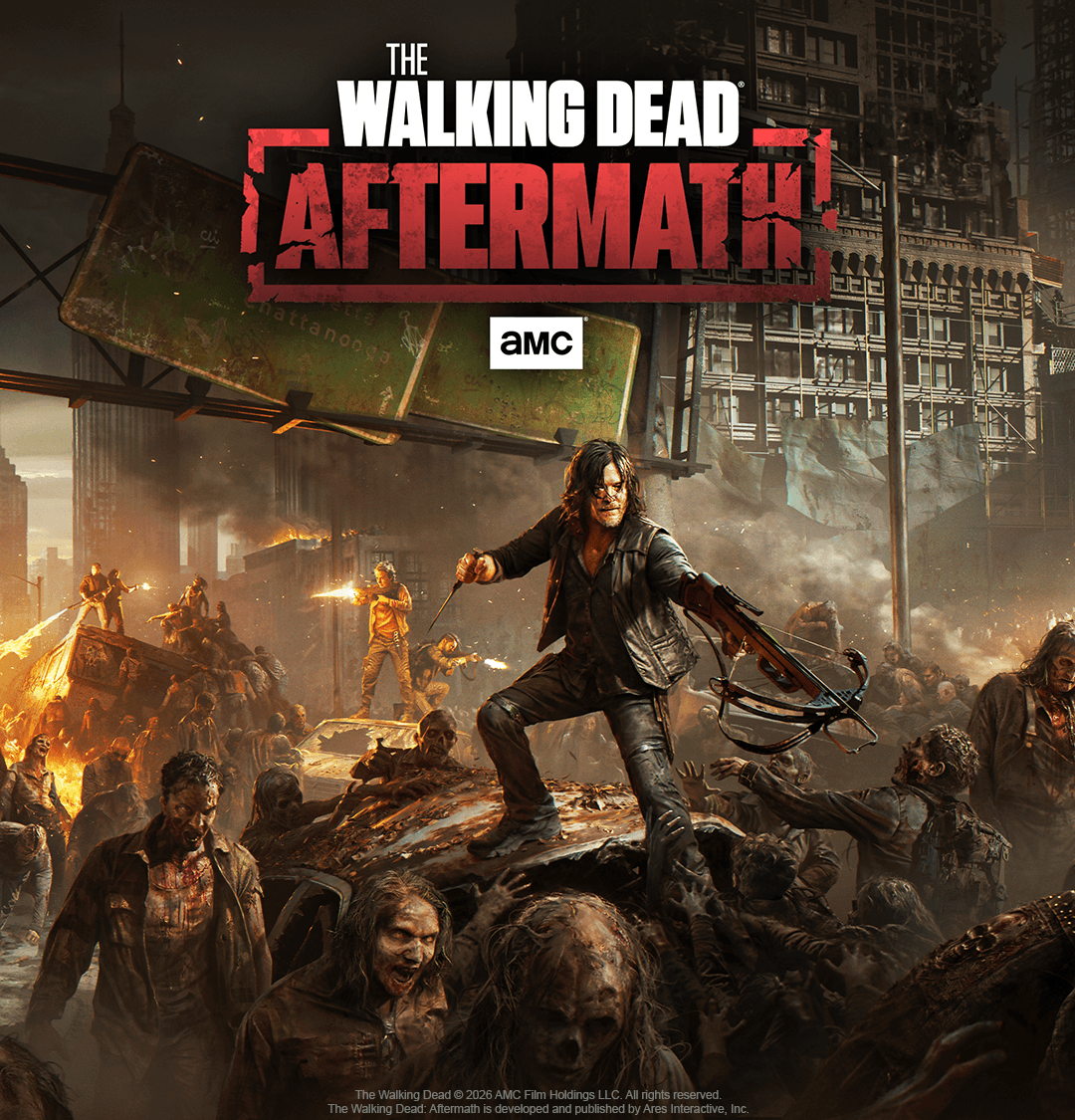
The Walking Dead: Aftermath is the easiest game in the digest to care about right now because it already has the two things mobile players look for: a recognisable IP and visible progress. The free-to-play roguelite is being developed by Swift Games for Ares Interactive and AMC Global Media, and it is set for Android and iOS in summer 2026.
It is not sitting in the abstract either. The game is in soft launch in select regions, including Poland, and global pre-registration is already live, which makes it feel much closer than a typical announcement-only license. Ares Interactive's $70 million Series A in February 2026, led by General Catalyst, helps explain why this one is being pushed like a real release instead of a branding exercise.
For anyone deciding what to wishlist or pre-register for, this is the digest's safest bet. It has the Walking Dead name, a defined release window, and enough operational movement to suggest the studio is treating it as a live product rather than a pitch deck.

Rust Mobile is turning pre-registration into the headline
Rust Mobile has a different kind of momentum. Rather than leaning on a date, Proxima Beta and Tencent are using a public milestone ladder to show how far the campaign can stretch, with rewards tied to 500,000, 2 million, 5 million, 10 million, and 15 million contributions on the official site.
That structure makes the project feel bigger than a quiet mobile adaptation of Facepunch's survival game Rust. It is the sort of pre-registration page that tells you the publisher expects a crowd, and that it wants to make the audience see the size of that crowd long before launch timing is spelled out.
This is the kind of game worth keeping on a shortlist, even if it is not yet one to obsess over. If The Walking Dead: Aftermath is the easy pre-reg, Rust Mobile is the one to watch for scale, because the milestone design suggests Tencent wants to turn interest into a public scoreboard.
Tencent's GTA-style bet comes with a real market backdrop
Tencent's GTA-style project is still the most speculative item in the digest, but it lands in a lane that already has a recent proof point. Mobilegamer.biz has been tracking a wider push into large-scale mobile open-world experiments, and Perfect World's Neverness to Everness is the cleanest example of that trend so far.
Neverness to Everness launched worldwide on April 29, 2026, and Appmagic estimates cited by Mobilegamer.biz put it at 9.3 million downloads and just over $28 million in in-app purchase revenue in seven weeks. That is exactly the sort of performance that makes publishers keep chasing the genre, especially when Tencent's gaming business was estimated at $10.99 billion in Q1 2026.
The lesson here is not that every GTA-style mobile game will repeat that outcome. It is that Tencent has the scale, and the market has enough appetite, to keep these projects from feeling like fantasy prototypes.
The new Rollic game is still a name, not yet a reason
The new Rollic entry in the digest is the most clearly early-stage item on the page. Right now it exists as "another new Rollic game," which is enough to signal that the studio is still feeding its pipeline, but not enough to tell you whether this is the next quick-hit concept or something that will matter beyond a first look.
That makes it a monitor, not a pre-register. Without a title, genre, or release window, there is no gameplay hook to grab onto yet, only the fact that Rollic remains active and ready to keep testing fresh ideas.
Bleach keeps showing up because anime IP still travels
Bleach is the other recurring name that belongs in the "watch, don't rush" column. Mobilegamer.biz has already flagged a Bleach game published by ByteDance in a previous digest, which is a reminder that anime licenses continue to draw steady publisher interest even when a specific project is not fully detailed.
That persistence matters in a mobile market where recognizable worlds often move faster than original IP. Bleach keeps reappearing because the audience is already there, and because publishers know a familiar name can do a lot of work before a trailer ever has to explain the game itself.
The digest ultimately draws a clear line between games that are ready to act on and games that still need shape. The Walking Dead: Aftermath and Rust Mobile are the ones to watch now, Tencent's GTA-style project is the one to monitor for scale, and the Rollic and Bleach mentions stay in the background until they turn from labels into real launch stories.
This article was produced by Prism’s automated news system from verified source data, official records, and press releases, then run through automated quality and moderation checks before publishing. The system is built and supervised by the people who set the standards it runs under. Read our full AI policy.
Did this article answer your question?