Athearn models GATC 2600 Airslide covered hoppers in HO Genesis run
Athearn’s HO Genesis GATC 2600 Airslide brings flour, sugar and plastics traffic to 1950s-era layouts, with three body styles and a Primed for Grime option.

The GATC 2600 Airslide covered hopper gives mid-century freight operators something a generic covered hopper cannot, a believable way to move flour, starch, sugar and plastics in 1950s and 1960s bulk service. On a layout built around grain elevators, bakery sidings, sugar plants or food-grade interchange, it opens traffic patterns that ordinary 4-bay hoppers never quite capture.
Athearn used its May 11 announcement to put the HO Genesis version in front of modelers with three body styles, road names drawn from customer input and a Primed for Grime option that duplicates the look and feel of in-service equipment with faded base colors matched to the prototype. The model carries a $54.99 list price, with a $5 premium for Primed for Grime versions, and Athearn has tagged the run for 1958 through the 1990s eras with a September 2027 release date.
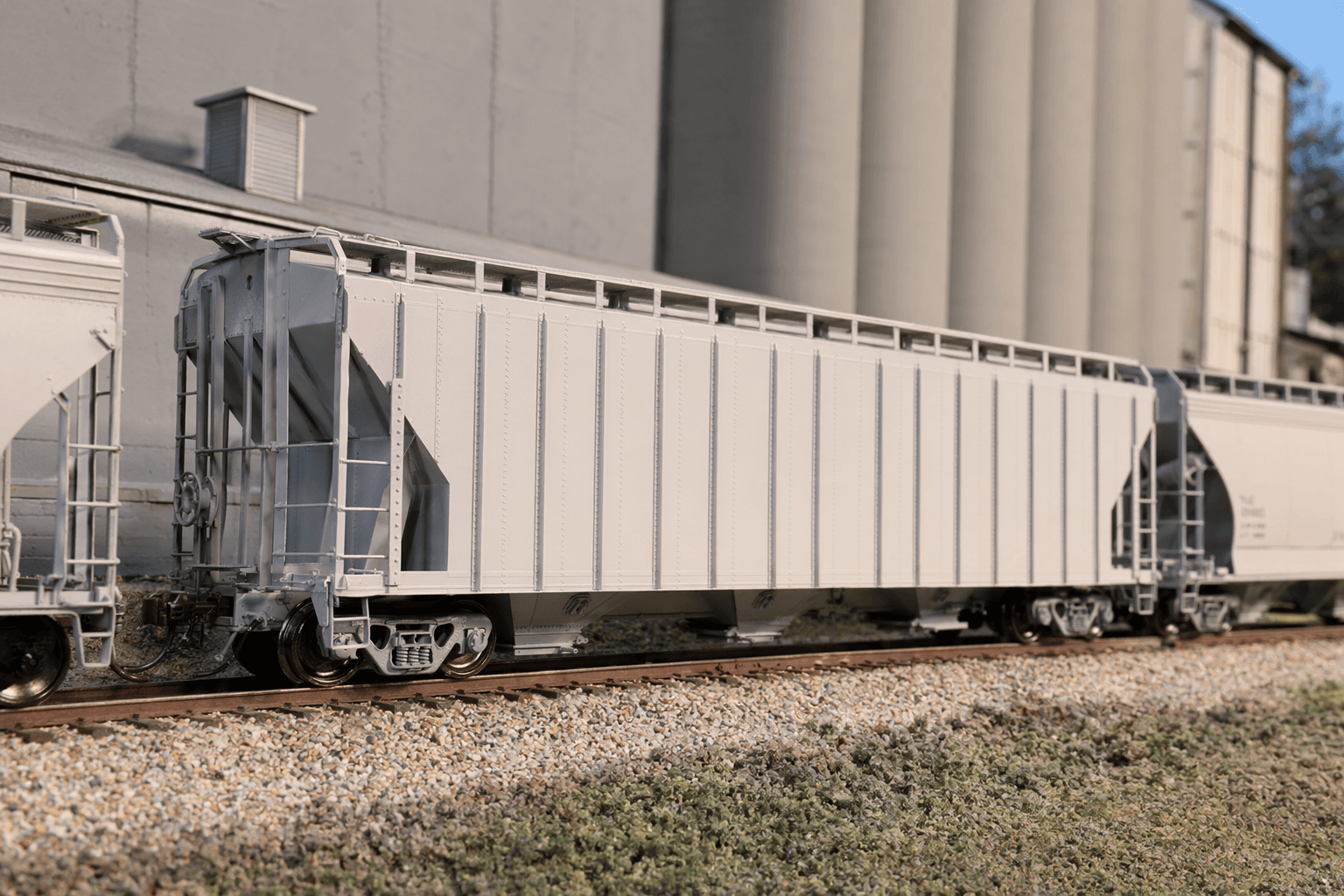
The prototype story is what gives the car its real weight. The Fuller Company of Catasauqua, Pennsylvania, patented the Airslide concept, which used two narrow, steep-sided troughs with air-permeable material at the bottom. Air pumped through that material fluidized the lading and helped it flow out through the hopper outlets, a practical answer to commodities that did not unload cleanly from standard bays. General American Transportation began building Airslide covered hoppers in 1953, and one of the original versions was the 2,600-cubic-foot, single-bay, 70-ton car Athearn chose to model.
That detail matters because the Airslide was not just another bulk car. Athearn’s background notes say the cars were leased not only to railroads but also to sugar and bakery companies, and some 2,600-cubic-foot cars were later permanently connected in two-unit drawbar sets that operated as a single car and totaled 5,200 cubic feet. One reference source puts total production of the 2,600-cubic-foot cars at about 5,000 between 1953 and 1969.
Athearn matched that prototype variety with detailed underbody piping, rectangular or oval shaker brackets, gravity or gravity-pneumatic outlets, see-through metal roof walks, factory-installed wire grabs and brake piping, separately applied roof hatches and brake wheel, roller bearing or Bettendorf trucks and body-mounted McHenry couplers. For operators, the payoff is straightforward: the car fits 1950s interchange scenes, 1960s and 1970s commodity service and later industrial spurs where a specialized bulk car looks right at home. That is the kind of traffic that makes a mid-century freight roster feel busy, specific and earned.
This article was produced by Prism’s automated news system from verified source data, official records, and press releases, then run through automated quality and moderation checks before publishing. The system is built and supervised by the people who set the standards it runs under. Read our full AI policy.
Did this article answer your question?