Choosing Between HO, N, and O Scale for Your First Layout
Space, budget, and prototype goals separate HO, N, and O scale more than most beginners realize; knowing the 1:87, 1:160, and 1:48 ratios is just the start.
Before buying a single piece of track, four questions should shape your scale decision: How much physical space do you have? What's your budget? What do you want to model, in terms of era, region, and prototype? And how important is realism versus the quantity of rolling stock and operational complexity you want to achieve? The answers will point you clearly toward HO, N, or O scale, the three most popular choices in the hobby today.
Understanding Scale and Gauge
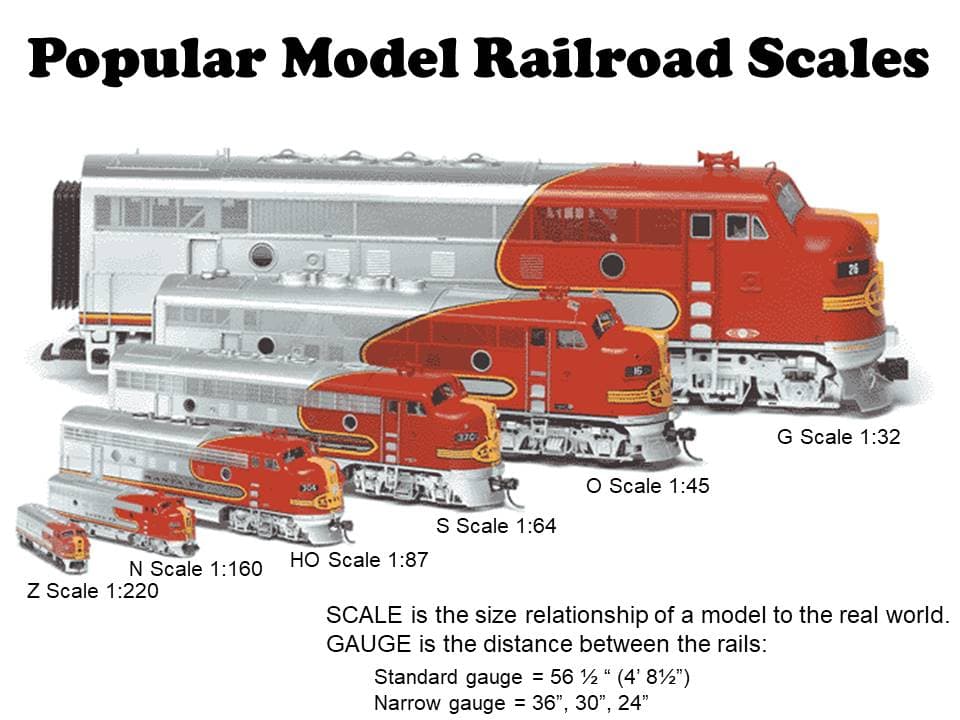
"Scale" and "gauge" are not interchangeable, and sorting out that distinction early saves a lot of confusion at the hobby shop. Scale describes the model-to-prototype size ratio. HO runs at 1:87, meaning a model locomotive is 1/87th the size of the real thing. N scale compresses that further to 1:160, while O scale in the U.S. sits at 1:48 for most manufacturers, making it the largest of the three. Gauge, by contrast, describes the distance between the rails and is a consequence of the scale you choose, not a separate decision.
Space: The First and Most Honest Filter
Of all the variables, available space is the one that doesn't negotiate. N scale wins decisively for tight quarters. A compact apartment or small spare room can host a genuinely impressive N-scale layout with long mainline runs, a fiddle yard, and detailed scenery, because N's smaller footprint compresses linear footage into a remarkably small area. Enthusiasts who prize realism aim for radii of 11 to 15 inches or greater when possible to run modern locomotives smoothly, but smaller radii are available if you need to fit a layout onto a modest table.
HO sits in the middle ground and earns its reputation as the hobby's most popular scale in North America largely because of that balance. Comfortable handling for fine detailing and a workable footprint make HO accessible in a dedicated spare room or a well-organized basement corner. The typical recommended minimum radius for convincing HO operation is 22 to 24 inches for most modern locomotive types. Industrial or switching-focused layouts can use tighter radii in the 15 to 18-inch range, which opens the door to interesting, operationally rich designs in tighter spaces.
O scale is in a category of its own for space requirements. Everything scales up physically, and that means loop diameters, bench widths, and aisle clearances all expand accordingly. O is the scale for a dedicated hobby room where visual impact and physical presence are the goal, not mileage of mainline run. If you want fewer models arranged with genuine theatrical weight, and you have the room to support them, O rewards that investment.
Cost and Product Availability
Budget shapes not just what you buy on day one, but how far the hobby takes you over the long run.
N scale generally offers the lowest per-car and per-locomotive entry cost, which makes building long, realistic consists on a tighter budget genuinely achievable. That said, top-end N models with DCC sound decoders can be expensive, so "cheaper scale" is not a blanket rule at the premium tier.
HO has the broadest aftermarket and detail-parts ecosystem of any scale in North America. Low-cost entry-level sets are available for beginners, and the price range extends all the way up to brass and limited-run collector models. That depth means you can grow into the hobby at whatever pace your budget allows, and finding replacement parts, decoder-compatible shells, or prototype-specific rolling stock is rarely a problem.
O scale carries higher base costs for detailed models, and because everything is physically larger, layout construction costs rise proportionally. Track, structures, and scenic materials all scale up in price. The tradeoff is a vibrant specialty-manufacturer and collector market that actively supports the scale, and the models themselves are built with a heft and visual substance that HO and N simply cannot replicate.
Operations and Realism
Each scale has a different operational personality.
N scale excels at realistic long-distance operations. Running a 60-car coal train through mountain scenery with prototypical signaling is far easier to achieve on a modest footprint in N than in any other scale. The challenge is in the details: small parts are more delicate to model and weather by hand, though modern fine-print decals and 3D-printed accessories have substantially narrowed that gap in recent years.
HO is the scratchbuilder's and kitbasher's natural habitat. Turnouts, structure kits, figures, interior details, and cab fittings are all easier to find, easier to handle, and easier to modify at 1:87. If you want to spend time at the workbench adding cab detail, painting weathering effects, or building structures from scratch, HO gives you the most tactile control over that process.
O scale's larger physical size makes weathering and scratchbuilding physically straightforward in a way that smaller scales cannot match. The visual drama of an O-scale locomotive on a display layout is genuinely hard to argue with. The operating experience skews toward display, toy-train tradition, and collector enjoyment rather than prototypical long-haul simulation, and for many modelers that is precisely the appeal.
Community, Clubs, and Resale Value
The scale you choose determines the community you join, and that community matters more than beginners often expect.
Checking local club preferences before committing is worth the effort. HO and N clubs frequently operate with established modular layout standards, which means you can build a module at home, bring it to a meet, and plug it into a room-length layout with strangers. That kind of shared infrastructure accelerates learning, provides social motivation, and makes the hobby more sustainable.
Resale is a practical consideration if your interests evolve. HO is the largest scale market in the U.S., and that size typically makes it easier to sell models if you eventually change direction or upgrade your roster. N has a solid secondary market as well. O scale has strong collector demand, but the buyer pool for any specific item is smaller.
Starting Small and Testing Your Instincts
Many new modelers start with an inexpensive starter set, typically a road-and-rolling-stock bundle, to learn basic wiring, track geometry, and operation before committing to a full layout investment. That approach keeps early spending low and, crucially, lets you discover what you actually enjoy most before locking in decisions about scale, era, or prototype.
Attending a local club open house is the other low-risk path to clarity. Seeing HO, N, and O layouts operating side by side in the same evening answers questions that no spec sheet can, including which scale you instinctively reach out to touch first.
The right scale is ultimately the one you will keep coming back to. Space narrows the field quickly; budget and prototype interests do the rest of the sorting. Pick the scale that fits your room, respects your budget, and matches the trains you actually want to run, and the rest of the hobby will follow naturally from there.
This article was produced by Prism’s automated news system from verified source data, official records, and press releases, then run through automated quality and moderation checks before publishing. The system is built and supervised by the people who set the standards it runs under. Read our full AI policy.
Did this article answer your question?