Club Show Coordinators Share Field-Tested Checklist for Two-Day Layout Events
Veteran club coordinators reveal that a two-day show lives or dies on three decisions made weeks before setup day: confirmed floor dimensions, dedicated power circuits, and a named crew schedule.
Pulling off a two-day operating layout display is one of the most satisfying things a club can do publicly — and one of the easiest to underestimate. Setup and teardown at many venues requires all equipment to be carried in and out through a single set of doors, yet experienced clubs can get 24 modules in place in short order when the right people are committed in advance. The difference between a 2.5-hour build and a 7-hour ordeal almost always traces back to decisions made weeks before anyone loads a car.
Confirm your floor footprint before anything else
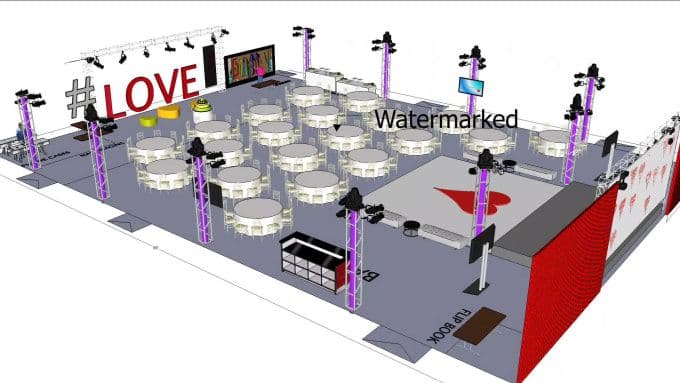
The first item on any coordinator's checklist is a signed, dimensioned floor plan from the venue. Large shows divide their space across multiple buildings — one pavilion of roughly 13,500 square feet for vendor tables and layouts, and a separate event center approaching 33,600 square feet for additional vendor tables, layouts, and the show office. Even if your club is occupying a single corner of a gymnasium, you need those dimensions confirmed in writing. Layouts designed for show display consist of modules or sections, and the size of the configuration is directly constrained by the available floor space. Get the exact dimensions, confirm aisle clearance requirements with the show organizer, and draft your module arrangement on paper before setup day.
For modular groups, confirm interface compatibility between members' modules well ahead of time. Good preparation will reduce the number of problems when interfacing modules for the first time — there are often small adjustments to be made, but if care is taken and proper planning is done, these can be kept to a minor nature. Know the total linear footage you're committing to. A group of connected modules can total around 150 feet — and because all modules are built to a standard design, height, and connectivity, the same group can do six to eight shows or meets per year with that footprint adapting to each venue.
Power: plan circuits, not just plugs
Power planning is where coordinators most frequently get burned. Confirm the number of dedicated circuits your club needs from the venue coordinator before the show contract is signed. Most beginner layouts can manage with 1-2 amps, but serious setups should plan for power supplies rated at 3-5 amps or higher. For DCC-equipped modular layouts running multiple trains simultaneously across a long consist, that figure climbs quickly.
Install a track power bus so that power flows from one module to the next, and run a DCC or LocoNet bus along the setup with telephone jacks or Digitrax UP5 panels so throttles can be plugged in at multiple points around the layout. At a public show, having throttle access points distributed across the layout perimeter means operators aren't crowded into one corner, and visitors can watch trains from every angle without a handler hovering nearby.
Consider power districts, especially on longer modular setups. Power districts can be created using either a circuit breaker — an electrical switch that automatically protects the DCC system in the event of an overload — or a booster, which serves as an auxiliary power supply. A short circuit in one section of a 150-foot modular layout shouldn't take down the whole railroad in front of a gymnasium full of spectators. On a small to midsize railroad where only a few locomotives are in operation, circuit breakers allow you to subdivide the layout easily, and using circuit breakers to establish zones is more economical than purchasing additional boosters and power supplies.
Bring one extension cord and one power strip more than you think you need. Venues often move outlets, and show-floor power strips disappear.
Setup window: treat it like an operating session
Many show coordinators designate a Friday setup window from 9 a.m. to 6 p.m. for clubs and vendors, with additional Saturday morning access from 7 a.m. to 9 a.m. Know which window your club has confirmed, and plan your crew call time accordingly. Do not assume Saturday morning setup is sufficient for anything larger than a simple two-module display.
Assign specific roles before arrival, not on the floor:
- Module placement lead: confirms the footprint matches the venue floor plan, directs traffic as tables and legs come in
- Track connection lead: owns all module-to-module rail joints, tests continuity before the power bus is energized
- Power lead: runs the bus wiring, assigns throttle jack positions, tests each power district independently
- Scenery and fascia crew: handles the cosmetic elements — backdrop panels, skirting, signage — after track and power are signed off
When a coordinated crew turns out in force, a full layout can be assembled, tested, and running with scenery complete in as little as two and a half hours — a dramatic improvement over the seven-hour exercises that happen when roles aren't pre-assigned.
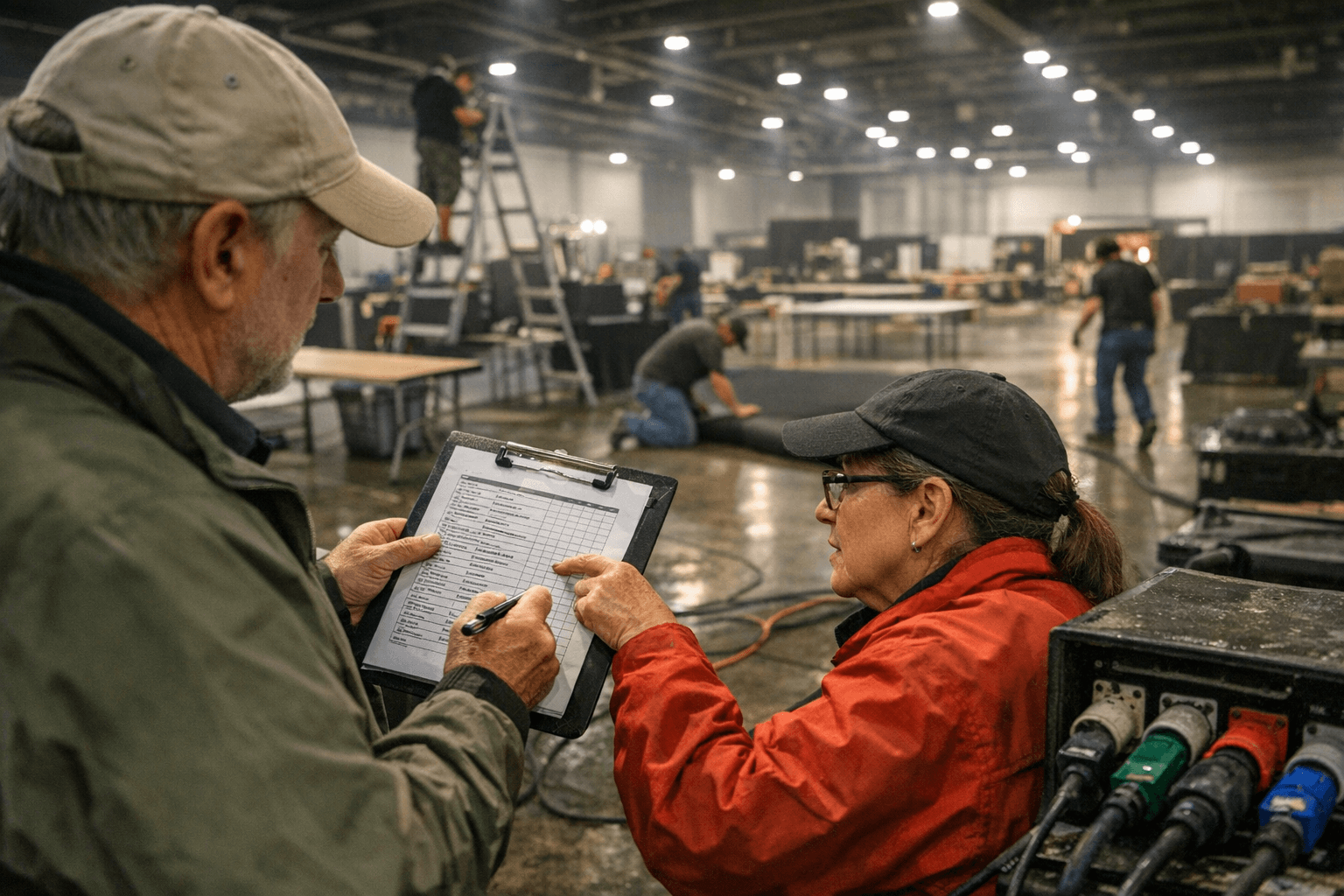
Crew scheduling across two show days
A two-day show requires a different staffing mindset than a one-day event. Typical two-day show hours run from 10 a.m. to 5 p.m. on Saturday and 10 a.m. to 4 p.m. on Sunday. That's 16 hours of public-facing operation, plus setup and teardown, and no single volunteer should be expected to cover all of it.
Build your crew schedule in four-hour blocks and assign a minimum of two members to the layout at all times. One handles operations and visitor questions; the other monitors the track, resets any derailments, and watches for small children reaching over the barrier. Identify your most experienced operators for the Saturday peak window — typically mid-morning through early afternoon when attendance is highest — and schedule less experienced members into slower windows where they can build confidence without managing a crowd.
Name a point of contact who will be reachable by the show coordinator throughout both days. The show coordinator role carries the responsibility of being the organizing club's primary communication link with the venue and other participants. Your own internal equivalent — your layout liaison — should have the venue contact's phone number and a clear escalation path if power, space, or crowd-control issues arise.
Track condition and maintenance kit
Regular cleaning of the tracks is essential to maintain smooth operation: dust, dirt, and oxidation can accumulate on the rails, leading to poor connectivity and performance. Use a track cleaning solution or a track cleaning car to keep your tracks in good condition. At a public show, contamination builds faster than at home — foot traffic kicks up dust, and handling by curious visitors (or their children) leaves oils on surfaces near the layout perimeter. Plan to run a cleaning car through the mainline at the end of Saturday before powering down, so Sunday morning starts clean.
Pack a show maintenance kit as a separate bag, not buried in a module transport box:
- Rail joiners, both insulated and metal, in multiple sizes for your scale
- Spare track sections matching your modular standard
- Needle-nose pliers and a small screwdriver set
- Rerailing tool and a small flashlight for under-table diagnostics
- Contact cleaner and track cleaning pads
- A printed copy of your power district map
Teardown: the checklist that actually matters
Teardown at venues where all equipment must be carried through a single entry point requires as much coordination as setup. Assign the same module placement lead to direct teardown traffic in reverse. Disconnect power before any track joints are separated. Photograph the layout from multiple angles before disassembly begins — that photo record becomes your setup guide for the next show.
Stage modules in the order they'll be loaded: outermost sections first, corner modules last. If you're using a club trailer or van, the loading order should be worked out in the parking lot, not improvised at the door.
The clubs that consistently deliver clean, running layouts at public shows share one trait: their coordinators treat logistics as seriously as scenery. A well-run two-day event doesn't happen because everything went right — it happens because the coordinator spent three weeks making sure there was a plan for when things didn't.
This article was produced by Prism’s automated news system from verified source data, official records, and press releases, then run through automated quality and moderation checks before publishing. The system is built and supervised by the people who set the standards it runs under. Read our full AI policy.
Did this article answer your question?