Dapol traces its wagon branding and packaging history since 1983
Dapol’s wagon boxes are a time machine, with logos and packaging that map the firm’s shift from 1983 newcomer to a multi-gauge British-outline staple.
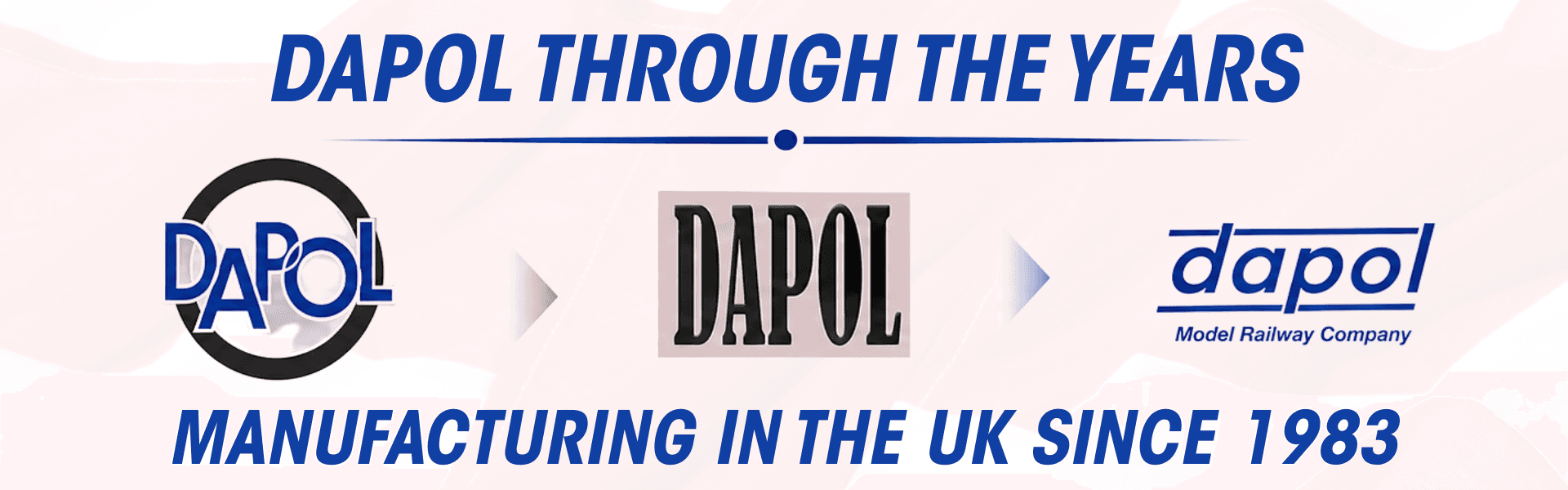
How many Dapol eras can you identify from a wagon box alone? That is the fun hiding inside this company history, because the logo on the packaging does more than date a model. It points to where Dapol was in the hobby, how it was making product, and what kind of model railway market it was chasing at the time.
A brand story that starts with one opening in OO
Dapol says it was founded in 1983 by David and Pauline Boyle after they spotted an opportunity in the mainstream OO model railway market. That detail matters because it explains why the company’s visual identity has always been tied so closely to wagons, packaging and product presentation rather than just a corporate name on a box. From the start, Dapol was trying to speak to the everyday branchline and wagon-yard modeller, not just the collector’s shelf.
The earliest breadcrumbs are useful for dating stock. A secondary historical reference places the Dapol name in a Railway Modeller advert in September 1983, and another notes that the first Dapol OO wagons were announced for availability on 20 November 1983. For anyone sorting through old shop finds, that narrow window is a clue in itself: if the box art feels like the birth of a brand, it probably is.
What the logos tell you about the hobby
Dapol’s own wagons feature has the right instinct for this subject because it treats logos as part of the story, not just decoration. Over more than 40 years, the company says it has used several different logos, and some appeared only on railway products while others crossed over into wider Dapol ranges. That gives collectors a practical way to read the brand’s visual timeline, one package at a time.
For long-time buyers, those shifts can feel strangely personal. A logo on a wagon box can pull back a memory of earlier catalogues, older tooling, and the period when a favourite livery was fresh on the market. For newer modellers, the same logo can be a dating tool, helping separate an original release from a later run, or a classic wagon from a more recent special edition.
The reason this lands so well in model railways is simple: packaging is not disposable in this hobby. Boxes get kept, stacked, labelled and revisited years later, which means branding becomes part of the object’s provenance. Dapol’s feature taps directly into that collector instinct, turning the company’s changing look into a visual guide to the era each wagon came from.
From Winsford to Hong Kong, then Llangollen
The production history behind the brand gives the logos even more weight. Dapol says its products were made from Winsford, with some design and manufacturing also taking place in Hong Kong and the Far East. That mix of locations tells you the brand was never standing still, even in its early years. The packaging changes mirror that evolution, showing a manufacturer balancing British-outline identity with broader production realities.
A further layer comes from the move to Llangollen in 1994. A secondary source notes that Dapol acquired a new site and moved to a new facility in Llangollen, Denbighshire, and that the old Winsford factory was later destroyed by a huge fire. That shift marks a real change in the company’s physical story, and for collectors it helps explain why older packaging can feel like a different chapter entirely.
It is also why the company’s visual history matters beyond nostalgia. When you see one logo on an early wagon and a different one on a later special run, you are not just seeing art direction. You are seeing the trail of a business that moved sites, widened its reach and kept adapting how it presented itself to the hobby.
Why the current wagon range still fits the old story
This is not just a memory piece, though. Dapol’s current website lists wagon and freight ranges across OO, O and N gauge, which shows that wagons remain central to the company’s identity. The blog archive backs that up, with current wagon releases and special projects still appearing in its news output. In other words, the brand history is still actively being written.
That ongoing range is important for collectors and operators alike. A special-run wagon or limited-edition livery can sit alongside the older branding story and extend it, especially when the model is tied to a charity issue, a commemorative release or a themed collaboration. The current OO listings, including examples such as the 7 Plank Hope House Charity Wagon, the VJ Day Army 80th Anniversary release and Titanic Brewery, show how Dapol continues to use wagons as both rolling stock and brand statement.
For modellers, that continuity has practical value. A wagon shelf built across decades can still make sense if you know which logo belongs to which phase of the company. That helps when you are buying secondhand stock, checking whether a box matches the model inside, or simply trying to place a release within Dapol’s wider timeline.
The collector’s shortcut for reading a Dapol box
If you want the quickest way to think about the brand, start with three questions: which logo is on the box, what gauge is the wagon, and does the release feel like a standard production item or a special project? Those three clues usually tell you enough to place the model in the right part of Dapol’s story. They also explain why this subject resonates so strongly with collectors who care about packaging as much as painted metal and plastic.
That is the real charm of Dapol’s wagon history. The company did not simply change logos over the years, it left a trail that mirrors the changing shape of the hobby itself, from the 1983 OO opportunity to today’s multi-gauge freight line. Look at enough Dapol boxes side by side and the question becomes less about nostalgia than about identification: how many eras can you spot, and what does each one say about the modeller who bought it?
This article was produced by Prism’s automated news system from verified source data, official records, and press releases, then run through automated quality and moderation checks before publishing. The system is built and supervised by the people who set the standards it runs under. Read our full AI policy.
Know something we missed? Have a correction or additional information?
Submit a Tip