Heljan shows decorated OO gauge Class 86/2 samples with key detail changes
Heljan’s decorated OO gauge Class 86/2 samples show TDM and pantograph options, plus fresh livery work, as Ben Jones checks the last corrections before release.

Heljan’s decorated OO gauge Class 86/2 samples put the project into the stage where small errors matter most. In a video feature with Mike Wild, project manager Ben Jones walked through the model’s development and the livery work now being checked against the tooling, with Heljan saying revisions are still being made before production. That makes this more than a first look: it is the point where buyers can judge whether Heljan has turned a broad Class 86 promise into a model that actually reflects the sharper differences between subclasses and eras.
The engineering package is aimed squarely at serious OO electric-era layouts. Heljan says the locomotive will come DCC-ready with a 21-pin decoder socket, directional lighting, a five-pole motor, twin flywheels, and all-wheel drive with pickup. Just as important, the tooling has been built to cover locomotives with and without TDM cables, alongside different pantograph types. That matters because Class 86s were not one-size-fits-all machines in service, and the market for premium electrics now expects those distinctions to be visible in the bodywork, roof detail, and fit-out, not just in the number on the cabside.
The prototype has the right sort of history to justify that level of attention. British Rail introduced the Class 86 in the 1960s as the AL6 design for West Coast Main Line electrification, and 100 locomotives were built in 1965 and 1966. They became the reliable heart of express working between London, Birmingham, Manchester, and Glasgow, before the fleet was split into principal subclasses in the early 1970s. Heljan’s own launch material framed the 86/2 as a particularly useful choice for modellers because it spans late-1970s to mid-1980s appearances and later forms with high-intensity headlights, TDM cables, and either Faiveley or Brecknell Willis pantographs.
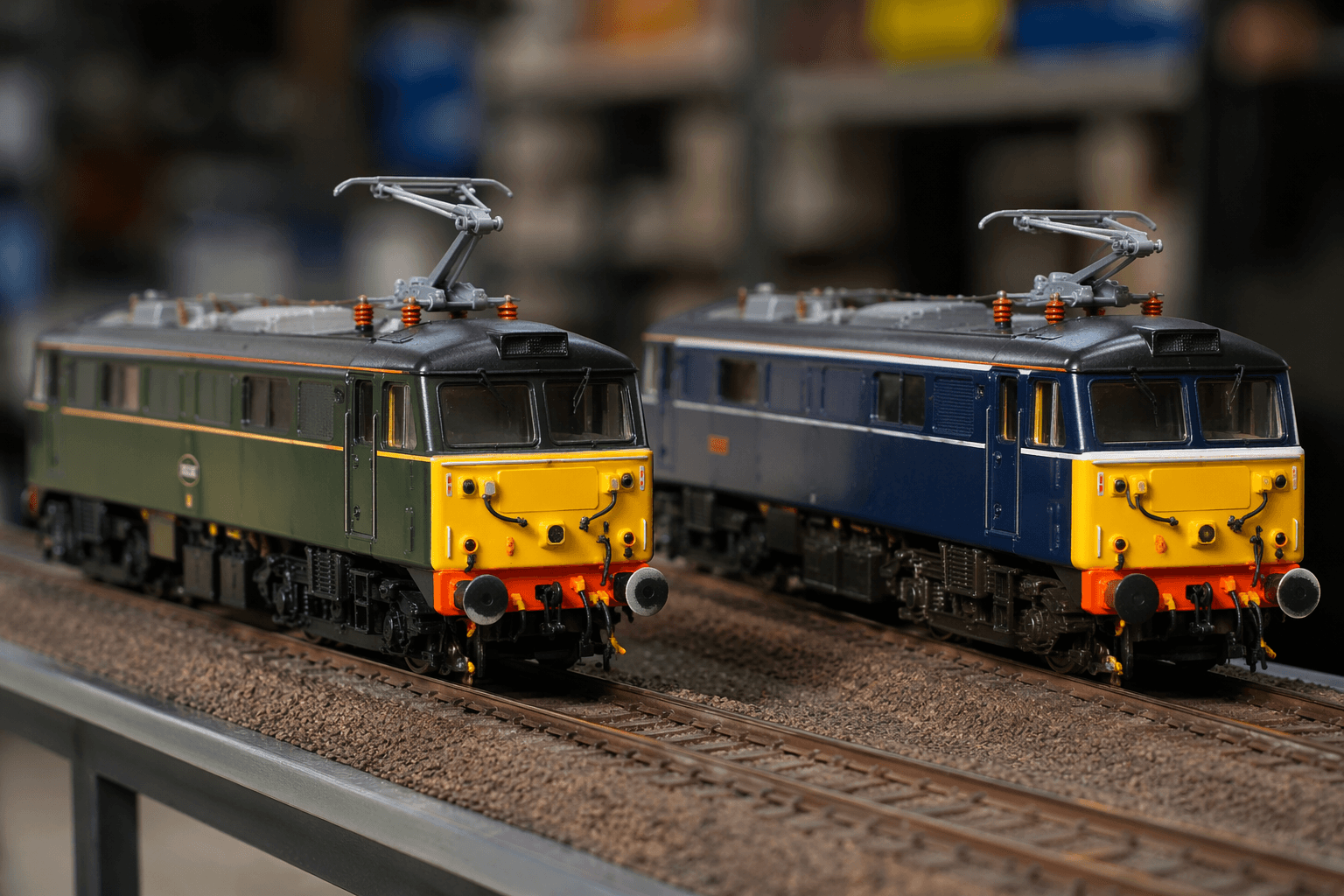
The decorated samples also sharpen the appeal of the livery list. Railway Models UK said the range would include a new parcels-liveried model, while preserved 86259 Les Ross has been working on the main line since preservation, underlining how long the class has stayed relevant beyond its original express duties. With delivery expected in 2026 and the DCC-ready price set at £159.98, the key question now is not whether Heljan has chosen a popular subject, but whether the final corrections keep the decorated sample honest to the subclass differences that made the 86/2 worth waiting for in the first place.
This article was produced by Prism’s automated news system from verified source data, official records, and press releases, then run through automated quality and moderation checks before publishing. The system is built and supervised by the people who set the standards it runs under. Read our full AI policy.
Know something we missed? Have a correction or additional information?
Submit a Tip