Heljan unveils OO gauge LNER Sentinel-Cammell steam railcars in multiple liveries
Heljan’s new OO Sentinel-Cammell railcars reach into a corner of LNER branch-line history most RTR releases miss, with Q2 2027 delivery and liveries from green to a BR what-if.

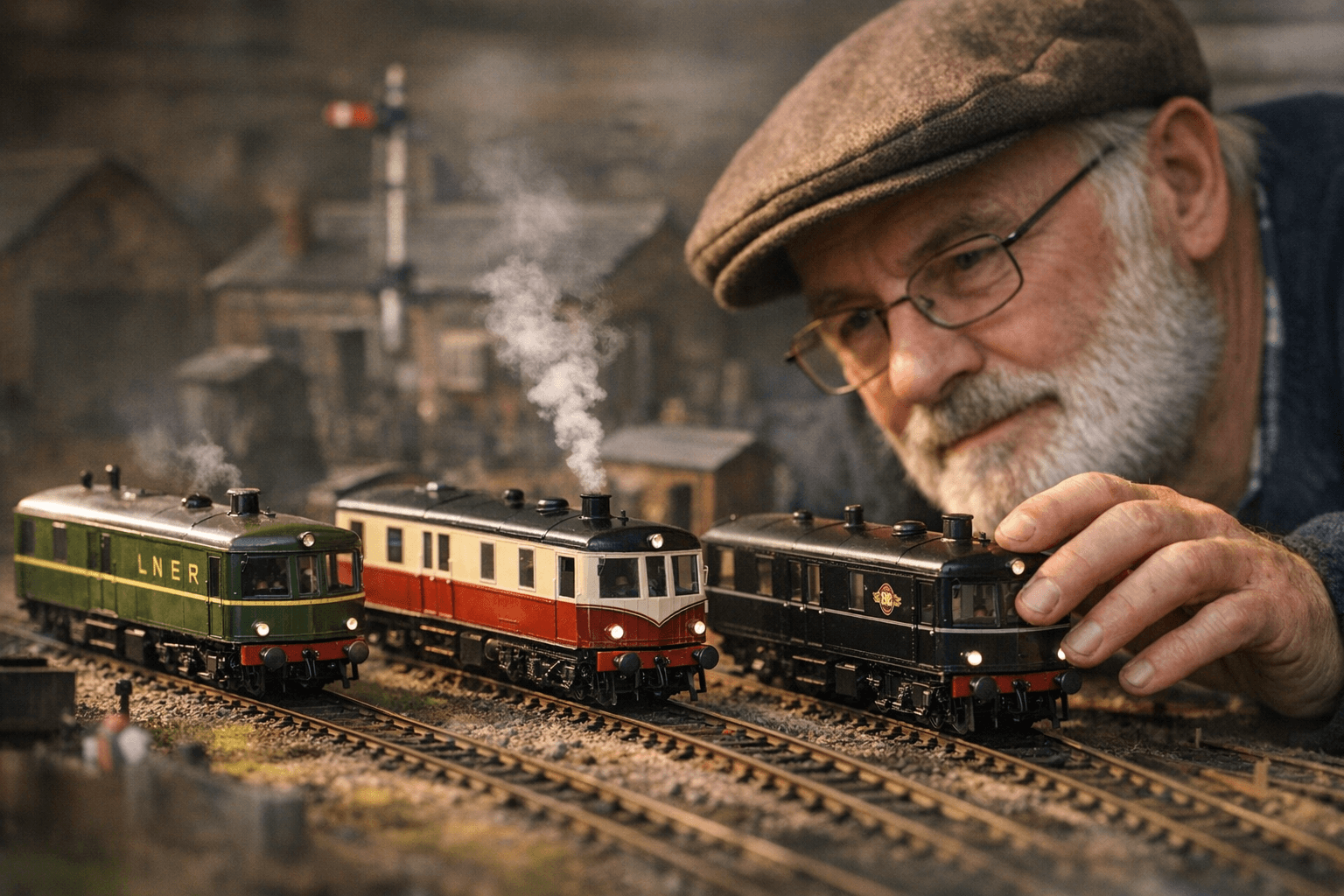
Heljan has opened up one of the most distinctive corners of LNER branch-line operation with an all-new ready-to-run OO gauge model of the Sentinel-Cammell steam railcars. The project covers Diagram 96 and Diagram 97 vehicles, and Heljan says it is the first major release since becoming part of the Accurascale group, with delivery scheduled for Q2 2027.
That matters because the prototype was never just an oddity. The LNER introduced the railcars between 1925 and 1932 to cut operating costs and improve branch-line services, and the fleet eventually reached 80 vehicles across 13 diagrams, with Diagrams 96 and 97 emerging as the most numerous types. Their backstory reaches to a 1924 British Empire Exhibition display, where the design came to A. C. Gresley’s attention after earlier work by Sentinel Waggon Works of Shrewsbury and Cammell Laird of Nottingham.
For layout builders, the appeal goes well beyond novelty. Heljan says the real railcars worked across North London, East Anglia, the Midlands, Cheshire, Scotland, Yorkshire and the North East, which makes them a strong fit for lightly trafficked branch lines, commuter stubs and rural services that rarely get headline RTR treatment. They were, in Heljan’s own words, “victims of their own success,” often attracting more passengers than they could always carry. That kind of operation gives modelers a believable reason to run a short, self-contained train in a way that feels rooted in actual railway practice rather than generic branch-line filler.
Heljan is also backing the model with a broad livery spread. The initial range includes LNER green and cream in multiple variations, Cheshire Lines Committee light and dark brown, LNER wartime brown, LMS crimson lake and a BR crimson-and-cream what-if scheme for an imagined post-nationalisation survivor. That mix makes the release useful for strict pre-war and wartime scenes, but also for preservation-style or collector displays where visual variety matters as much as prototype fidelity.
The specification is equally ambitious. Heljan has fitted five separately switchable lighting functions in DCC mode, saloon and cab lighting, bi-colour LED head and tail lamps, ESU-designed electronics with Stay Alive capacitors, a Next18 decoder interface, a factory-fitted speaker and optional factory-fitted DCC sound. The cars also include a low-profile motor under the saloon, a detailed interior with partitions and reversible seating, plus diagram-specific details such as toplight vents on Diagram 96 vehicles and droplight windows on Diagram 97 examples.
For OO gauge modelers looking for a centerpiece with real scene-building value, this is the kind of release that can define a layout rather than merely populate it. Heljan has not simply added another pre-nationalisation train to the range; it has brought one of the LNER’s most characteristic branch-line machines back into the mainstream RTR conversation.
This article was produced by Prism’s automated news system from verified source data, official records, and press releases, then run through automated quality and moderation checks before publishing. The system is built and supervised by the people who set the standards it runs under. Read our full AI policy.
Did this article answer your question?