High Wycombe model railway society open day offers layouts, repairs, sales
The High Wycombe society’s open day goes beyond a display, letting visitors run trains, test models and shop sale stock in one stop.
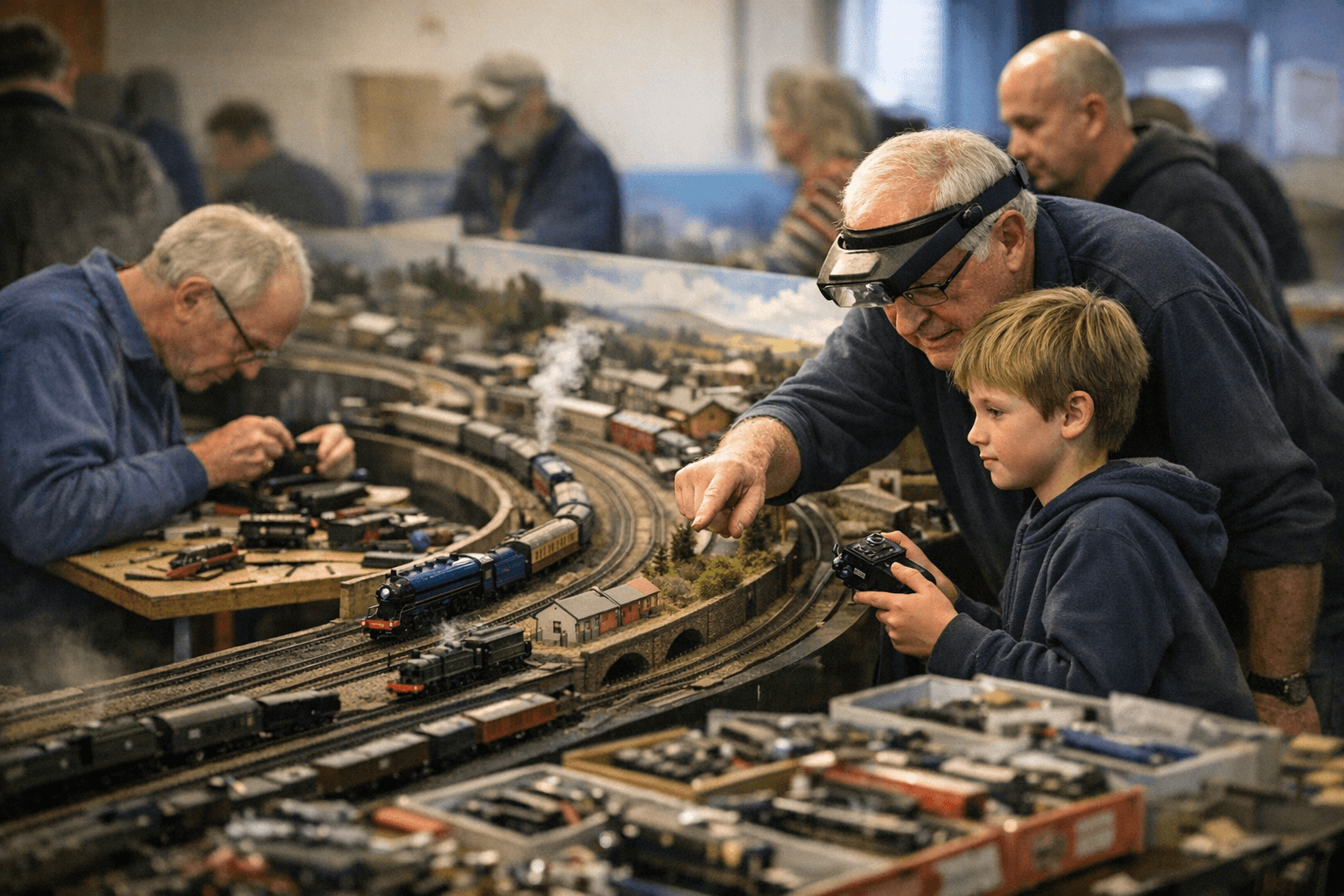
A clubroom that lets you run trains, browse sale stock and put your own locomotives on a test track is doing far more than hosting a display. At the High Wycombe & District Model Railway Society, the open day turns a club visit into a working session, a shopping trip and a low-pressure lesson in how the hobby actually functions.
A clubroom built for participation
The society says it was formed in the late 60s or early 70s, and it presents itself as one of the leading model railway societies west of London, if not in the South East. That confidence makes sense when you look at what is on offer in its dedicated clubroom at 11 Duke Street, High Wycombe, overlooking Platform 3 of High Wycombe station. This is not a sealed-off showroom. It is a place where operating sessions, practical advice and visitor access are part of the rhythm of the year.
The club says its layouts are worked during Monday and Wednesday evening sessions and Thursday mornings, which gives the open day context. The public event is not a one-off stunt; it sits inside a year-round routine of running, maintaining and refining layouts. For anyone who has ever felt that model railroading starts with too many unknowns, that matters. It means the club is set up not just to display finished scenes, but to show how layouts live and evolve.
What the open day lets you do in one visit
The open day listed for Saturday, April 18, 2026, from 10 a.m. to 3:30 p.m. is especially useful because it brings several parts of the hobby together at once. Visitors can see the layouts, join in operating and browse sale stock, which makes the visit feel practical rather than passive. You are not just looking at track plans and scenery; you are watching how trains are handled, how a session is run and what kinds of stock circulate through a club environment.
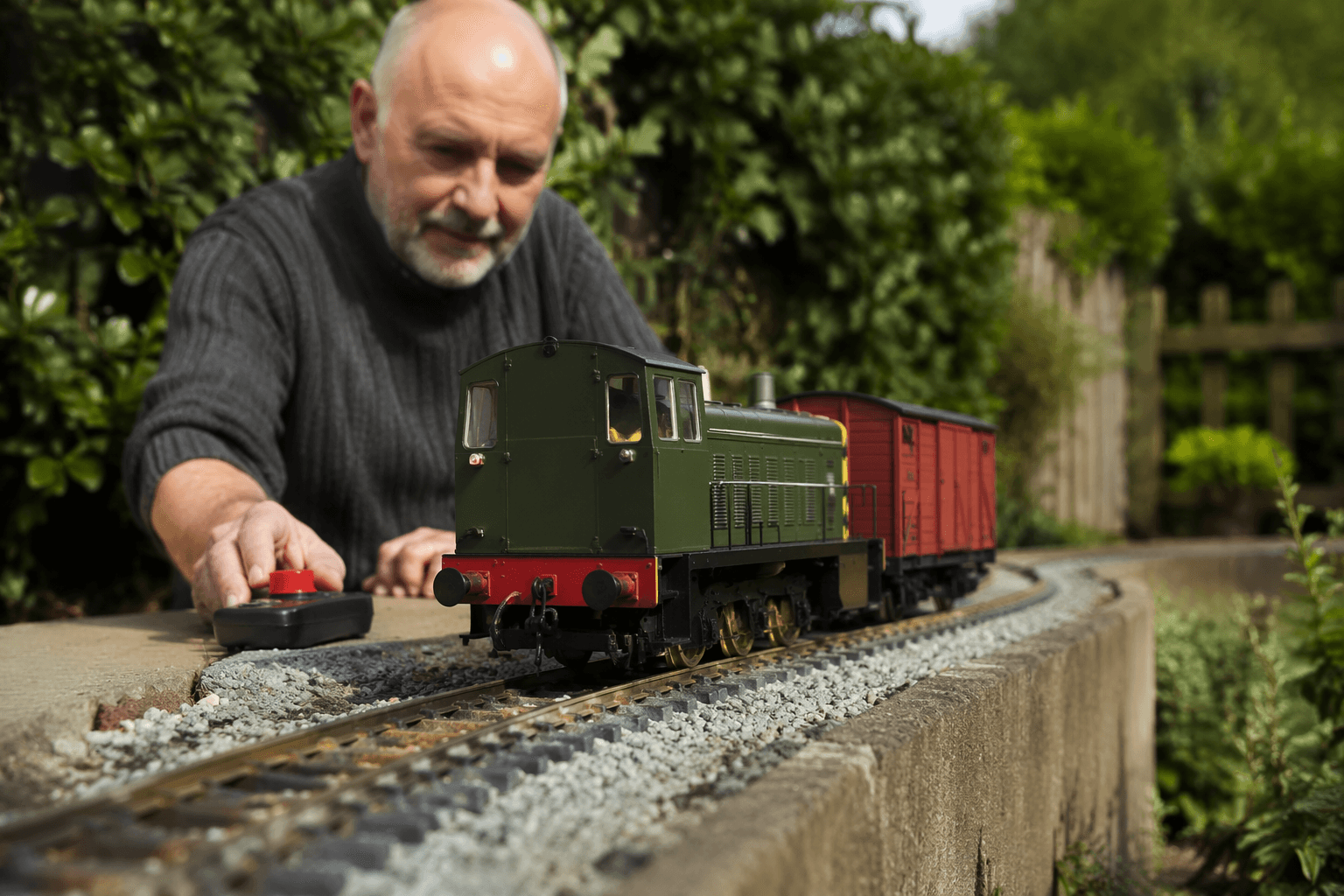
The most unusual part is the invitation to bring your own models for a health check or to run them on the club’s test track. That lowers the barrier for anyone trying to figure out why a loco hesitates, whether a wheelset is out of line or if a model needs tuning before it reaches the layout. In a single visit, a serious buyer or a curious newcomer can compare different running qualities, ask questions about care and wiring, and leave with a better sense of what works before spending more money.
The club’s layout list also tells you a lot about the breadth of the room. It says it has British and American genres in OO/HO, 00-9 and On30, plus a test track covering 0, 00/H0, 12mm and N gauges. That spread gives visitors a rare chance to see several scales and narrow-gauge approaches side by side, which is exactly the kind of hands-on exposure that helps narrow the gap between interest and commitment. If you are deciding between a first layout in N scale or a larger OO/HO project, or trying to understand what changes when you move into 00-9 or On30, this is the sort of room that makes those choices tangible.
Why sale stock and test track matter to beginners
The sale-stock table is not just a convenience. Used and surplus items are often the cheapest way into the hobby, and they can keep money circulating inside the model railroading ecosystem rather than pushing a newcomer straight to the highest-priced option. That makes the open day useful for people who want to buy carefully, test before they commit and avoid the common beginner mistake of choosing a model before knowing how it runs.
The test track is just as important. A layout can be impressive, but a test track tells you whether a locomotive is smooth, whether a wheelset needs attention and whether the running qualities match what you expect from the box. Paired with the offer of a health check, it creates a kind of hobby triage: quick diagnosis, practical advice and a chance to see whether a model is ready for home use or needs more work first. For newer modelers, that kind of feedback can be the difference between a frustrating purchase and a confident one.
Because the society says regular Clubroom Open Days happen throughout the year, the April listing also points to something bigger than a single Saturday. Model railroading communities stay healthy when access is recurring, not rare. A first visit can become a second visit, then a question about wiring, then a return trip with another locomotive to test. That slow path into membership is often how real hobby communities are built.
How to get there and what else is on the calendar
The practical access details are unusually friendly. The nearest bus stop is Duke Street in Totteridge Road, served by Arriva routes 27, 31, 33 and 41. High Wycombe railway station is about a two-minute walk away, which makes rail access especially easy for visitors arriving by Chiltern Railways or anyone connecting through the station. If you are driving, the adjoining station car park and nearby road parking are available.
The open day also sits inside a busier 2026 calendar. The society’s events listing includes MRX26 on April 11, 2026, and Wycrail on November 7, 2026, showing that the club’s outreach and exhibition work is spread across the year rather than concentrated in one season. That kind of schedule reinforces the same message as the open day itself: this is a club that keeps its doors open in practice, not just in name.
For anyone weighing a first step back into the hobby, the value is straightforward. In one visit, you can watch layouts in action, test your own stock, buy second-hand models, and talk to people who keep British and American layouts running across several gauges. That is a rare amount of participation for a single open day, and it is exactly the sort of access that turns curiosity into a working knowledge of the hobby.
This article was produced by Prism’s automated news system from verified source data, official records, and press releases, then run through automated quality and moderation checks before publishing. The system is built and supervised by the people who set the standards it runs under. Read our full AI policy.
Did this article answer your question?