PIKO April 2026 release spans G, HO, TT, and N scale models
PIKO’s April wave is a continental buffet: premium G-scale showpieces, HO freight and motive power, and an N program that keeps stretching beyond Germany.
What this release wave says about the market
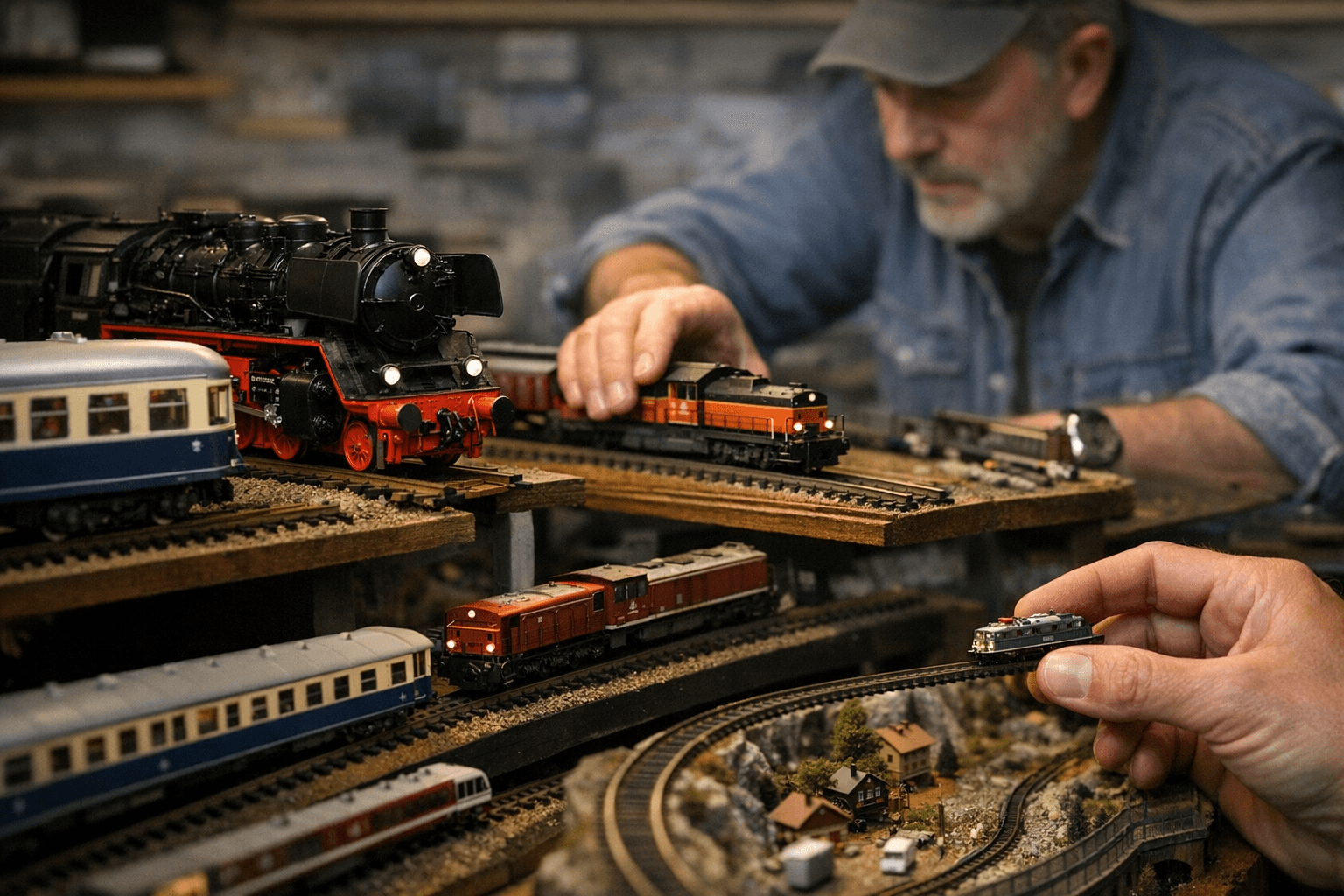
PIKO’s April 2026 slate is not just a product drop, it is a snapshot of where the hobby is heading. Announced on March 26, 2026, and packaged in a dedicated April flyer for G, H0, TT, and N, the program mixes premium showpiece locomotives, practical freight stock, and digital tools in a way that matters even if your own layout runs on American railroads. The signal is clear: the modern model-railway market is increasingly multi-scale, prototype-driven, and built around whole ecosystems rather than single locomotives.
For North American readers, the key question is not whether every item belongs on a U.S. pike. Most of it does not. The real value is in seeing how a major manufacturer is balancing continental European prototypes, compact-layout options, and DCC support across four scales at once. That mix says as much about the direction of the hobby as any one release does.
G scale goes big, and expensive
The headline G-gauge items are built for modelers who want theater as much as operation. PIKO puts the DR Class 95 steam locomotive and the ET91 Gläserner Zug at the front of the large-scale line-up, and the ET91 in particular reads like a statement piece. It is priced at €1,650, comes factory-fitted with sound and a decoder, includes interior lighting and an illuminated driver’s desk, and arrives with pre-installed figures. At 824 mm long, it is also a serious presence on the layout, and the 600 mm minimum radius tells you immediately that this is not a casual shelf model.
That combination of sound, lighting, figures, and long-wheelbase drama makes the ET91 a premium purchase for gauge-1 and G-scale modelers who want a finished, presentation-grade train rather than a project. Its estimated delivery at the end of April 2026 gives the release a concrete, near-term hook, but its real significance is broader: large scale continues to be a space where manufacturers can justify high-end detailing and strong pricing when the prototype and the presentation feel special enough.
HO carries the widest appeal
The HO side of the slate is where PIKO shows its range. The line includes Rh 500 locomotives from VSM, Hungarian M44 shunters, and the BR V200 1001 in Messe Leipzig form, with both standard and sound-equipped versions available. That variety matters because it stretches across different railways, eras, and operator types, from classic diesel power to compact shunting work.
The most talk-worthy HO item for many collectors is the BR V200 1001, item 52584, priced at €179 and expected at the end of April 2026. PIKO ties the model to a 1965 special-design concept first shown with V 180 059, using fiberglass-reinforced polyester roof and front-wall sections and steeply inclined front windows to create its distinctive look. That backstory gives the model more than just a locomotive body number; it gives it a design lineage, which is exactly the sort of detail that keeps prototype-focused buyers interested.
Freight stock is part of the story too. PKP Fals side-discharge wagons and ATIR Rail sliding-wall wagons may not carry the same display appeal as a locomotive with a museum-style pedigree, but they matter in a different way. They add operating texture, traffic variety, and train length options, which is often what makes a layout feel alive once the headliner locomotives have had their moment.
TT and N keep the compact-layout crowd in play
PIKO’s TT and N offerings extend the same international flavor into smaller footprints. Modern DB, RailCargoGroup, and Train Charter traction keeps the program pointed at contemporary European railroading rather than nostalgia alone, which should resonate with builders who want current-era trains and cleaner, more modular consists.
N scale gets a particularly useful framing in PIKO’s 2026 catalog. The company says its 1:160 program restarted in 2011, a reminder that this is still a relatively young branch of the line compared with older, more established product families. The catalog highlights the RegioShuttle RS1, sold in DB BR 650 guise, as a 2026 headline and notes that nearly 500 were built, with the prototype spreading beyond Germany into the Czech Republic. That is a strong clue about PIKO’s strategy in N: focus on proven, versatile regional equipment that can appeal to both domestic European modelers and anyone building a compact, modern-era layout.
For smaller-space builders, that matters. The RS1 is the kind of prototype that fits the realities of tabletop and apartment layouts while still feeling contemporary and operationally useful. It also reinforces the broader theme of the April release wave: even in the smallest scales, PIKO is thinking internationally.
Digital support is part of the product now
The flyer does not stop at rolling stock. PIKO also pushes SmartProgrammer items, which shows that the company is selling more than locomotives and wagons. It is selling the surrounding DCC environment as part of the package, from decoder setup to the tools that make tuning easier once the model is on the layout.
That matters because it points to a broader industry shift. A release wave like this is no longer just about what sits on the rails. It is about what sits behind the scenes, how the decoder is managed, how sound is configured, and how easily a model can be integrated into a running roster. For a brand trying to keep pace across multiple scales, digital support is becoming as important as the casting and printing itself.
What North American readers should take from it
If you model U.S. prototypes exclusively, this is mostly a watch-and-learn release, not a must-buy list. The strongest European bias runs through the whole program, from DR and DB material to Hungarian, Polish, and Czech connections. Even so, the wave is worth attention because it shows where the wider market is putting its energy: cross-scale choice, prototype specificity, premium detail, and built-in digital readiness.
The most telling detail may be the simplest one. PIKO is not treating April as a one-off locomotive reveal. It is pairing locomotives, freight stock, accessories, and catalog support with trade-fair and Open House promotion, which makes the release feel like a company-wide 2026 push. That is the real takeaway for model railroaders on this side of the Atlantic: the future of the hobby is increasingly about complete systems, and PIKO’s April slate is leaning hard into that reality.
This article was produced by Prism’s automated news system from verified source data, official records, and press releases, then run through automated quality and moderation checks before publishing. The system is built and supervised by the people who set the standards it runs under. Read our full AI policy.
Did this article answer your question?