Rapido Trains unveils HO scale SW9 switcher with road-specific detail options
Rapido’s SW9 arrives with road-specific details and a roster that reaches from Boston and Maine to Toronto, Hamilton and Buffalo. Atlas answered with an O-scale well car and a Canadian HO boxcar.
A switcher with road-specific details, a rebuilt well car built for modern intermodal work, and a Canadian boxcar with deep prototype roots showed three very different corners of the model railroad market still have room to grow. The common thread was not size or era, but specificity: the kind of equipment that lets a layout feel tied to a railroad, a terminal, or a memory of the prototype.
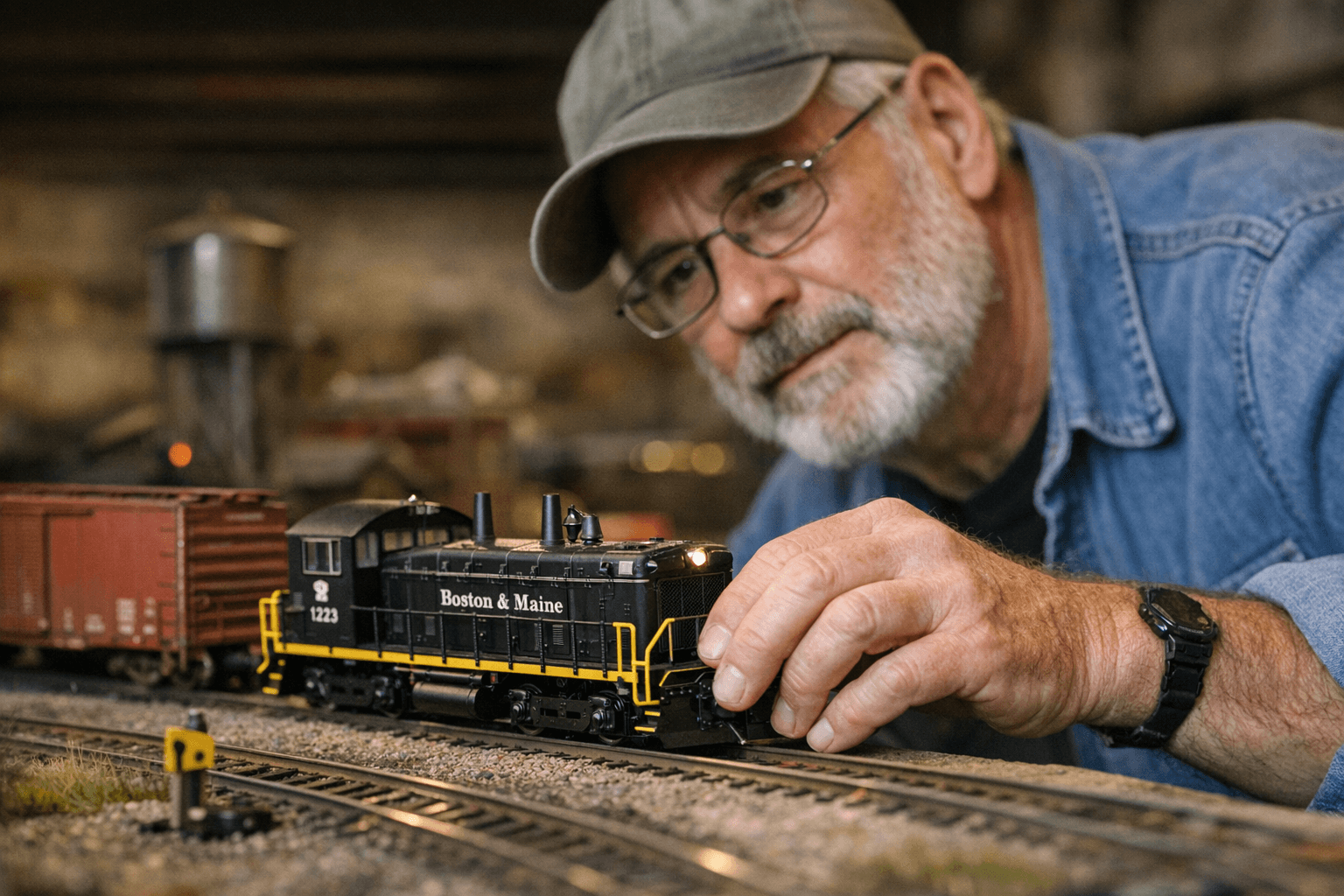
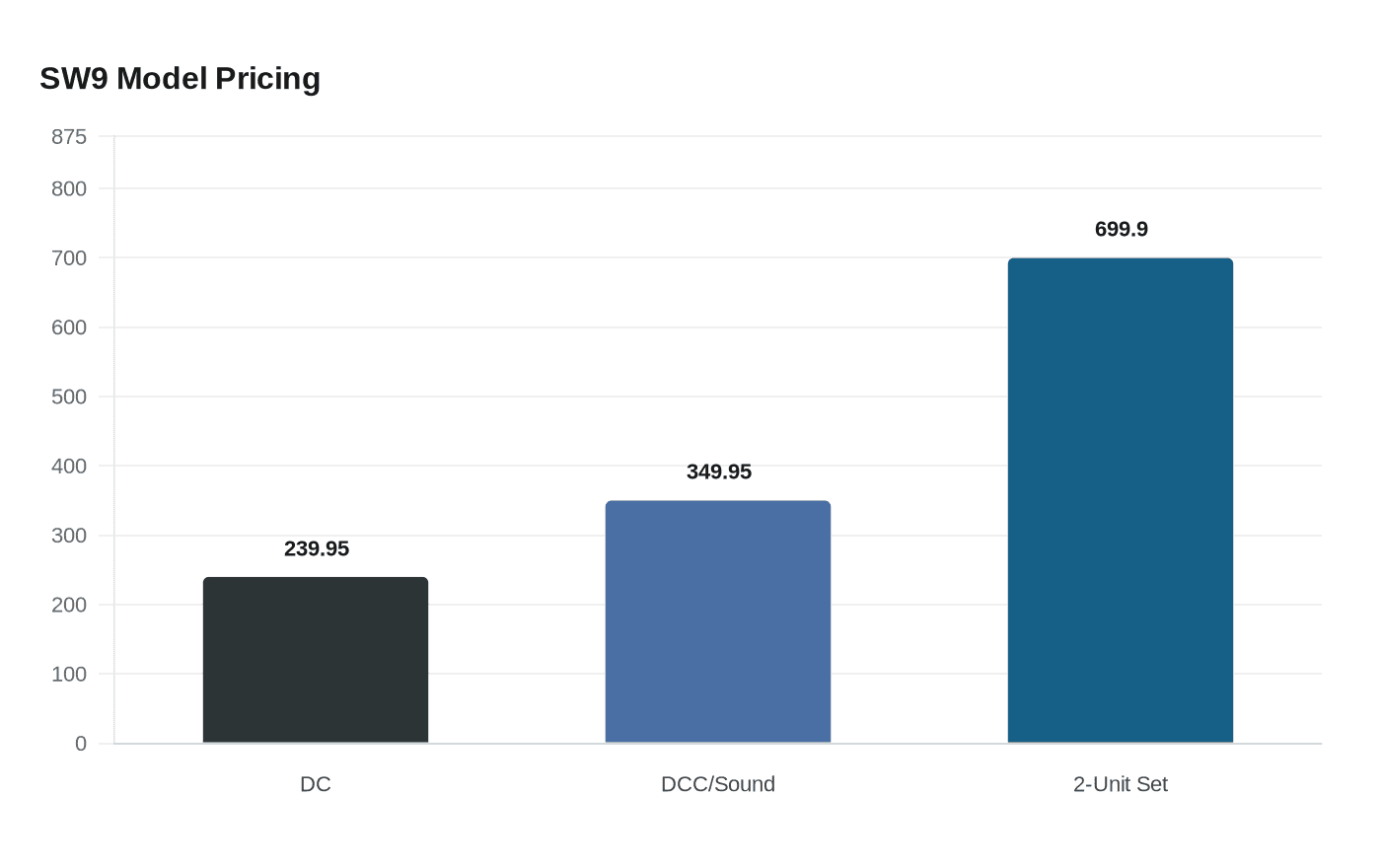
Rapido Trains’ HO scale Electro-Motive Division SW9 led the mix with a wide spread of paint schemes that includes Boston and Maine, Atchison, Topeka & Santa Fe, Canadian National, Canadian Pacific Railway, Erie-Lackawanna, Illinois Central, Louisville & Nashville, New York Central and Toronto, Hamilton & Buffalo. More focused DCC and sound-only versions were also listed for Soo Line, Cambria & Indiana and a Canadian National post-1954 version, a clear signal that railroad-specific rosters still matter as much as broad road name coverage. The model comes in at $239.95 for DC, $349.95 for a single DCC/sound unit and $699.90 for a two-unit set, with road-specific details, see-through etched metal parts, a detailed cab interior, LED lighting and Rapido semi-scale metal couplers. Rapido backs the release with a strong prototype story: nearly 800 SW9s were built at La Grange from November 1950 to December 1953, 29 more were built in London, Ontario for Canadian National and Canadian Pacific, and Illinois Central’s order for 70 units was the largest in the run. Rapido says the locomotive rode on the 567B prime mover, with some units later upgraded to the 567BC engine.
Atlas brought a different kind of purchase decision in O scale with its Master Line 40-foot rebuilt well car, priced at $119.95 and offered in TTX and Maersk. The car is based on TTX’s rebuilt 48-foot wells, a practical response to a fleet that was not being discarded but reshaped, with some cars shortened to 40 feet and others lengthened to 53 feet. Atlas lists minimum radii of O-54 for 3-rail and 36 inches for 2-rail, and the model includes a die-cast body, etched-metal walkways, detailed brake rigging and sprung die-cast trucks with rotating bearing caps.
Atlas also used HO scale to tap into Canadian prototype loyalty with its 50-ton Minibox boxcar at $49.95. The model, based on former True Line Trains tooling, comes in three road numbers per scheme and includes Youngstown-style doors, separately applied ladders and brake details, metal wheelsets and body-mounted Accumate couplers. Atlas says 7,500 of the Canadian Pacific Minibox cars were built between 1929 and 1930, that the design bridged the ARA 1923 and ARA 1932 boxcar standards, and that survivors kept working until 1983, with some lasting in maintenance-of-way and storage service until 1993. Taken together, the three releases point to a market that still rewards railroad accuracy, road-specific detail and equipment that tells a longer operational story than a simple new-item announcement.
This article was produced by Prism’s automated news system from verified source data, official records, and press releases, then run through automated quality and moderation checks before publishing. The system is built and supervised by the people who set the standards it runs under. Read our full AI policy.
Did this article answer your question?