Viessmann launches limited-edition CarMotion Actros truck with test mat
Viessmann paired a limited-edition Actros with a printed roadway mat, making CarMotion easier to test, tune and bring to shows before a full road system is built.
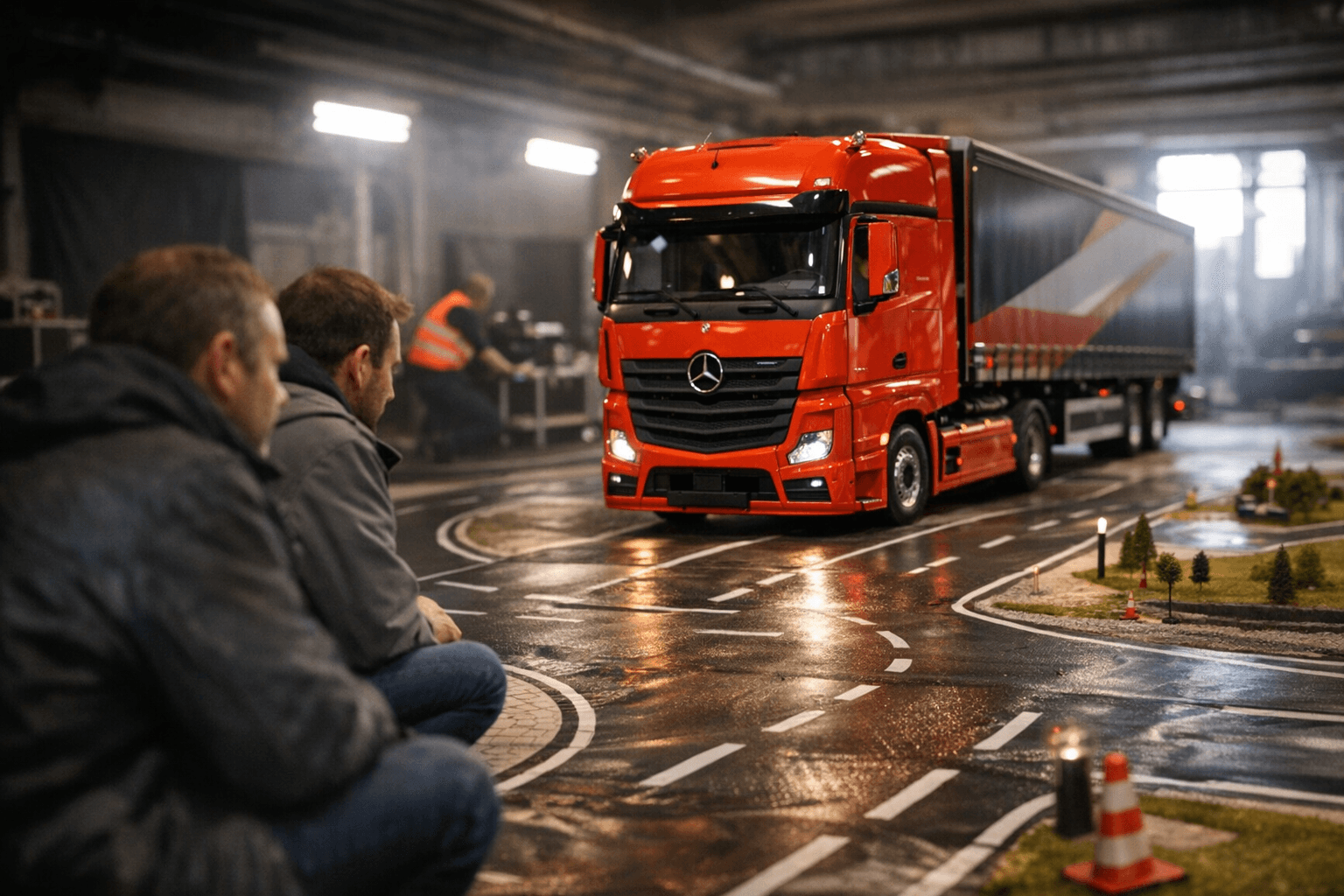
The most useful part of Viessmann’s latest CarMotion release is not the truck itself, but the printed-cardboard roadway that lets a layout builder try the system without committing to a permanent street network. Item 8461, designed for the CarMotion Basic Module, is aimed squarely at testing and demonstration, giving club builders and exhibition crews a fast way to sort out route geometry, magnet placement and vehicle behavior before any road surface is fixed in place.
That matters because CarMotion has been moving beyond a novelty and into infrastructure. Viessmann says the system uses magnetic tape under the road for guidance and permanent magnets for control functions, with integrated motors, adjustable driving behavior, automatic cruise control and functional lighting. The company also traces CarMotion back to former Kibri stationary models that were motorized and fitted with electronics and lighting, which helps explain why the current range feels less like a gimmick and more like a working traffic system for 1:87 scenes.
The headline vehicle is item 8116, a limited-edition H0 Mercedes-Benz Actros 2-axle box body CarMotion functional model. Retail listings put the suggested price at €214.95, with availability beginning in mid-May 2026 and one dealer listing the delivery date as 18 May 2026. The model is described as a trade-fair or exhibition release in limited quantity, and the prototype data points to a Mercedes-Benz Actros Type 2040 with a V6 producing 290 kW, or 394 hp, plus a 32.5 m³ box body. Its EAN is 4026602081168.
That combination of a special-run truck and a reusable test surface is the practical story for readers who want motion without rebuilding half a layout. The roadway mat lowers the risk of getting started, especially for those trying to add movement to freight yards, depot scenes or a road crossing for the first time. Viessmann says the roadway accessory is made of precisely printed cardboard and is not intended for continuous operation, which makes its role clear: test, demonstrate, adjust, then decide how far to go.
CarMotion already has the pieces to support that workflow. Viessmann says the trucks can technically handle slopes up to 38 percent, with 15 to 20 percent described as practically achievable, while the starter set includes a magnetic wand for simple start-stop scene control. Retail listings also say the vehicle batteries can run about four to six hours under normal conditions, or about two hours at maximum speed. Seen that way, the limited-edition Actros is less a static display piece than another step toward turning road traffic into a working part of the model railway scene, and the Dortmund Intermodellbau link showed how seriously Viessmann is positioning it.
This article was produced by Prism’s automated news system from verified source data, official records, and press releases, then run through automated quality and moderation checks before publishing. The system is built and supervised by the people who set the standards it runs under. Read our full AI policy.
Did this article answer your question?