NBA 2K25 James Worthy template build delivers balanced scoring forward blueprint
A Worthy template gives Rec and Park players a mobile power forward who can finish, post up, and survive on defense. The best move is often to borrow the blueprint, not copy it blindly.
What the James Worthy template solves
If your Rec squad keeps running into the same problem, a forward who can’t finish in traffic, can’t punish switches, and disappears once the offense slows down, the James Worthy template is built to fix that. It gives you a do-everything power forward who can run the floor, attack the rim, score from the mid-range, and still stay mobile enough to matter when possessions turn into half-court chess.

That is why this kind of build has real value beyond the legend name. The template is aimed at players who want a forward that can be a transition weapon, a post-up option, and a secondary connector without turning into a stationary spot-up piece. In practical MyPLAYER terms, that means you are getting a forward who can solve roster gaps, not just chase a highlight reel.

The blueprint, broken down
The template uses a power forward at 6'9, 225 pounds, with a 7'0 wingspan. That size is the first clue that this is not meant to be a pure stretch four or a brute-force paint anchor. It is designed to live between those extremes, with enough length to defend bigger bodies and enough quickness to keep up with modern wing-heavy lineups.
The attribute spread makes that identity obvious:
- Close shot: 92
- Driving layup: 85
- Driving dunk: 89
- Standing dunk: 85
- Post control: 87
- Mid-range shot: 80
- Three-point shot: 75
- Free throw: 78
- Pass accuracy: 80
- Ball handle: 75
- Speed with ball: 68
- Offensive rebound: 60
- Defensive rebound: 60
- Interior defense: 73
- Perimeter defense: 80
- Steal: 60
- Block: 43
- Speed: 75
- Agility: 75
- Strength: 79
- Vertical: 78
Read together, those numbers tell a very specific story. The Worthy build is a scoring forward first, a mobility piece second, and a specialist only in the sense that it specializes in versatility. The 89 driving dunk, 85 standing dunk, and 78 vertical make it dangerous as a rim runner. The 92 close shot and 87 post control give it real value against smaller defenders. The 80 mid-range and 75 three-point shot mean it can keep a defense honest instead of clogging the lane.
Why Worthy is the right legend for this role
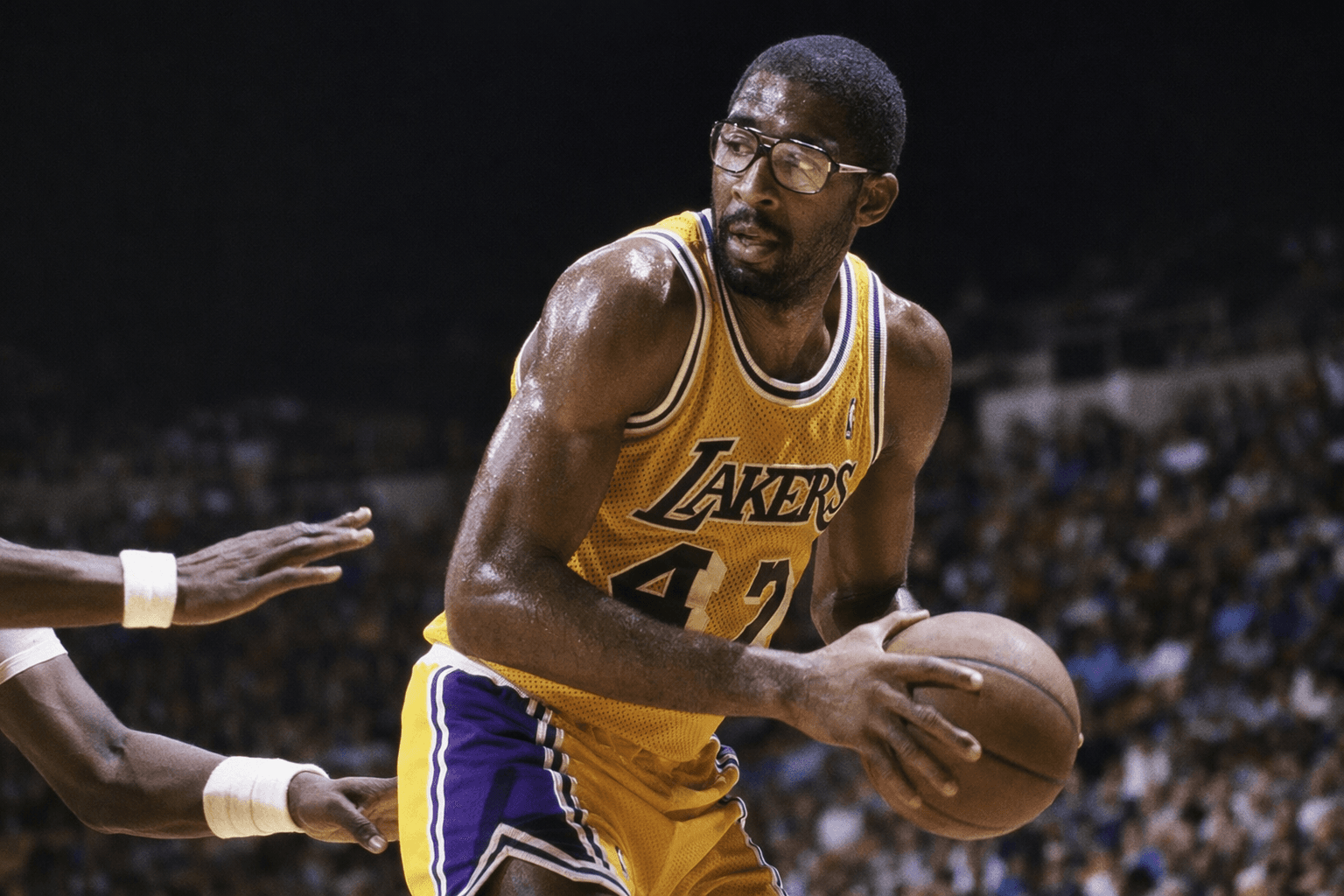
James Worthy is not being used here as a nostalgic label slapped onto a generic build. His real career matches the template almost too cleanly. He starred on North Carolina’s 1982 NCAA title team, was the No. 1 pick in the 1982 NBA draft, and went on to win championships with the Lakers in 1985, 1987, and 1988. He made seven NBA Finals appearances and won Finals MVP in 1988.
That matters because Worthy’s identity was never just “good scorer.” He was the explosive, versatile forward who fit the Lakers’ up-tempo Showtime style beside Earvin “Magic” Johnson, and his biggest moments came when the games got bigger. NBA.com’s historical coverage says he averaged 22 points, 7.4 rebounds, and 4.4 assists in the 1988 Finals, then finished Game 7 with 36 points, 16 rebounds, and 10 assists. That is the profile the template is chasing: a forward who can be a pressure point in transition and a problem in winning time.
Where this build actually helps in Rec and Park
This template is most useful when your team already has a primary creator and a true interior center, but needs a forward who can do a little bit of everything without dragging down pace. In Rec, that means you can space the floor, attack closeouts, and still switch onto wings instead of getting hunted every possession. In Park, it means you can punish mismatches, finish possessions quickly, and keep your movement clean enough that the offense does not stall.
The most common roster problems this build solves are simple:
- A frontcourt player who can score without demanding the ball every trip
- A forward who can rebound enough and defend enough to stay playable
- A slashing big who is not useless when the offense swings to the perimeter
- A small-ball four who can still post up smaller defenders
The 80 perimeter defense is especially important here. That number is part of what keeps the build relevant in modern lineups, because it means you are not automatically forcing your team to hide you every time the other side spaces the floor.
The tradeoffs versus the meta PF builds
The Worthy template is balanced, but balance comes with a ceiling. If you want the most extreme version of a meta power forward, this is not that. It does not give you elite block or high-end rebounding numbers, and the 75 three-ball will not satisfy players who want to live in five-out spacing as a first option. The 43 block and 60 rebound ratings are the biggest reminders that this is not a paint-erasing anchor.
Compared with pure stretch PFs, the Worthy build gives up some shooting gravity for much stronger rim pressure, better post control, and more vertical finishing. Compared with lockdown forwards, it gives up some defensive ceiling for real scoring versatility. Compared with inside-only bruisers, it keeps enough speed, agility, and perimeter defense to avoid feeling stuck in mud. That is the trade: you are giving up specialization in exchange for a forward who can solve more problems on more possessions.
Start from the template, or just borrow the blueprint?
This is where the official Community Builds system matters. NBA 2K describes Community Builds as blueprints you can use to build a MyPLAYER to compete at the highest level, and if you use them as-is, they can come with the creator’s recommended Signature Animations and Takeover already attached. The MyPLAYER Builder also now includes an Animation Glossary and detailed Scouting Reports, which makes it easier to understand why a build performs the way it does instead of guessing.
That is why the Worthy template is worth using as a starting point, but not always worth copying blindly. If you want a ready-made forward with a clear identity, strong mobility, and a useful all-around package for Rec or Park, the full template is a strong choice. If you already know your squad needs a little more rebounding, a little more shooting, or a different animation path, then the smarter move is to borrow the attribute blueprint and tune it to your role.
The clean verdict is simple: James Worthy is one of the best starting points for players who want a versatile scoring forward without sacrificing mobility, but the real win is understanding why it works, then deciding whether your team needs the whole build or just the skeleton underneath it.
This article was produced by Prism’s automated news system from verified source data, official records, and press releases, then run through automated quality and moderation checks before publishing. The system is built and supervised by the people who set the standards it runs under. Read our full AI policy.
Did this article answer your question?