NBA 2KW spotlights Evan Mobley template build for NBA 2K26
Mobley’s template gives NBA 2K26 players a switchable, two-way big built for rim protection and perimeter coverage, not just paint camping.
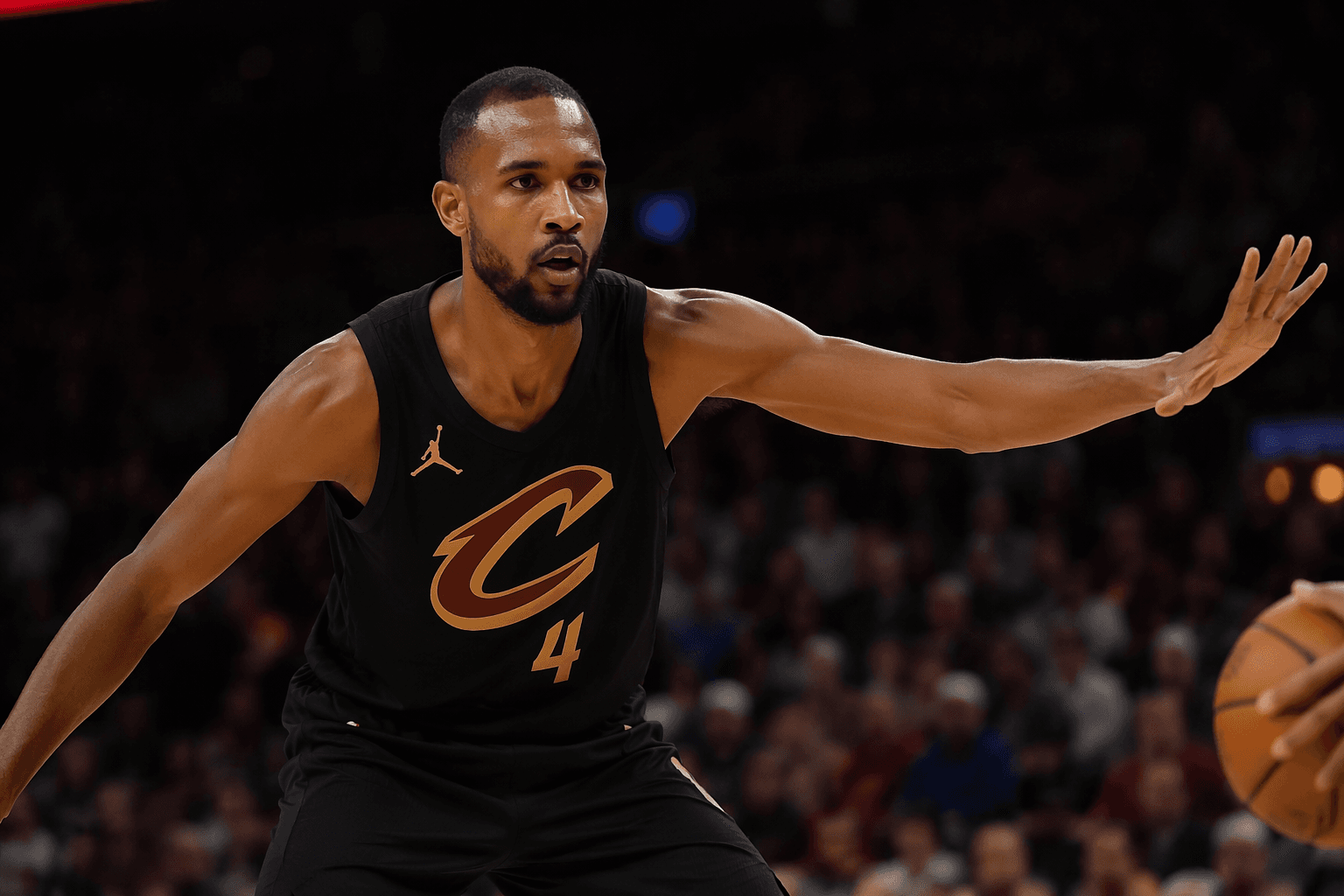
If you want a MyPLAYER that can protect the rim without getting exposed on the perimeter, the Evan Mobley template is the cleanest big-man blueprint in NBA 2K26. NBA 2KW’s new guide turns one of the league’s most modern defenders into a ready-made build for players who want length, mobility, and real two-way value from the start.
Why the Mobley template works
NBA 2KW frames Mobley as a highly versatile two-way interior anchor, and that description gets to the heart of the build. This is not a pure paint-only center that only exists to stand under the basket and rebound. It is the kind of frontcourt template that can cover space, switch onto threats, and still finish possessions at the rim, which is exactly the profile many players want in a modern 4 or 5.
The practical appeal is simple: NBA 2K26 rewards bigs who can defend without becoming a liability when the action shifts away from the lane. Mobley’s real game fits that demand almost perfectly. He is long enough to bother shots at the rim, agile enough to slide with perimeter players, and active enough to matter in transition and pick-and-roll action.
What the official template system gives you
This guide is part of NBA 2KW’s larger NBA 2K26 template-build hub, which is built around recreating real NBA players instead of making you guess your way through the builder. The site says these templates mirror authentic player replicas with exact height, weight, signature moves, jump shot, and more. That matters because the whole point of a template build is to remove uncertainty and give you a tested starting point that already reflects a recognizable NBA identity.
NBA 2K’s official MyPLAYER Builder guide backs up that approach. It says Community Builds are competitive templates that can be used as a blueprint for MyPLAYER creation, and if you use the build as-is, it comes pre-equipped with the builder’s recommended Signature Animations and Takeover. That makes the Mobley template especially useful for players who want to get on the floor fast with a defensive big, or for MyNBA and franchise players who want a realistic role-player profile rather than a chase for pure scoring upside.
How to build it correctly
The key to making the Mobley template work is to respect what it is trying to be. The strength of the build comes from defense-first versatility, so the important decisions are the ones that preserve rim protection, lateral movement, and reliable finishing. NBA2KLab’s NBA 2K26 rating profile reinforces that identity: Mobley is listed at 89 overall with 96 interior defense, 82 perimeter defense, 86 block, and 95 help-defense IQ.
That rating spread tells you what to value in the builder. You want your build to stay anchored in interior defense and shot-blocking while keeping enough mobility to survive switches and closeouts. You also want your body type and physical setup to reflect a modern big, not a slow traditional center that loses the very movement that makes Mobley special.
- A defensive 4 who can guard the lane and still survive on the perimeter
- A versatile 5 in REC who can protect the rim and keep up in space
- A Park big who punishes mistakes without needing to dominate the ball
- A MyNBA or simulation build that mirrors an actual NBA identity rather than a meta-scoring mold
For the players who get the most out of this template, the build usually makes sense in a few clear roles:
Because this is a template, the smartest play is usually to keep the structure intact and only make changes that preserve the core traits. The more you drift away from the two-way interior anchor concept, the more you risk turning a polished replica into an ordinary big man with worse movement.
The badge and animation logic behind the build
Even without treating the Mobley build like a pure badge-hunting project, its value is easy to understand. The profile is built around the kind of defensive tools that let you contest at the rim, recover to the perimeter, and stay active in help defense. That means your badge choices should reinforce protection, coverage, and recovery rather than trying to force the build into a scoring-heavy role it was never meant to fill.
The animation side matters too. Since NBA 2K says Community Builds come with the maker’s recommended Signature Animations and Takeover when used as-is, Mobley’s template saves players from the usual trial-and-error process. That is especially important for a defensive big, because the wrong animation package can make a build feel clunky even if the ratings look strong on paper.
Common mistakes that ruin the replica
The biggest mistake is trying to turn Mobley into a traditional bruiser. If you overload the build with size at the expense of movement, you lose the switchability that makes the real player so valuable and the template so appealing. A heavier, slower version may still rebound and sit in the paint, but it stops behaving like Evan Mobley and starts acting like a generic center.
Another common error is chasing offense first. Mobley’s 2025-26 production, listed by ESPN at 18.2 points and 9.0 rebounds per game, shows that he can score and finish plays, but that is not the same thing as building around ball dominance. The template is strongest when it supports efficient scoring, quick reads, and defensive impact, not when it is twisted into a primary shot creator.
It is also a mistake to ignore the perimeter side of the build. NBA2KLab’s 82 perimeter defense rating is part of what makes Mobley such a modern fit, and it is one reason his template matters in NBA 2K26. If you strip away that mobility, you lose the ability to switch, chase, and recover, which is exactly where the build separates itself from old-school center templates.
Why Mobley is the right blueprint now
Mobley’s real-world résumé explains why this template hits so well. He was selected No. 3 overall in the 2021 NBA Draft by the Cleveland Cavaliers, signed a five-year, $224 million maximum rookie extension in July 2024 that could reportedly rise to $269 million, and on April 24, 2025, he was named the 2024-25 Kia NBA Defensive Player of the Year. The NBA also said he became the fifth-youngest player ever to win the award.
That résumé matches the in-game profile almost too neatly. Mobley is already one of the clearest examples of the modern defensive big, and NBA 2KW’s template captures that by focusing on versatility instead of brute force. For players who want a build that can anchor REC lineups, hold up in Park, or simply give MyCAREER a smarter defensive identity, this is the kind of blueprint that saves time and actually makes sense on the court.
In a mode where too many bigs are either one-dimensional rim runners or slow, easy targets on switches, the Mobley template lands in the sweet spot. It gives you the length to erase mistakes, the mobility to stay on the floor, and the kind of all-around defensive shape that makes a MyPLAYER feel built for how NBA 2K26 really plays.
This article was produced by Prism’s automated news system from verified source data, official records, and press releases, then run through automated quality and moderation checks before publishing. The system is built and supervised by the people who set the standards it runs under. Read our full AI policy.
Know something we missed? Have a correction or additional information?
Submit a Tip