Canadian project secures funding to make copper-67 with fusion reactions
Canada is funding a fusion-based copper-67 project aimed at faster cancer isotope supply. The $500,000 Scale-67 effort targets automated purification and a commercial workflow.
A Canadian isotope consortium has put fresh money behind a fusion-based route to copper-67, a medical isotope prized for cancer imaging and therapy because it carries both beta and gamma emissions and decays with a 2.58-day half-life. The goal is not just to make Cu-67 in a lab, but to prove a production path that can be separated, purified, and moved into a commercial workflow fast enough to matter in nuclear medicine.
The Canadian Medical Isotope Ecosystem backed the Scale-67 program with $500,000 as part of its third call for proposals, which closed in 2025 and selected five projects for more than $2 million in total funding. CMIE, launched in 2023 with up to $35 million over five years from the Government of Canada’s Strategic Innovation Fund, said the Development Fund is meant to accelerate collaboration, technology adoption, and training across Canada’s isotope sector. The ecosystem works under the oversight of the Centre for Probe Development and Commercialization and TRIUMF Innovations, and the new project brings together Promation, Astral Systems, and McMaster University.
Copper-67 is the kind of isotope that exposes how tight the medical isotope supply chain really is. A 2021 review in Scientific Reports described Cu-67 as a beta-minus emitter that also produces gamma rays at 93 keV and 185 keV, while the Journal of Nuclear Medicine has noted that copper isotopes are attractive because they can support both diagnostic and therapeutic uses. That same commentary also made the adoption hurdle plain: any new radionuclide has to offer clear access, cost, or clinical advantages before hospitals and isotope centers switch. For Cu-67, the short half-life makes production, chemistry, and delivery a race against the clock.
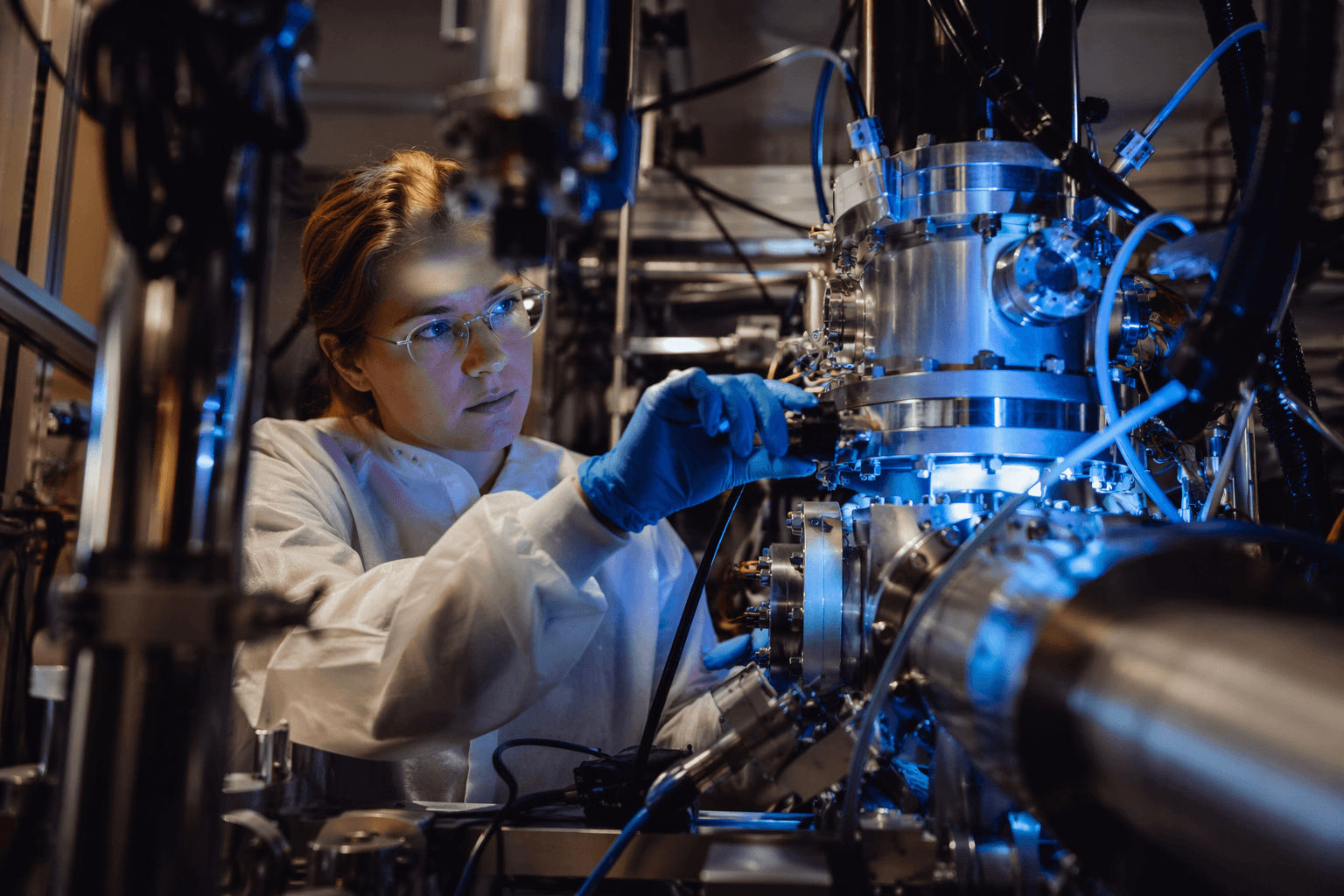
Astral Systems is trying to make that race winnable with its multistate fusion reactors, which generate high-energy neutrons in a compact system by combining fusion in a solid-state lattice with a plasma environment. The University of Bristol said Astral has already developed and demonstrated a first-of-its-kind Multi-State Fusion reactor, and that the company was founded in 2021 by Tom Wallace-Smith and Talmon Firestone. Bristol also said Astral won a £1 million grant from the UK Science and Technology Facilities Council for the MicroNOVA project, aimed at commercialization and medical radioisotope production. In Canada, McMaster will handle isotope processing and purification work while Promation contributes engineering.
The stakes go beyond one isotope. A University of Bristol summary cited a UK government report saying six fission reactors supply more than 90% of the world’s medical isotopes, and that all but one are expected to shut down by 2030. Canada has been trying to harden its own isotope base for years, and earlier Cu-67 work from Iotron Medical Inc. and Canadian Isotope Innovations Corp. showed the same pressure point, with the companies saying in 2021 that Cu-67 was difficult to produce in sufficient quantity and purity with reactors or cyclotrons. Scale-67 is now testing whether fusion neutrons, automation, and chemistry can finally push Cu-67 from promise toward a dependable supply line.
Know something we missed? Have a correction or additional information?
Submit a Tip_38085.jpg&w=1920&q=75)