China to Commission Seven Reactors, Extending World’s Largest Nuclear Buildout
China is set to commission seven reactors in 2026, a pace that widens its lead over the U.S. and Europe and tightens pressure on uranium and fuel supply.
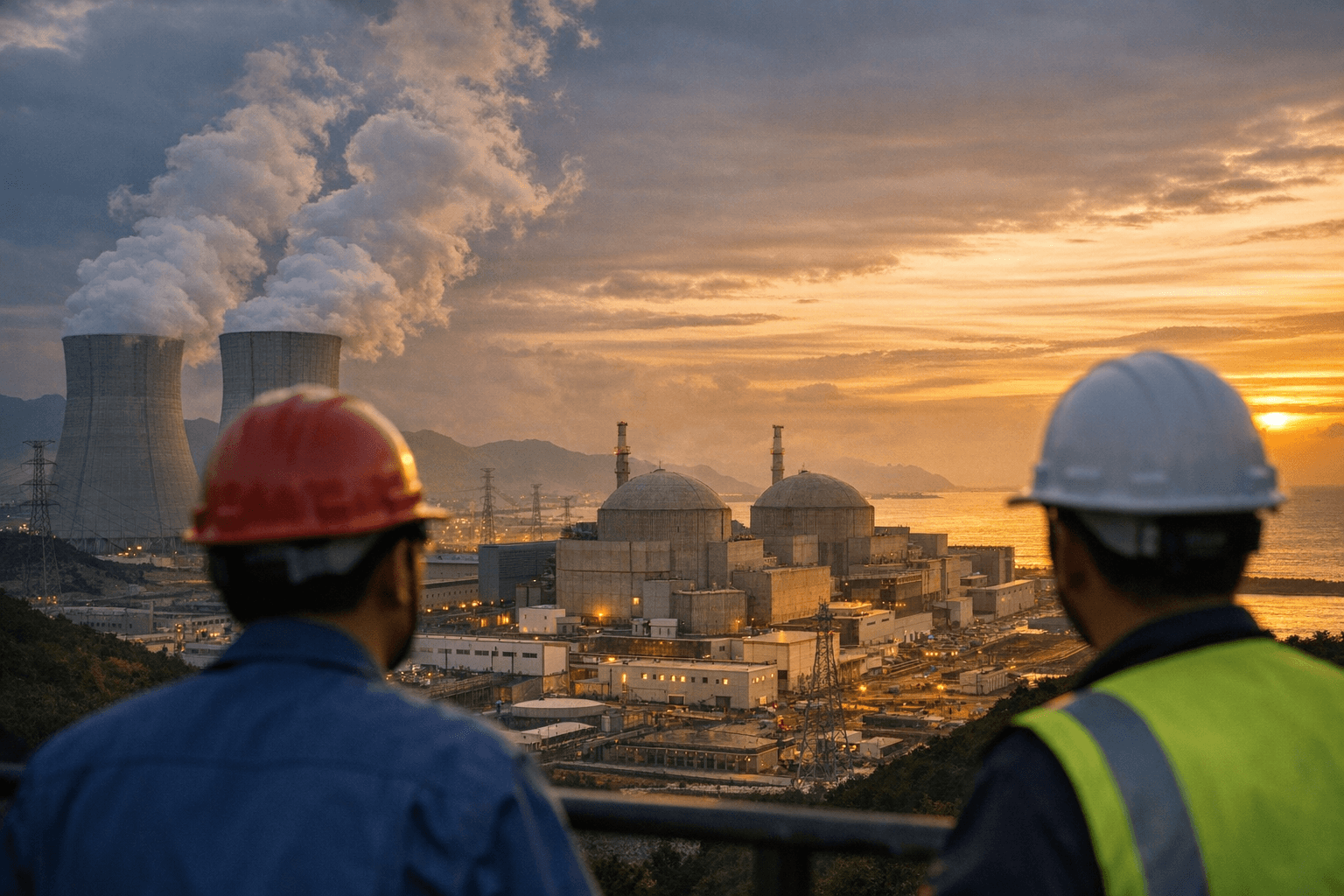
China is set to hand seven reactors to the grid in 2026, a pace that turns its nuclear program into an industrial machine rather than a policy slogan. For a sector that still celebrates single-unit milestones in the U.S. and Europe, that many completions in one year is the kind of cadence that changes supply chains, vendor priorities and the global uranium conversation.
The China Nuclear Energy Association’s 2026 blue book, cited by China Central Television, said the country’s total installed nuclear capacity reached 125 million kilowatts, or 125 gigawatts, and that China now has 60 commercial nuclear units in operation and 36 under construction. It also said 16 additional units have been approved for construction, and that China started work on two nuclear units this year. Other industry databases count the fleet slightly differently, but all point to the same picture: China is building more nuclear power than any other country by a wide margin.
That scale matters because it sits inside a much larger growth target. China set a goal of 110 gigawatts of nuclear capacity by 2030, a 76 percent jump from the end of 2025, after missing earlier targets for 2020 and 2025. Reactor construction timelines in China run five to seven years, which is why Francois Morin, China director for the World Nuclear Association, said the target is likely to be missed by a few years. Even so, the direction is unmistakable. Nuclear supplied about 5 percent of China’s electricity in 2023, and Beijing still wants the share to climb toward 10 percent by 2035.
The market consequences stretch well beyond the reactor sites themselves. Seven completions in a single year mean more demand for uranium, conversion, enrichment, fuel fabrication, heavy civil works, instrumentation, maintenance and training. They also tighten pressure on a fuel cycle that is already being asked to serve a fleet expanding faster than most Western systems can easily absorb. Global Energy Monitor says nearly half of the world’s nuclear power under construction is in China, and that less than one-third of China’s planned capacity has yet broken ground, a sign of how large the pipeline remains.
That is what sets China apart from the U.S. and Europe. In those markets, nuclear still moves project by project, often measured in licensing steps, financing rounds or first concrete. In China, the headline is commissioning. Seven reactors in one year is not just a number. It is proof that Beijing’s nuclear buildout has reached a scale that is already shaping the rest of the industry.
This article was produced by Prism’s automated news system from verified source data, official records, and press releases, then run through automated quality and moderation checks before publishing. The system is built and supervised by the people who set the standards it runs under. Read our full AI policy.
Did this article answer your question?