First American Nuclear submits EAGL-1 reactor plan to NRC
First American Nuclear put EAGL-1 into the NRC's pre-application lane, a key move toward a 240 MWe prototype and the first real licensing test.
First American Nuclear put EAGL-1 into the Nuclear Regulatory Commission’s formal pre-application lane, turning a fast-spectrum concept into a licensing campaign with a clear next step: a path toward a construction permit. The company said it submitted its regulatory engagement plan on April 15, 2026, and the NRC-hosted document for EAGL-1 is dated February 10, 2026.
That filing matters because a regulatory engagement plan is not just paperwork. The NRC says it lays out desired meetings, pre-application submittals and proposed project timelines, and the agency encourages applicants to use it as part of early engagement. Under NRC practice, a vendor or applicant can be treated as inactive if a project goes a year without activity. In other words, this is how a developer shows it intends to be judged as licensable, not as a concept still waiting for a regulatory home.
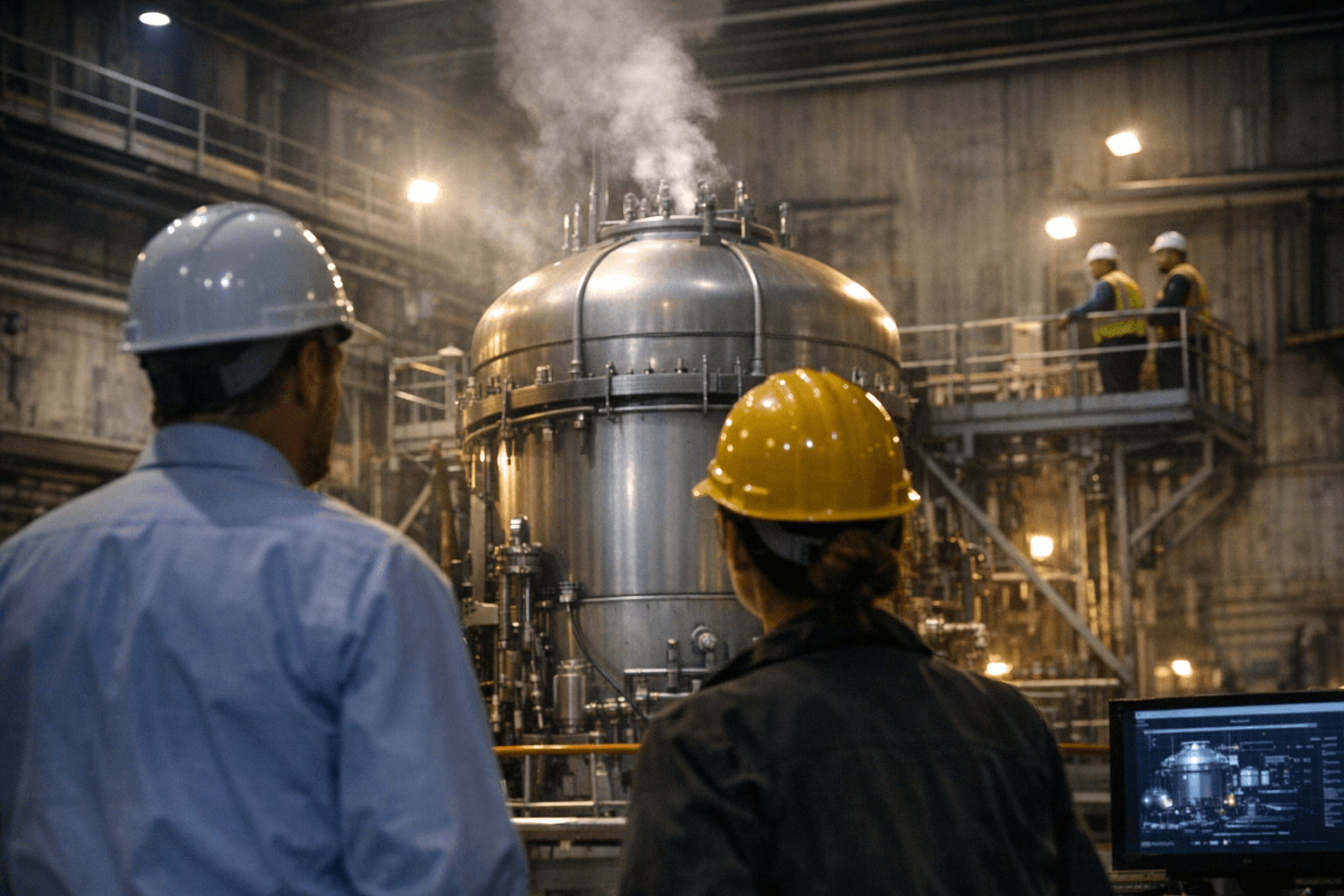
EAGL-1 is described in the NRC file as a 600 MWth, 240 MWe heavy liquid metal fast reactor using lead-bismuth eutectic coolant. First American Nuclear says the design is intended to work under the NRC’s existing framework, specifically under 10 CFR Part 50 for a prototype, rather than forcing regulators to build a new rulebook around it. The company also paired the reactor pitch with a bridge-power concept, included in a section called Energy Island - Bridge Power Solution, that would use off-the-shelf package boilers and a steam turbine to generate gas-fired electricity first, then swap in the nuclear island later. The company says that bridge power could use natural gas or alternative fuels such as fuel oil.
The technical case is being bolstered with outside review. Pacific Northwest National Laboratory reviewed the design under DOE GAIN support, identified in the NRC file as PNNL-28013, and the filing says the concept was advanced with support from PNNL through GAIN awards and a DOE Advanced Reactor Demonstration Program grant. That kind of paper trail is one of the proof points investors, utilities and regulators watch closely: not just a bold reactor graphic, but test data, national-lab scrutiny and a licensing path that looks real.
First American Nuclear, also known as FANCO, is not new to the field. POLITICO has reported the company has been around since the 1990s, and Indiana reporting said it announced plans in November 2025 to move headquarters and manufacturing from Richland, Washington, to Carmel, Indiana, with about $4 billion in planned investment and roughly 5,000 jobs. The company has said its first project is aimed at Indiana, with construction targeted for 2028 and a gas-to-nuclear transition in the early 2030s. The April 2026 hiring spree, which brought in Patrick Schweiger from Oklo, George Malone from GE Vernova Hitachi Nuclear Energy and Rafael Paz from NuScale Power, underscored the same message: FANCO wants to be seen as a company building toward deployment, in a crowded field that already includes active pre-application efforts from Westinghouse AP300, Holtec SMR-300, Deep Fission, ARC-100 and Radiant Kaleidos.
This article was produced by Prism’s automated news system from verified source data, official records, and press releases, then run through automated quality and moderation checks before publishing. The system is built and supervised by the people who set the standards it runs under. Read our full AI policy.
Did this article answer your question?