Samsung Heavy, Sargent & Lundy to develop floating SMR platform
Samsung Heavy and Sargent & Lundy signed on to turn a floating SMR into a standardized platform, with offshore siting aimed at coastal and island power demand.
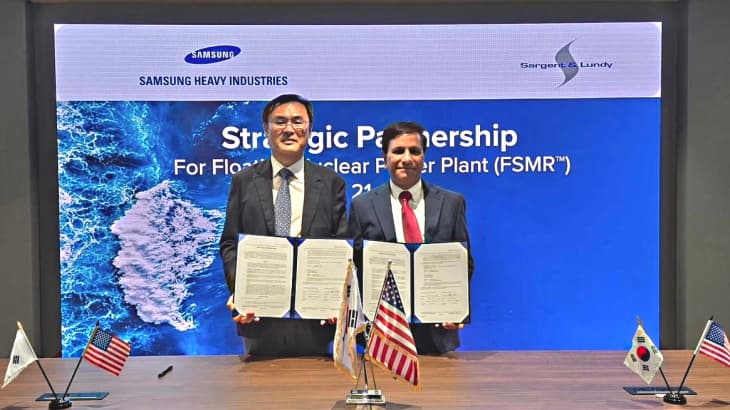
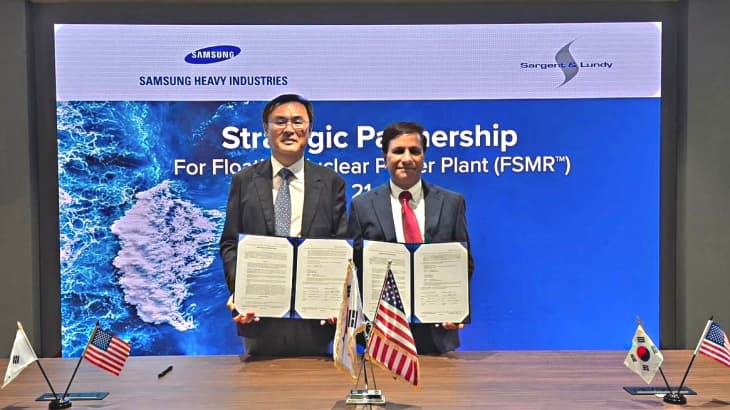
Samsung Heavy Industries signed a memorandum of understanding with Sargent & Lundy on July 22 to develop a standardized floating small modular reactor platform, moving the concept one step closer to a buildable offshore power unit. The deal pairs a shipbuilder that works at marine scale with a US engineering firm known for nuclear project design support, and the focus is not just on study work but on a repeatable platform that could be fabricated, assembled and deployed more like industrial hardware than a one-off plant.
The platform Samsung Heavy is pursuing is a floating small modular reactor, or FSMR, an offshore nuclear power system that mounts an SMR on a floating structure at sea to generate electricity. That changes the physical shape of deployment in a big way. Instead of a conventional land-based site, the reactor would sit on a maritime or near-shore structure, which makes shipyard construction, heavy-lift integration and serial production methods more relevant to the build. It also opens siting options for coastal island regions, which Samsung Heavy has already pointed to as a strong use case for this kind of energy infrastructure.
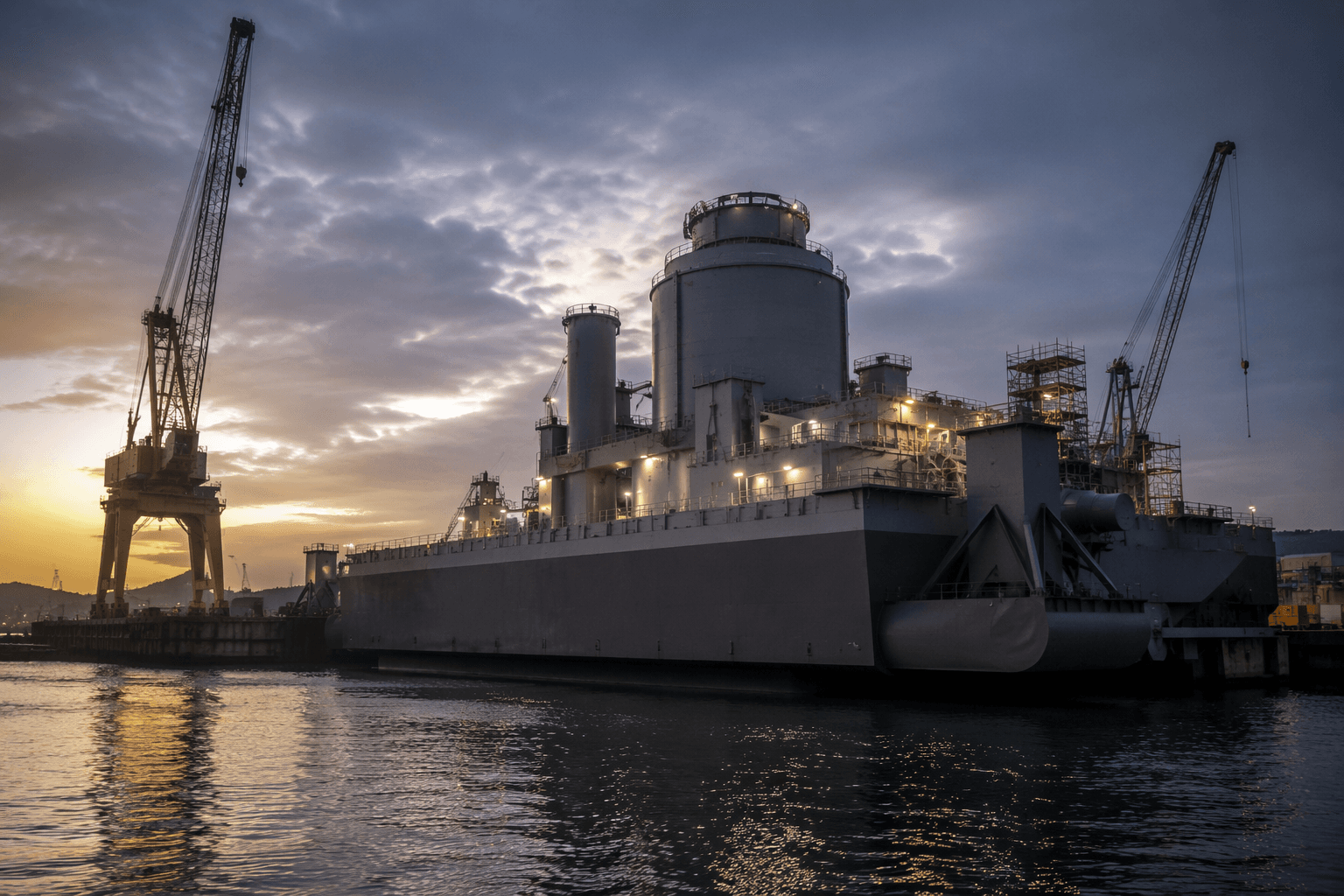
Standardization is the part reactor watchers will be tracking most closely. A universal or standardized FSMR platform would mean less custom engineering from project to project, clearer requirements for suppliers and a cleaner path toward licensing than a bespoke design every time. World Nuclear News described the effort as a standardised floating SMR platform, while Aju Press said Samsung Heavy signed a mutual priority cooperation memorandum of understanding with Sargent & Lundy to develop a universal FSMR standard platform. That matters because advanced nuclear projects typically stall when every site, hull and reactor package has to be treated as a special case.
Sargent & Lundy brings a long nuclear pedigree into the mix. Aju Press said the firm was founded in 1891 and has led global nuclear project design and engineering for more than 70 years. Samsung Heavy brings the marine side, including experience building complex offshore structures at scale. Put together, the partnership is aimed at bridging two industries that rarely meet at this level: ship construction and nuclear plant engineering.
The hard part now sits in the engineering details that make or break floating nuclear power, including marine stability, extreme weather protection, grid interconnection, security, maintenance access and emergency preparedness. The July 22 announcements from World Nuclear News, Yonhap News Agency, Aju Press, Asia Business Daily and CHOSUNBIZ show the same direction of travel: Samsung Heavy is trying to turn floating SMR work into a platform, not a prototype. The next milestone is whether that platform becomes a repeatable design package that can actually be built and placed offshore.
This article was produced by Prism’s automated news system from verified source data, official records, and press releases, then run through automated quality and moderation checks before publishing. The system is built and supervised by the people who set the standards it runs under. Read our full AI policy.
Did this article answer your question?