37-Year-Old African Grey Parrot Bill Melts Hearts With Sweet Morning Greeting Routine
Bill, a 37-year-old rescue African Grey, invented a daily morning greeting routine for his caregiver that he repeats with unwavering devotion every single day.

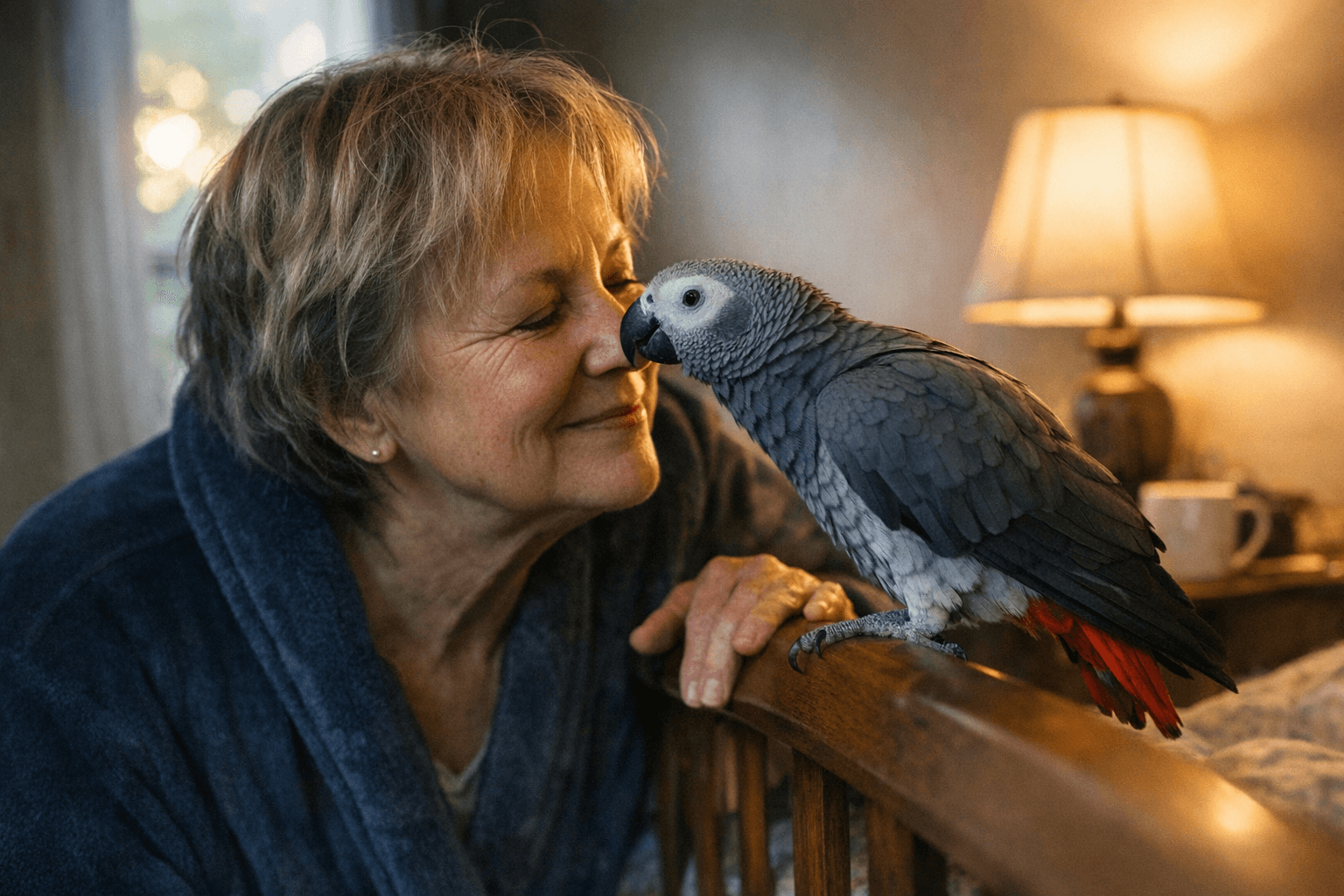
Every morning, without fail, Bill walks up to his caregiver and delivers the same affectionate greeting. He has done it every day since he decided, at 37 years old, that mornings needed more warmth.
Bill, a rescue African Grey parrot, joined his current family two years ago and has grown steadily sweeter with each passing month. His self-invented wake-up routine is not a fluke or a phase. "Bill is a man of structure," as the story describing his behavior puts it, "which means repeating a list of things he enjoys every single day until the new schedule sticks." The routine is directed entirely at his caregiver, the woman his household simply calls Mom.
The video capturing the greeting made the rounds and sparked a broader conversation about what African Greys are actually like to live with, because Bill represents the affectionate end of a wide behavioral spectrum. As the source coverage notes, "the level of affection depends on history, personality, and environment." In Bill's case, two years of stability appear to have compounded into something genuinely devoted. He has, by every account, only gotten sweeter since arriving.
That sweetness comes packaged inside one of the most cognitively demanding companion animals a person can keep. African Greys are capable of holding conversations through large vocabularies, solving puzzles, and reading context clues with the comprehension of a human toddler. They can, as the coverage colorfully notes, "roast you one minute and do some version of beatboxing the next." They also routinely bond most intensely with a single person, becoming what behaviorists describe as "one-person" birds, which may explain why Bill's routine is so specifically targeted at Mom rather than the household broadly.
The care requirements behind that intelligence are substantial. African Greys need four to five hours of social interaction daily, consistent mental stimulation through puzzles and activities, and reliable time with their people to remain emotionally healthy. They are not considered beginner-friendly, in large part because the commitment is measured not in years but in decades: African Greys can live up to 80 years.
Bill, at 37, is statistically somewhere in the middle of what his lifespan could be. The fact that he is still innovating his daily routines and deepening his bond with a family he has known for only two years suggests that the capacity for connection in this species does not diminish with age. For rescue birds especially, that arc of growing trust tends to move at its own pace, on its own schedule, and sometimes it arrives one morning greeting at a time.
This article was produced by Prism’s automated news system from verified source data, official records, and press releases, then run through automated quality and moderation checks before publishing. The system is built and supervised by the people who set the standards it runs under. Read our full AI policy.
Did this article answer your question?