ABMA-IAATE Conference Brings Parrot Care Experts Together in Cincinnati
Thane Maynard keynotes a Cincinnati conference where zoo trainers are sharing ambassador-bird techniques proven to stop screaming, biting, and boredom at home.
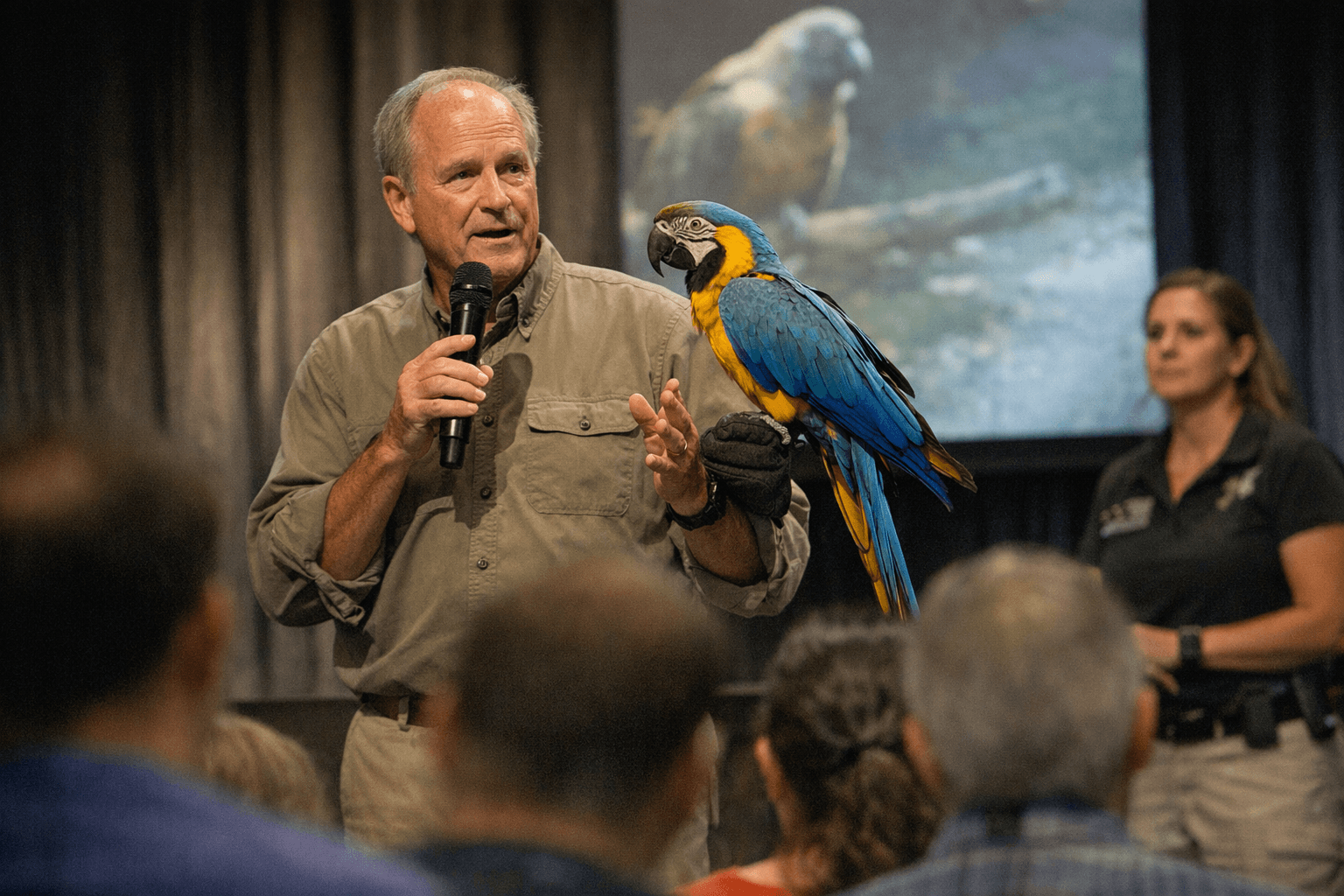
The techniques that keep ambassador parrots steady during nail trims, weigh-ins, and public handling can solve the exact problems most parrot households wrestle with daily. Three days into the five-day "Partnering for Success" joint conference at the Hilton Cincinnati Netherland Plaza, the trainers, behaviorists, and avian vets who apply those techniques have been translating them into practical tools for home caretakers and sanctuary staff.
The Animal Behavior Management Alliance (ABMA) and the International Association of Avian Trainers and Educators (IAATE) co-organized the event, which runs through April 2 and draws a cross-disciplinary speaker lineup spanning zoo professionals, applied behaviorists, and avian vets. Three sessions in particular have surfaced approaches that map directly onto the problems most parrot owners know intimately: biting during handling, displacement screaming, and chronic boredom.
The "Choice, Consent, Confidence: Empowering a Bonded Pair for Husbandry Training" session tackled biting at its source. Ambassador-bird programs have long used stepwise shaping to get parrots voluntarily presenting for nail trims and wing checks rather than being restrained. The core mechanism is an authentic opt-out: when a parrot has a genuine way to say no, biting as a communication strategy loses its function. That same logic scales directly to the home cage.
Boredom-driven screaming got direct attention in "Are You Not Entertained?! Open-Source Solutions for Automated Enrichment Opportunities." The open-source framing is the critical piece for parrot owners: instead of pointing toward zoo-grade equipment budgets, the session focused on DIY and low-cost foraging devices that replicate the cognitive challenge facilities like the Cincinnati Zoo build into their birds' daily routines. Problem-solving enrichment fills the mental gap that noise-reactive owners keep trying, and failing, to close by responding to the screaming itself.
The "Parrots 101: Getting Started with Parrots" session, aimed at new caretakers and sanctuary staff, reinforced a principle experienced owners often know but rarely operationalize: species-appropriate space, natural foraging patterns, and social structure are not enrichment extras. They are baseline conditions whose absence generates the environmental frustration behind most screaming and destructive behavior.
Thane Maynard, who transitioned this year to executive chair of the Cincinnati Zoo and Botanical Garden's board after nearly five decades with the institution, delivered the conference keynote. His presence reflects the kind of cross-disciplinary reach ABMA and IAATE have built, placing zoo leadership on the same program as hands-on trainers shaping individual birds one session at a time.
Both organizations offered virtual participation for caretakers who could not travel to Cincinnati, and the full agenda is publicly accessible through IAATE for anyone following the conference remotely.
The protocol distilled from these three sessions is compact. Wrap a portion of your bird's daily food inside crumpled paper and place it somewhere new in the cage — no tools, five minutes. Pick one husbandry task your bird resists, and begin shaping it this week: reward calm orientation toward the target object well before the object makes contact. Then identify the two-hour window that most reliably produces screaming and fill it with a novel foraging challenge before the noise starts. Ambassador-bird trainers call this consistency; you can start building it today.
This article was produced by Prism’s automated news system from verified source data, official records, and press releases, then run through automated quality and moderation checks before publishing. The system is built and supervised by the people who set the standards it runs under. Read our full AI policy.
Did this article answer your question?