CBP Officers Seize Three Smuggled Parrots at Texas Border Crossing
Three live parrots were found hidden in a box inside a GMC Yukon at a Texas border crossing, triggering a federal criminal investigation.
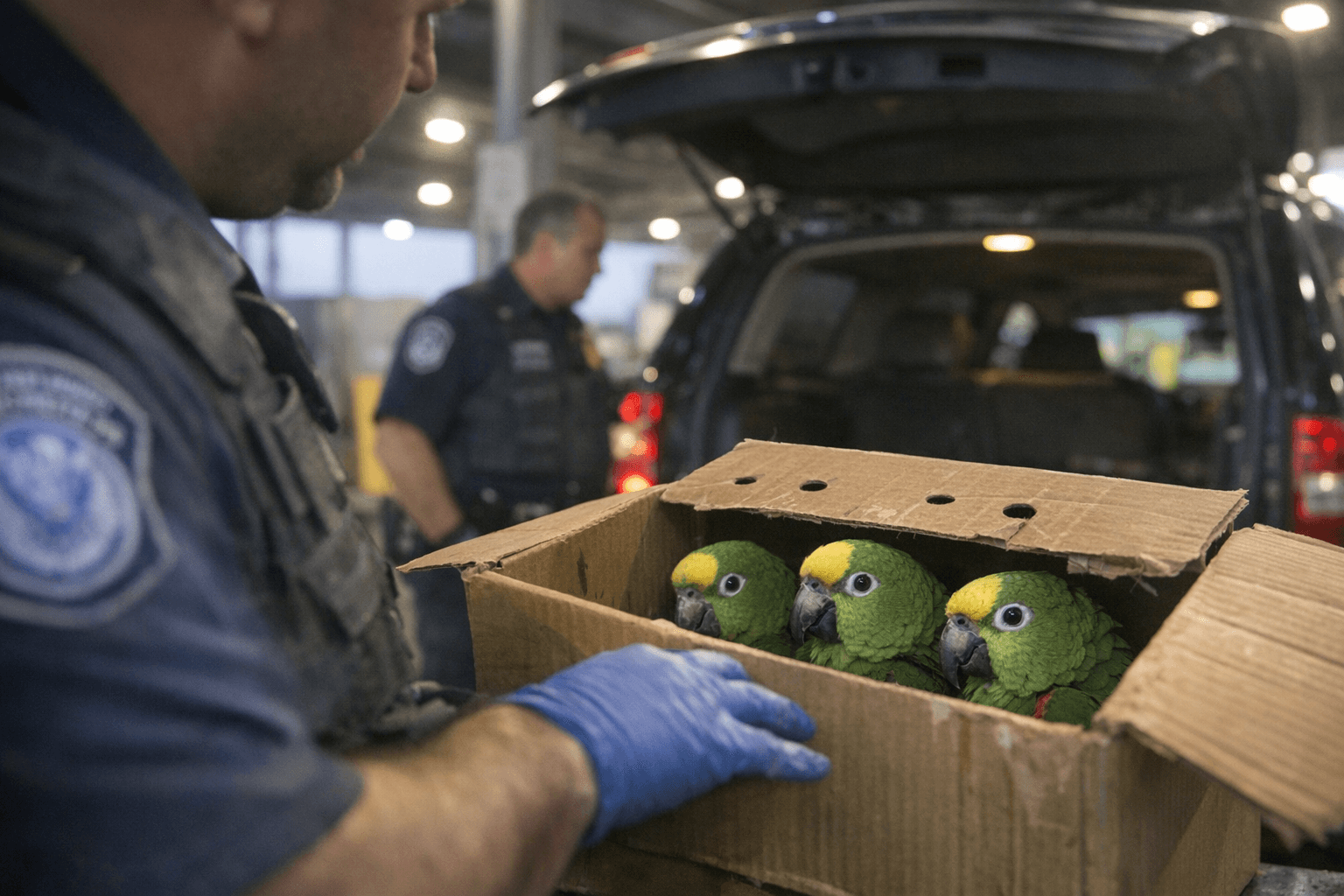
Three live parrots were pulled from inside a cardboard box hidden in a 2007 GMC Yukon at the Gateway International Bridge in Brownsville, Texas, on March 13, after CBP officers flagged the vehicle for a secondary inspection during what authorities are calling an alleged wildlife smuggling attempt.
Officers assigned to the Brownsville Port of Entry referred the GMC Yukon for the closer examination as part of routine screening. During the search, they found the birds concealed inside a box within the vehicle. Homeland Security Investigations subsequently opened a criminal case into the seizure, and CBP coordinated with the U.S. Department of Agriculture and the U.S. Fish and Wildlife Service to transfer the parrots to a local zoo for care.
"Parrots are protected species and our frontline officers work diligently to prevent suspected attempts to smuggle them as part of the illegal animal trade," said Port Director Tater Ortiz of the Brownsville Port of Entry. Ortiz also flagged the biosecurity dimension of the case: "Exotic birds may carry various diseases not known to exist in the U.S. that could endanger native wildlife and U.S. agriculture, resulting in potential economic harm as well."
That disease risk is not a minor footnote for anyone keeping parrots. Pathogens like Newcastle disease and psittacosis have historically entered the U.S. through illegal bird trafficking, and birds moving outside USDA-supervised quarantine channels arrive with no health certification, no disease screening, and no paper trail. The FWS regulates parrot imports under the Convention on International Trade in Endangered Species of Wild Fauna and Flora, which means virtually every parrot species requires documentation before crossing a U.S. border legally.
CBP has been direct about the consequences of sidestepping that process: smuggling birds into the United States is a serious criminal offense carrying potential fines and imprisonment. The agency noted it works with FWS and USDA specifically to intercept smugglers and pursue prosecution.
No species identification was released for the three seized birds, and CBP has not publicly named the driver of the Yukon or confirmed whether any arrests have been made. The HSI criminal investigation remains open. The birds are currently in the care of a local zoo, which has not been identified by name in any official release.
CBP posted publicly about the interception on March 20, a week after the discovery, placing the case within its broader agriculture enforcement mission at land, air, and sea ports of entry across the southern border.
This article was produced by Prism’s automated news system from verified source data, official records, and press releases, then run through automated quality and moderation checks before publishing. The system is built and supervised by the people who set the standards it runs under. Read our full AI policy.
Did this article answer your question?