DOC and Meridian Renew Partnership to Support Kākāpō Recovery Through 2029
Meridian Energy renewed its kākāpō partnership through June 2029, as a species once down to 51 birds hits 235 and enters its biggest-ever breeding season.
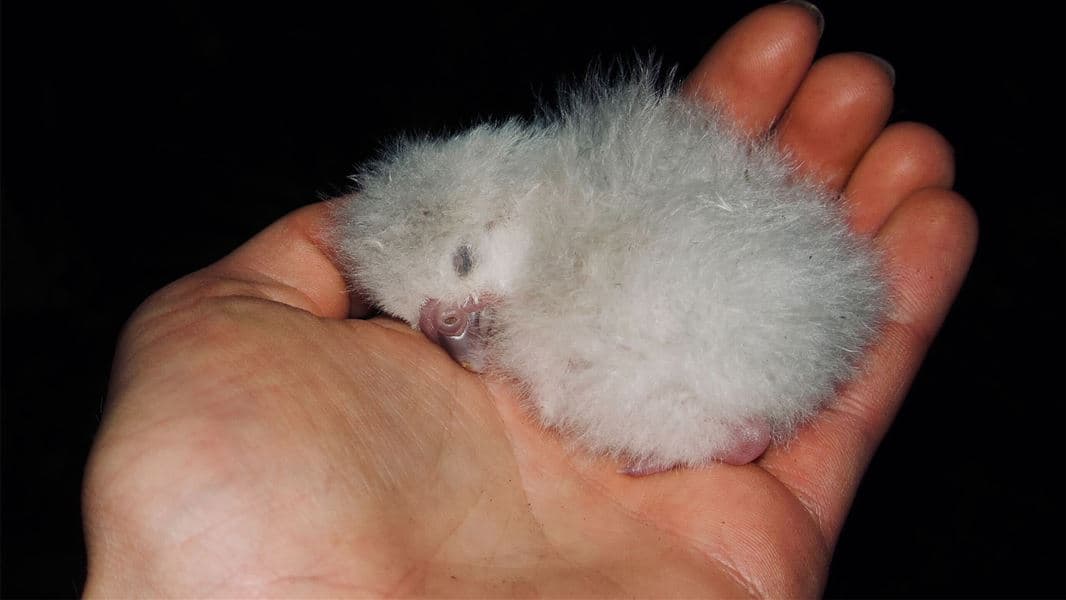
The kākāpō's numbers tell one of conservation's most astonishing comeback stories: 51 birds clinging to survival in 1995, 124 when Meridian Energy first signed on as the Kākāpō Recovery Programme's National Partner in 2016, and 235 alive today, with new chicks hatching this season on four predator-free islands across Aotearoa. On 19 March 2026, the Department of Conservation (DOC) and Meridian announced they are extending that partnership for a further three years, with Meridian's support now committed through to June 2029.
The renewal marks a full decade of formal collaboration between the 100% renewable energy company and DOC's Te Papa Atawhai, working alongside Treaty partner Ngāi Tahu. DOC Director-General Penny Nelson described the breadth of Meridian's contribution over that period: "Meridian has supported the Kākāpō Recovery Programme in innovative and practical ways for ten years. From boots on the ground naturing alongside rangers, to providing infrastructure development and engineering expertise on the kākāpō breeding islands, Meridian has backed the programme through a period of strong growth."
The engineering dimension of that support is quietly critical to what happens on the islands each breeding season. The Kākāpō Recovery Programme manages birds on four predator-free islands: Whenua Hou/Codfish Island off Stewart Island, Pūkenui/Anchor Island and Te Kākahu-o-Tamatea/Chalky Island in southwest Fiordland, and Hauturu/Little Barrier Island in the Hauraki Gulf. Meridian engineers, including team members Mark and Joe, maintain the power systems on those remote sites. As DOC's blog put it, Meridian "plays a vital role in maintaining generators and power systems on the remote breeding islands to support the seasonal influx of people and power critical equipment like chick incubators." DOC Deputy Director-General Henry Weston added that Meridian has "greatly reduced our reliance on generators on the remote island sites" and that the ongoing partnership "will enable us to build on advancing kākāpō research including population health and improved breeding management techniques."
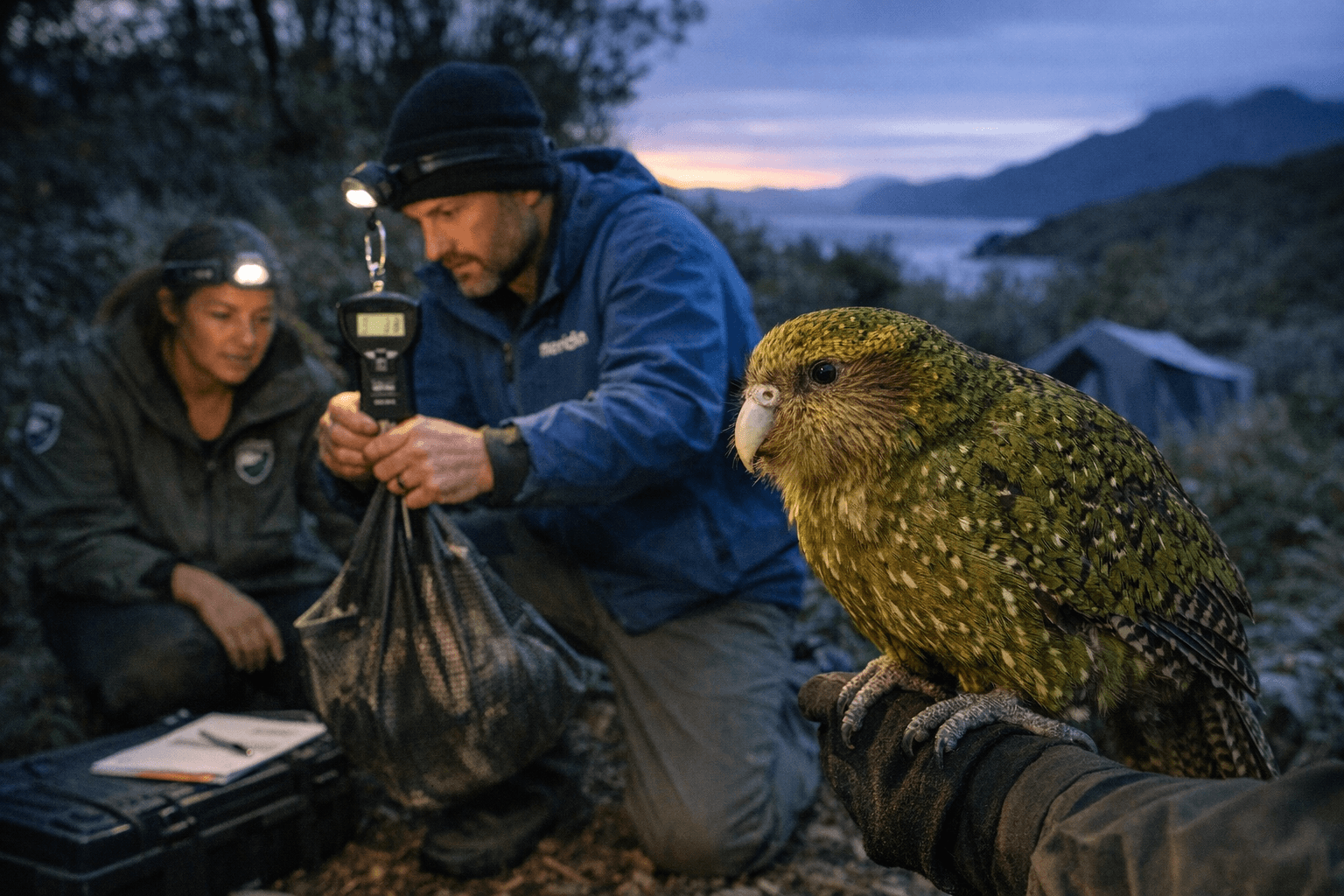
The timing could hardly be better. Breeding returns to the programme in 2026 after a four-year pause, and the Kākāpō Recovery team has described it as potentially "the biggest boom in kākāpō chicks yet." Ahead of the season, staff strategically transferred birds between islands based on genetics and history, and began supplementary feeding around October to bring some birds into optimal breeding condition. Veterinary partners Auckland Zoo and Dunedin Wildlife Hospital are on hand to provide medical care, with Air New Zealand supporting the transport of birds when needed.
Meridian CEO Mike Roan, who visited Whenua Hou as part of the company's kākāpō commitment, called it "a once in a lifetime experience" and expressed hope that the conservation work might one day open the island to more New Zealanders. For Ngāi Tahu, whose species representative Tāne Davis sits within the programme's leadership, the stakes extend beyond population counts. Davis noted that Meridian's support "is extremely important, not only to kākāpō but to Ngāi Tahu as well."
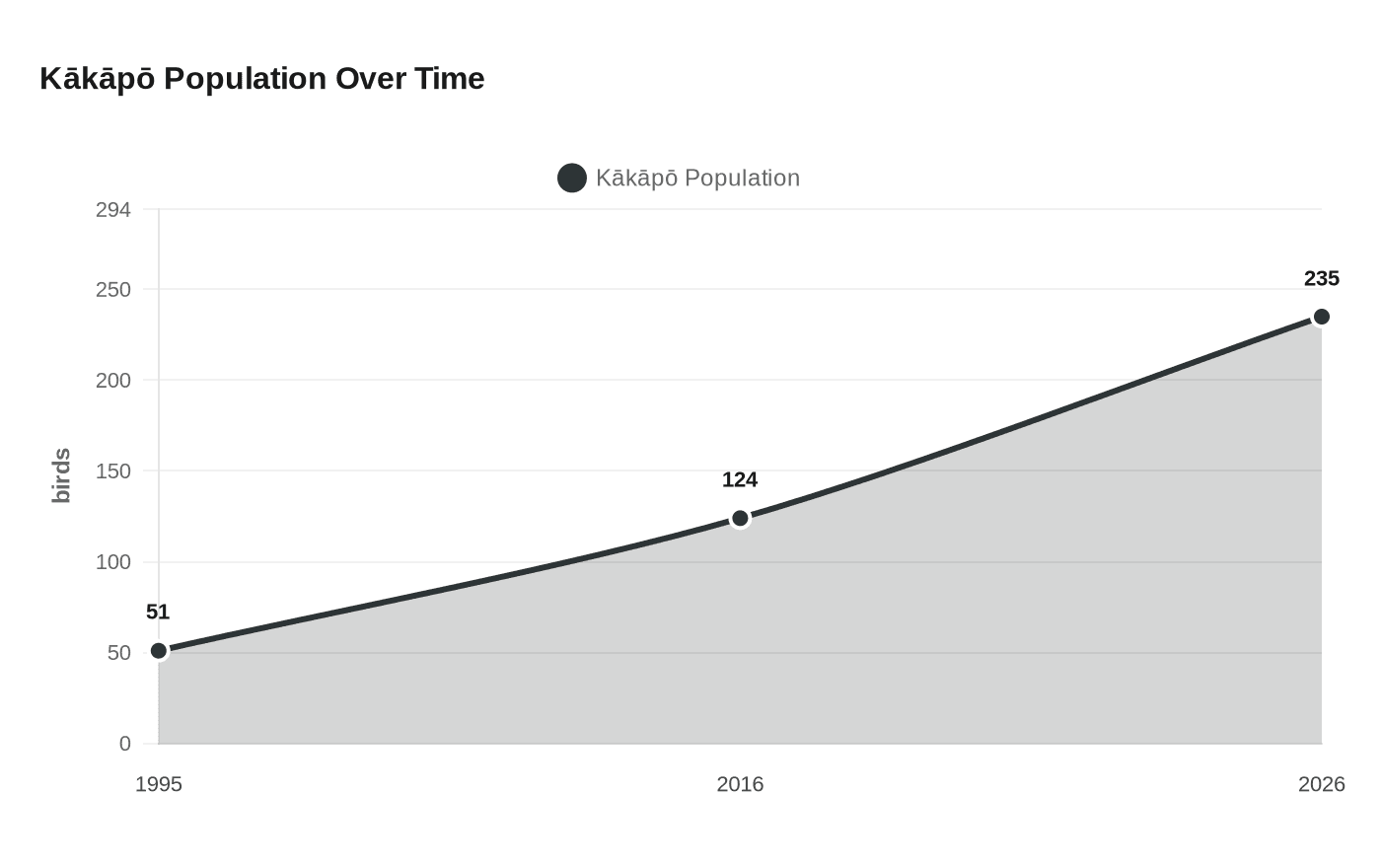
From a single 1995 low point, the kākāpō recovery has become a global model for what sustained, multi-partner conservation looks like in practice. With this renewed agreement running to June 2029, the programme enters its most promising breeding season yet with the infrastructure, expertise and funding to make the most of it.
This article was produced by Prism’s automated news system from verified source data, official records, and press releases, then run through automated quality and moderation checks before publishing. The system is built and supervised by the people who set the standards it runs under. Read our full AI policy.
Did this article answer your question?