Everyday Parrot Care Guide for New Owners: Cage, Food, Enrichment, Safety
Practical, day-to-day parrot care essentials covering cages, diet, enrichment, grooming and household safety to keep pet parrots healthy and engaged.

Proper housing, balanced nutrition, daily enrichment and common-sense safety are the building blocks of healthy parrot ownership. Choose a cage that gives room to stretch wings, climb and play, with bar spacing and construction suited to the species and easy-to-clean surfaces to reduce disease risk. For budgies and cockatiels select smaller enclosures with appropriate spacing; for conures, amazons and African greys use medium cages; for macaws provide very large flight-friendly space.
Perch selection matters for foot health. Provide a variety of natural wood perches in different diameters so the beak and feet get exercise and scales wear naturally. Rotate perch positions periodically to encourage movement and prevent pressure sores. Offer chew-friendly materials and shredders to satisfy beak work and reduce unwanted chewing of furniture.
Build the diet around a good pellet foundation, with fresh vegetables and fruit offered daily and seeds or high-fat treats given sparingly. Maintain strict water hygiene by changing drinking water at least once daily and cleaning dishes to prevent bacterial growth. Foraging and enrichment drive mental health - hide treats in foraging toys, stuff multiple puzzle toys and rotate toys weekly to keep birds investigating. Use shredders, rope toys and foraging boxes to encourage natural behaviors like tearing and probing.
Supervised out-of-cage time is essential for most parrots. Provide several hours daily depending on species, allowing flight or controlled flight exercises for birds that are not fully wing-clipped. Supervise step-up and training sessions to strengthen the human-parrot bond and practice recall or target training routines that help manage behavior in social settings.
Grooming needs vary by species and individual. Offer regular bathing opportunities through a shallow bath or gentle misting several times per week or more often during molt, and leave wing and nail trims to experienced hands or a qualified avian veterinarian to avoid bleeding and stress. Learn safe trimming practices from your veterinarian if you choose to clip wings, and schedule routine nail trims if nails grow unevenly.
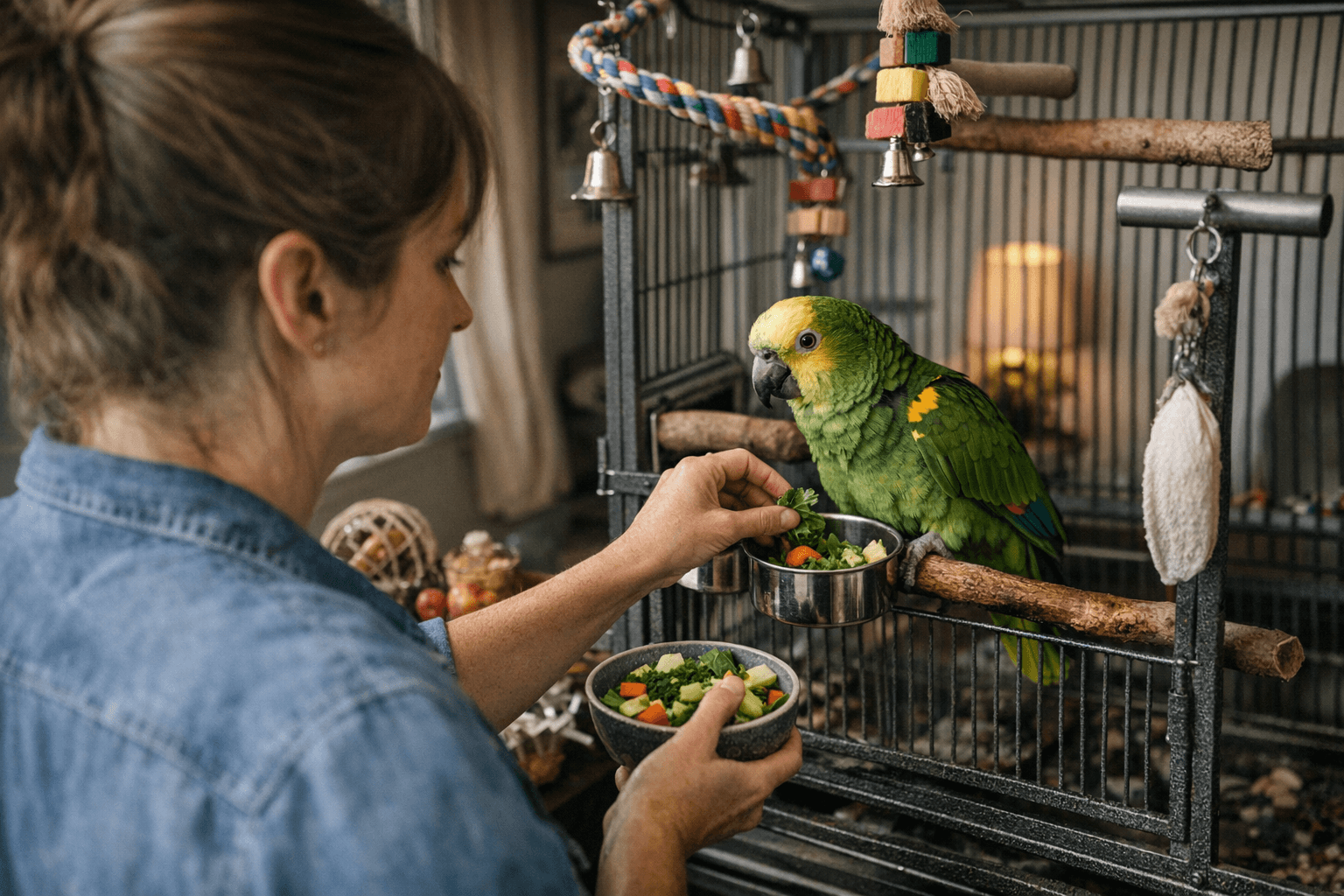
Home hazards are common and often preventable. Avoid Teflon and other nonstick cookware while birds are in the room, keep toxic plants and heavy-metal-containing toys out of reach, and inspect toys for loose parts or dangerous hardware. Replace frayed rope and chewed plastic before it becomes a choking risk.
Daily tasks include fresh water and food, a quick cage spot-clean, and brief out-of-cage interaction. Weekly tasks include thorough cage cleaning, toy rotation, and perch inspection. Schedule regular veterinary checkups and monitor for early warning signs such as fluffed feathers, lethargy, changes in droppings, loss of appetite or respiratory difficulty; these signs warrant prompt veterinary attention.
Feathering your nest with the right cage, nutrition and enrichment reduces stress, prevents common health problems and deepens your bond with your parrot. Start with a solid pellet diet and safe housing, keep enrichment fresh and predictable, and make routine veterinary care part of ownership to keep your bird thriving.
Know something we missed? Have a correction or additional information?
Submit a Tip
