LCFT Launches Advanced Parrot Training Certificate Covering Behavior, Welfare, and Skills
LCFT's new £99 parrot training certificate covers aggression, enrichment, and positive-reinforcement skills, but the real question is whether an online qualification translates to a calmer bird at home.
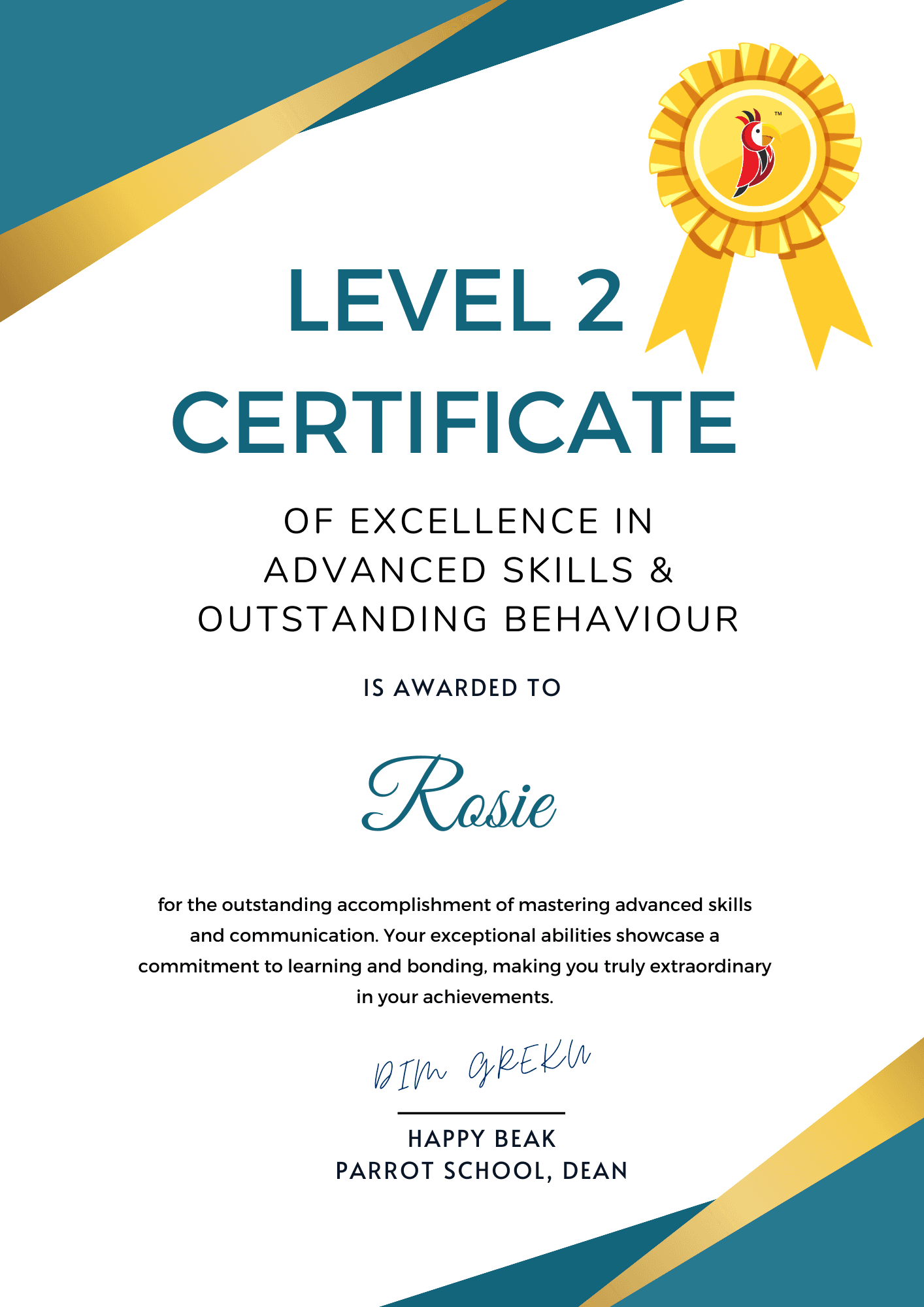
At £99 for a two-month standard track, or £149 for a compressed one-month fast-track, LCFT's Advanced Certificate in Parrot Training: Expert Techniques & Skills is priced below most professional short courses in animal behaviour and well within reach of shelter volunteers, rescue workers, and home-based bird keepers. Published March 31, 2026, the listing is built around six curriculum areas and an open-enrollment policy that removes the prerequisite barrier entirely.
The six modules span parrot behaviour and communication; enrichment and welfare design; training techniques with a declared emphasis on positive reinforcement and behaviour modification; health and nutrition; species-specific training methods; and business skills for public demonstrations and parrot-focused services. That final module signals ambition beyond the home context: this is a curriculum designed to transfer into professional roles as well as living rooms.
The module addressing aggression and fear is the one that will matter most in daily practice. Biting, territorial responses, and fear-driven screaming are the behaviours that most consistently push parrot owners toward outside help, and framing those challenges within a reward-based model reflects the research consensus: positive reinforcement reduces chronic stress, minimises fear responses, and produces more durable behaviour change than aversive correction.
For owners who want to test the curriculum's principles before enrolling, four skills provide the clearest starting point. Marker training, pairing a precise sound cue with an immediate food reward at the exact moment of correct behaviour, is the foundational mechanic that everything else in the curriculum builds on. Stationing, training the parrot to move to and remain on a designated perch on cue, gives owners a reliable management tool that prevents most conflict before it escalates. Recall, cueing the bird to fly directly to your hand, is the safety-critical extension of both, and is best practised first in a closed room with minimal distractions. Bite prevention follows from all three: a bird with solid marker, station, and recall foundations is operating in a low-stress, predictable environment, which is the single strongest predictor of reduced aggression.
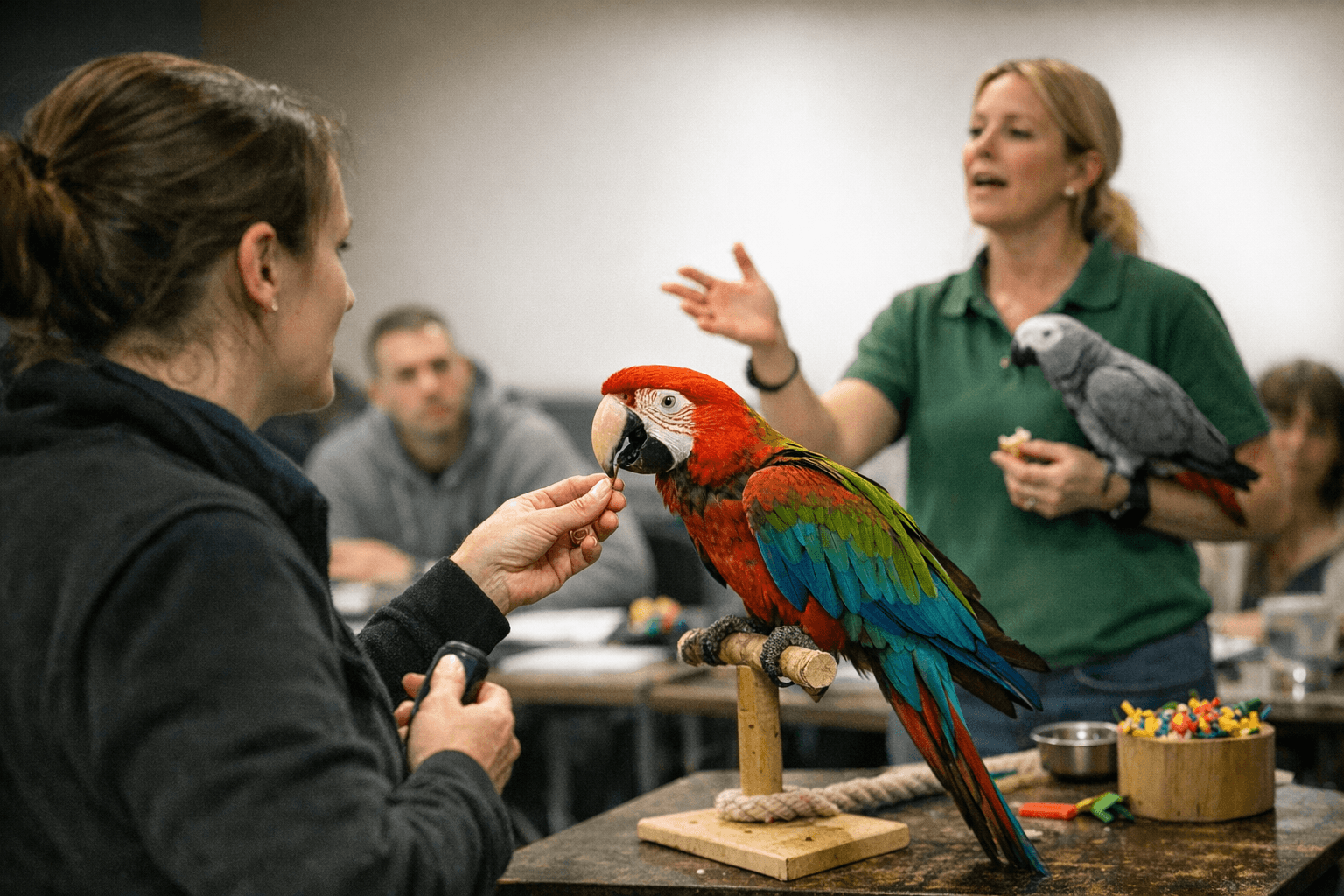
Try this today: in a quiet room, hold a small piece of your parrot's favourite food between your fingers and wait. The moment your bird looks at your hand without lunging or biting, say your marker word clearly and deliver the treat. Repeat ten times over five minutes. That sequence is the beginning of marker communication, and it is the first mechanical skill the LCFT curriculum is built around.
The honest gap in any short online certificate is in-person mentorship. Timing errors, misread body language, and the specific temperament of an individual bird are things a trainer has to observe in real time. Behaviour consultation ethics, knowing when a situation exceeds a certificate-holder's competency and requires veterinary or specialist referral, is also rarely addressed in programmes of this length. Prospective students should ask before enrolling whether practical hours involve live birds directly or observational sessions only, which species are used, and whether the certificate provides continuing education credits recognised by professional bodies.
At under £150 for a curriculum integrating behaviour, welfare, health, and applied training within a positive-reinforcement framework, the LCFT certificate is a credible entry point into evidence-based parrot work. Whether it translates to a measurable difference in the bird on your arm will depend entirely on how that live-bird component is structured.
This article was produced by Prism’s automated news system from verified source data, official records, and press releases, then run through automated quality and moderation checks before publishing. The system is built and supervised by the people who set the standards it runs under. Read our full AI policy.
Did this article answer your question?