Lovebirds Reveal How Lifelong Pair Bonds Shape Parrot Care Practices
Minutes after arriving in Phoenix, rosy-faced lovebirds in Encanto Park flash green, preen partners and regurgitate food, behaviors that inform hands-on care and welfare.
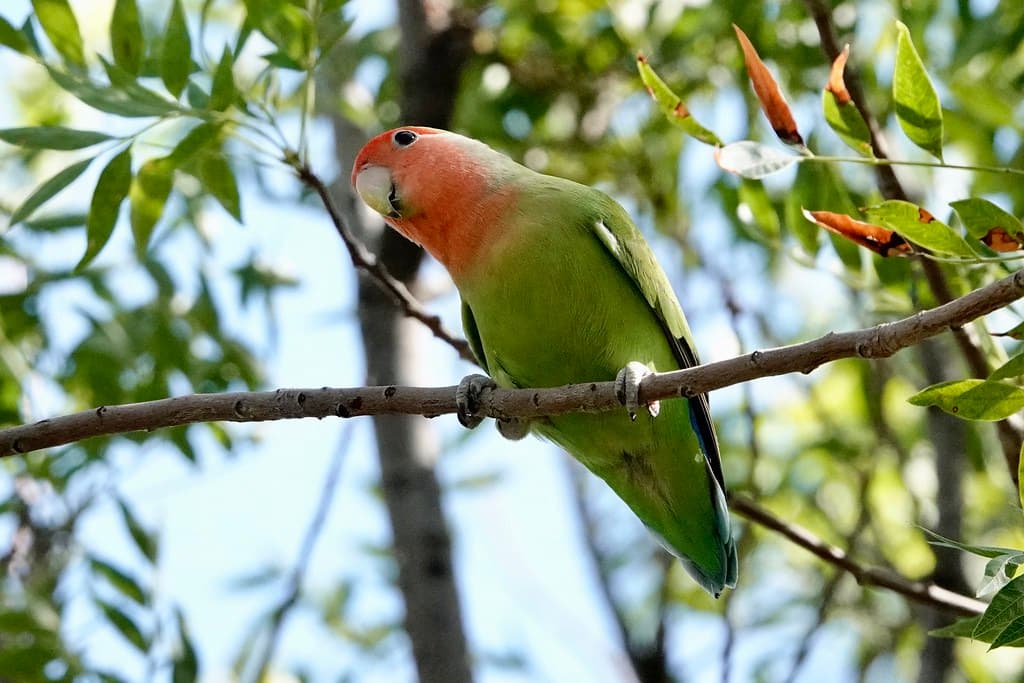
Minutes after getting to a park in the middle of Phoenix, flashes of green and constant chatter make it clear why Arizona is believed to be home to the largest colony of rosy-faced lovebirds outside southwestern Africa. A photo by Ross D. Franklin dated Jan. 18, 2026 captures a singing bird in Encanto Park, and observers say these birds are thought to be descendants of escaped pets now thriving in the city’s heat.
Lovebirds are a small African group that includes nine species, and the rosy-faced form has established urban colonies beyond its native range. Kenn Kaufman, field editor for Audubon magazine who has written about lovebirds, notes established populations in Phoenix and "fairly well-established colonies" on Hawaii’s Big Island and in Maui. In Phoenix the birds roost in holes in cactus and palm trees and often hang near air-conditioning vents, including at Arizona State University's science building, to cope with sweltering weather.
The species’ signature behavior is the persistent pair bond that gave them their common name. "Lovebirds earned their name because of their tendency to form lifelong bonds with their mates, who like to perch close together, almost like they're cuddling," Kaufman says. While genetic studies elsewhere have shown socially monogamous species sometimes breed with others, multiple reporters note that lovebirds are not known to stray, and Kaufman points out that fewer than half of bird species mate for life.
Mutual grooming and food sharing are central to that bond. Kaufman describes the interaction as a "parrot display of affection." He explains, "They pass food to each other with their beaks, which often looks like kissing." He adds an unromantic detail for caretakers: "It wouldn't be quite so romantic if humans were doing it," because the food being exchanged is regurgitated. Observers report that feeding each other continues beyond courtship and is a life-long behavior.
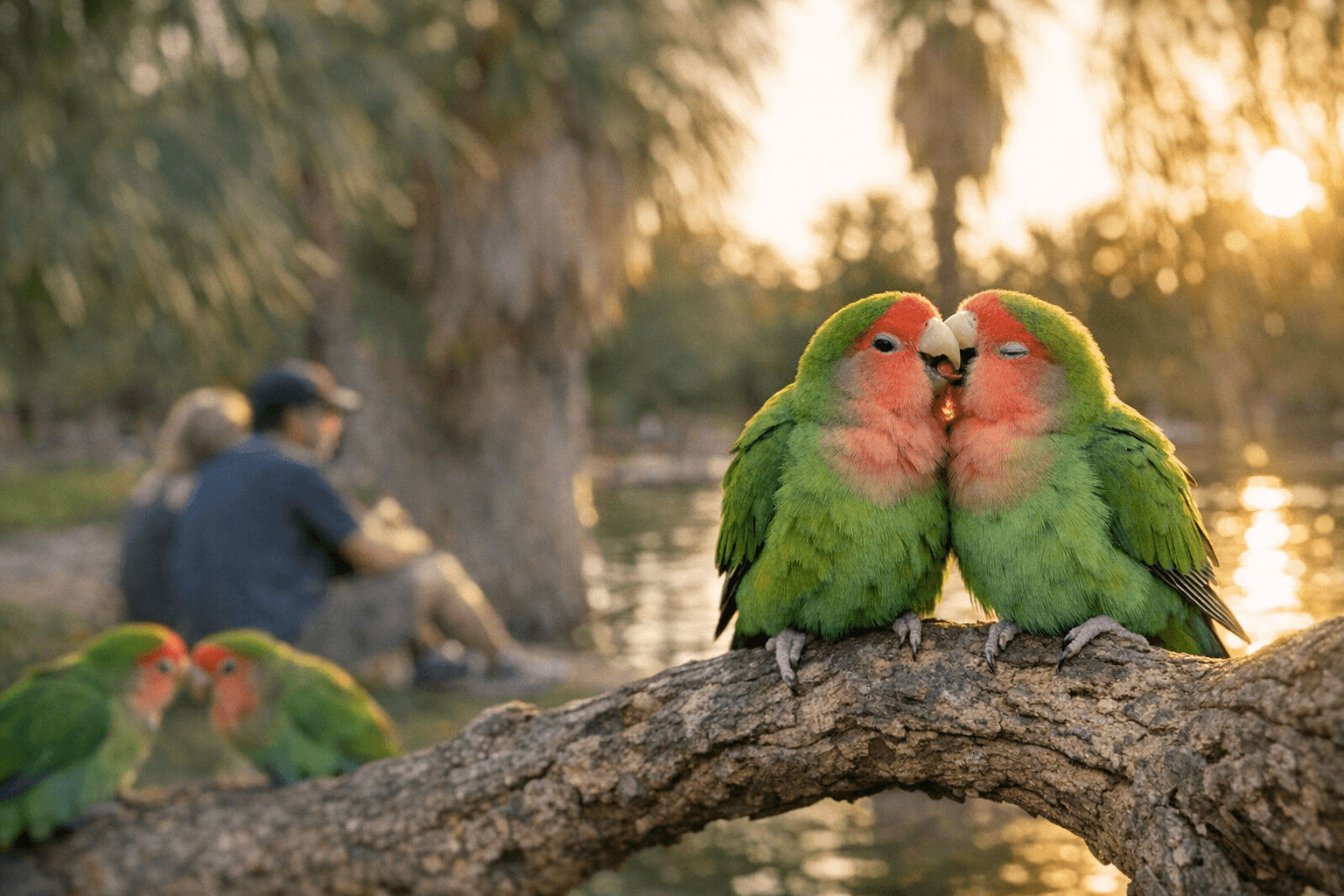
Those intimate behaviors have husbandry consequences. Dr. Stephanie Lamb, associate veterinarian and bird specialist at the Arizona Exotic Animal Hospital, says caretakers have reported that a surviving mate can seem depressed after partner loss, becoming inactive or making abnormal calls. Lamb warns that lovebirds can also be violent with each other, "screaming and pecking one another with beaks powerful enough to crack open seeds." Her on-the-ground remedy for tense pair interactions is pragmatic: sometimes the birds "have to sit at opposite ends of their cage for a bit, until one comes over and nudges their way back into a cuddle," and "then everything's good," she said.
Commitment matters: Kaufman gives a lifespan estimate of about 20 years for these parrots, "less than bigger parrots but longer than smaller songbirds," while a regional column cites "up to 15 years" of paired life. That range underscores what Dr. Lamb’s observations make plain, pairing decisions and grief management are real, long-term concerns for anyone caring for lovebirds in Phoenix, Hawaii or in captivity. Carter, a local observer, sums up the urban picture with a mixed view: while he thinks the birds "should have been left in Africa," he concedes "They definitely show a sense of resilience to the situation that they're in.
This article was produced by Prism’s automated news system from verified source data, official records, and press releases, then run through automated quality and moderation checks before publishing. The system is built and supervised by the people who set the standards it runs under. Read our full AI policy.
Did this article answer your question?