New cockatiel owner worries after bird stays in cage
A four-day-old cockatiel refusing to come out is usually decompressing, not rejecting you. Week one is about routine, patience, and reading body language.

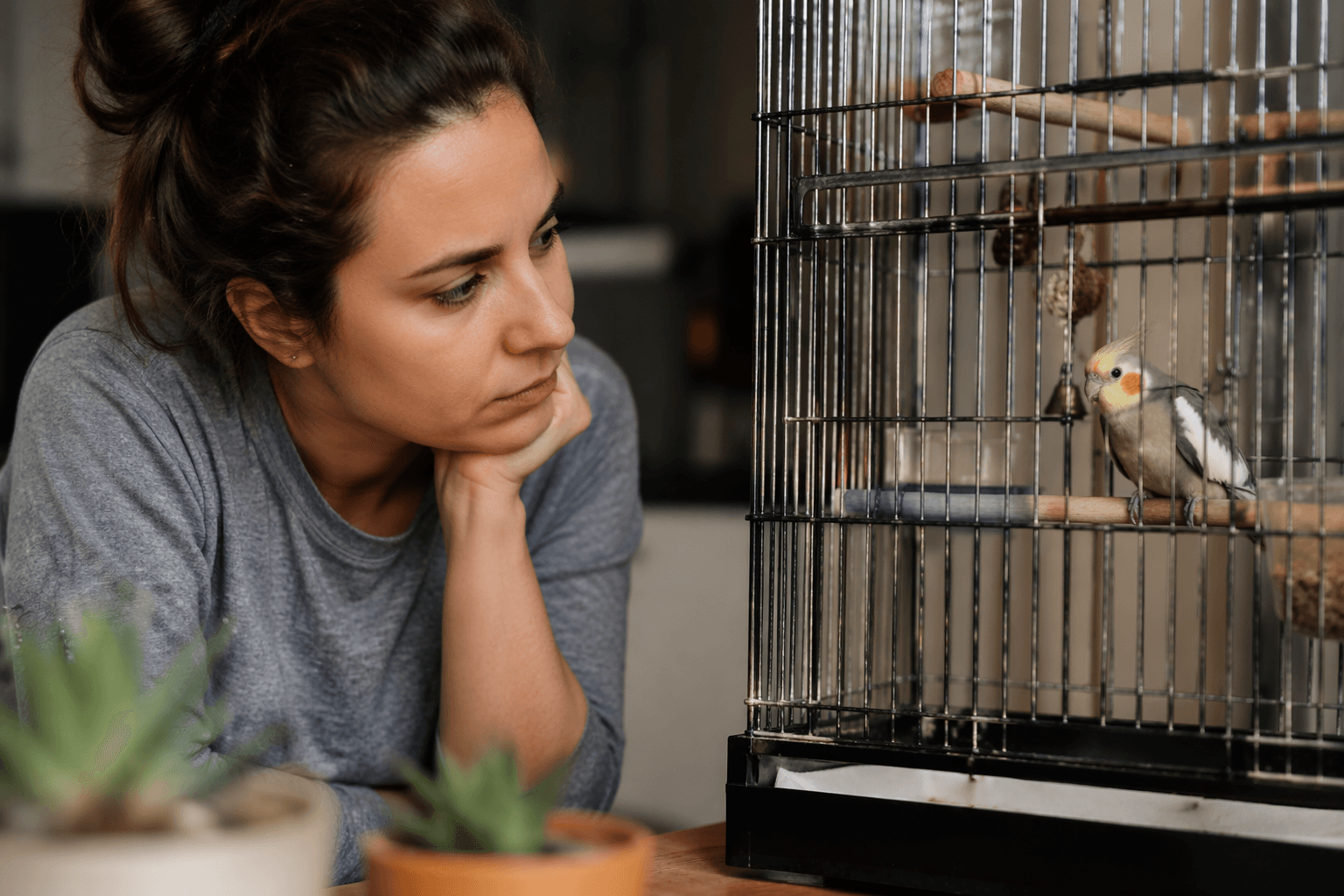
The cockatiel is doing something every nervous new owner eventually learns to respect: staying put, watching the room, and deciding whether this new place feels safe. In a Parrot Forums post, the bird is only three months old and has been home four days, while the owner sits nearby, talks softly, and avoids touching, yet still feels sad because the bird will not come out of the cage. That discomfort is real, but it is also familiar. Early caution is not a verdict on the bond, it is often the first sign that the bird is taking in the room, the sounds, the routine, and the people one piece at a time.
What the first four days really mean
The mistake most first-time cockatiel owners fear is pushing too fast and breaking trust before it has a chance to form. VCA Animal Hospitals, in guidance by Gregory Rich, DVM, and Rick Axelson, DVM, says the point of training is to earn a bird’s trust and respect, and that patience is part of the deal. Lafeber Pet Birds makes the same point in plainer language: the first few days with a new bird can be very easy or a little difficult. A bird that is not ready to step out after four days is not being stubborn. More often, it is still figuring out whether this new cage, this new person, and this new routine are predictable enough to trust.
What progress looks like in week one
First 3 days: decompression
The ASPCA Pro 3-3-3 guide is useful because it gives new owners something better than wishful thinking: a timetable with room for nerves. The first three days are usually a decompression period, when pets may be stressed, overwhelmed, anxious, or fearful. The goal is not a breakthrough performance. It is a calm landing, with a routine that stays steady and interactions that are gentle, brief, and never forced.
First 3 weeks: learning the rhythm
By the first few weeks, the bird is usually starting to notice patterns. ASPCA Pro describes this stretch as the time when pets begin learning routines and bonding, with less stress revealing more of their personality. For a cockatiel, that might mean the bird tolerates your presence more easily, watches you with less alarm, or settles faster when you approach the cage. Progress here is less about getting hands on the bird and more about becoming a familiar, non-threatening part of the room.
By 3 months: the bird feels at home
ASPCA Pro uses about three months as a common benchmark for fuller adjustment, when pets are more integrated into the household and trust is more established. That is a much better mental model than expecting a new cockatiel to act tame on command. In other words, week one is not the finish line. It is the period when the bird decides whether the world beyond the cage is predictable enough to explore.
How to read pause versus continue
Birds do not tell us how they feel mostly with sound. Best Friends Animal Society says vocalizations account for only a small percentage of a bird’s communication, while the rest is body language. That matters with cockatiels, because a quiet bird is not necessarily a happy bird, and a vocal bird is not automatically relaxed. You are looking for the whole picture: posture, movement, and whether the bird leans in or pulls away.
A few simple cues help separate “keep going” from “pause”:
- Continue when the bird looks settled, moves smoothly, and shows interest without tension. Best Friends notes that a foot held up can sometimes mean the bird is ready to step up, though the context matters.
- Pause when the bird opens its beak and lunges, flares feathers in a defensive way, or otherwise looks tense and ready to defend space. Best Friends also warns that fluffed feathers can mean comfort, but can just as easily mean the bird is trying to look larger and more threatening, so the cue has to be read with the rest of the body.
The key is not to translate one gesture as a yes or no by itself. Look for clusters. A relaxed, steady bird is inviting more. A bird that stiffens, lunges, or seems to be warning you away is asking for distance, not persuasion.
Daily routines that build trust without forcing contact
Best Friends suggests something many eager owners find surprisingly hard: interact with your new bird about as much as you realistically plan to six months from now. That keeps the early routine from becoming a dramatic burst of attention followed by a drop-off. Consistency is what teaches a cockatiel that life with you has a pattern, and patterns are what nervous birds use to decide whether they can relax.
A low-pressure day can be simple:
- Sit near the cage at roughly the same times each day.
- Talk softly without reaching in every time you stop by.
- Keep movements slow and familiar.
- Let the bird watch you do ordinary things from a safe distance.
- Use positive reinforcement when the bird makes a small, willing choice toward you, rather than asking for contact on demand.
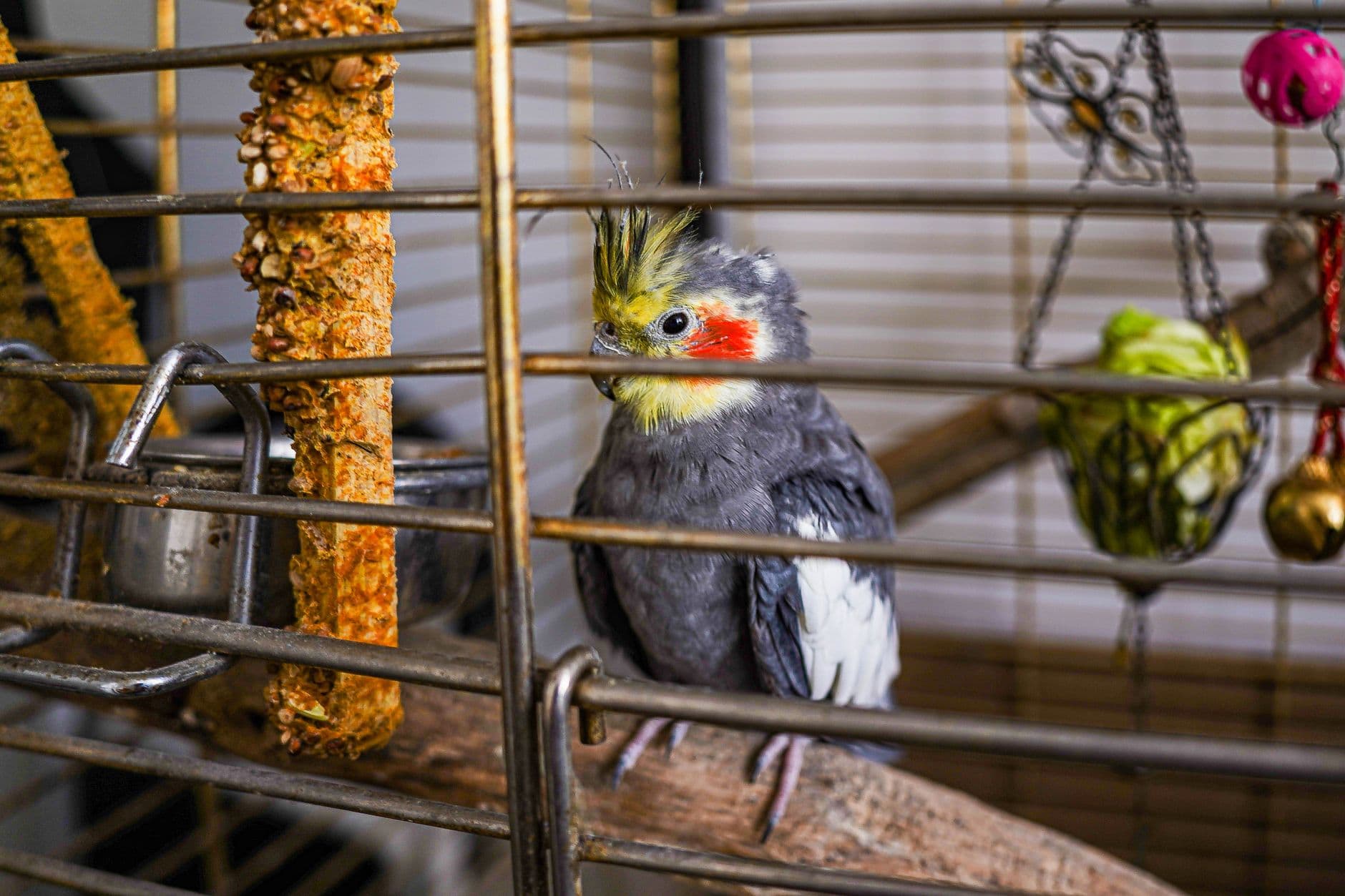
This is also where cockatiel-specific expectations help. VCA Animal Hospitals says cockatiels make excellent first birds for families, but it also notes that they need daily out-of-cage time and bird-safe toys to stay entertained. That means your goal is not to trap the bird in endless training sessions. Your goal is to make the cage feel like a secure home base while the rest of the room slowly becomes less mysterious.
Health and household basics still matter
Trust-building does not replace medical care. VCA advises that a new bird should be checked by an avian veterinarian as soon as it is acquired, and if it will live around other birds, it should ideally spend 30 to 45 days in a separate, isolated room for quarantine. That step protects more than the flock dynamic. It gives the bird a quieter start and gives you a baseline for what healthy behavior looks like in your home.
That is why the worried owner in the forum thread is not staring at a problem bird so much as a very normal beginning. A cockatiel that stays in the cage after four days is not closing the door on the relationship. It is doing what a careful newcomer should do: listening, learning, and waiting until the room feels like home.
This article was produced by Prism’s automated news system from verified source data, official records, and press releases, then run through automated quality and moderation checks before publishing. The system is built and supervised by the people who set the standards it runs under. Read our full AI policy.
Know something we missed? Have a correction or additional information?
Submit a Tip