New PBFD Vaccine Research Offers Hope for Parrots Battling Deadly Feather Disease
Scientists are testing inactivated and recombinant vaccine candidates that could finally give parrots a fighting chance against the fatal PBFD virus.
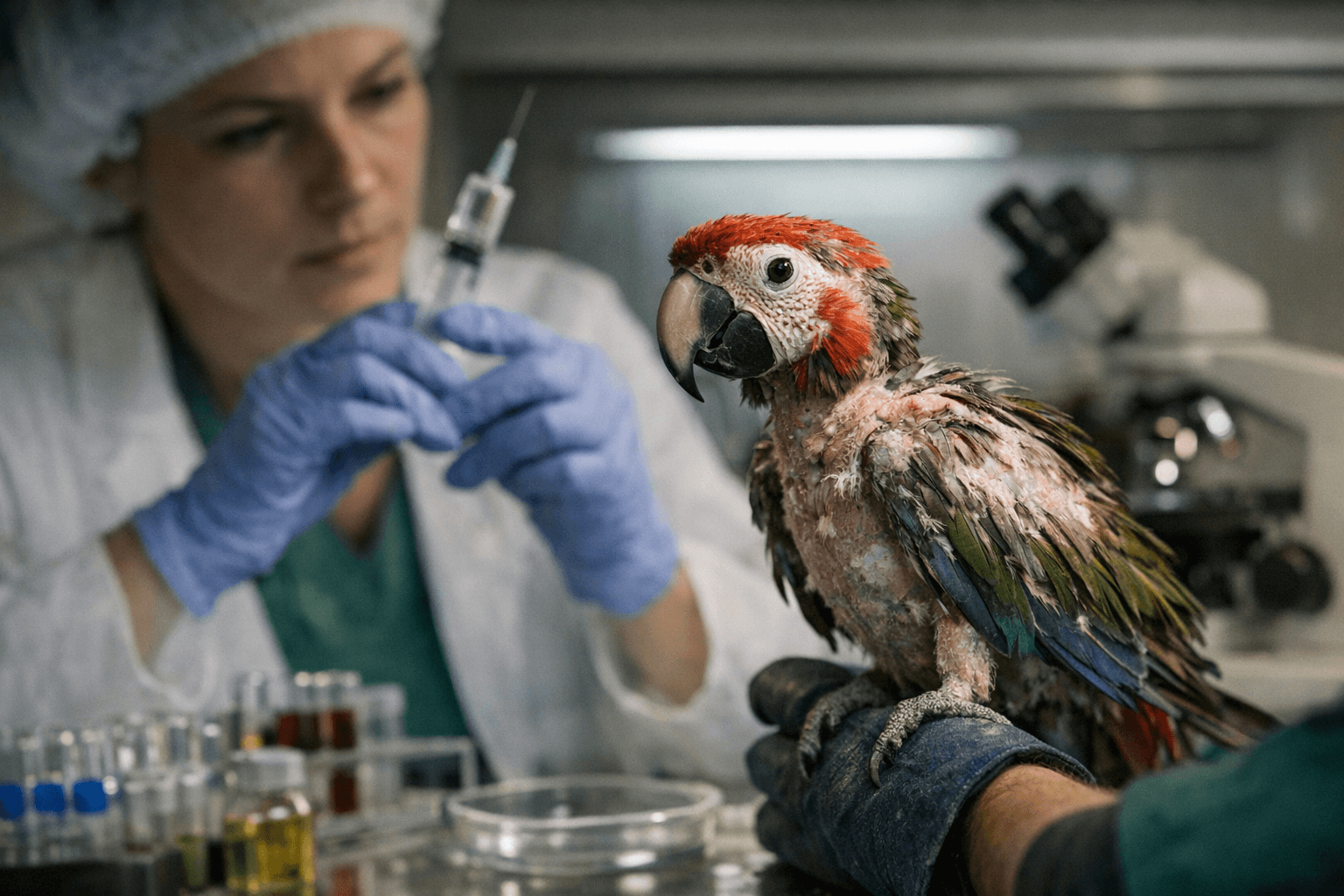
For decades, psittacine beak and feather disease has been one of the most feared diagnoses in aviculture: a circovirus that strips birds of their feathers, destroys their immune systems, and offers no approved treatment once infection takes hold. New research into vaccine candidates is beginning to change that picture.
Recent scientific efforts have moved into trials of two distinct vaccine approaches, inactivated and recombinant candidates, both targeting the circovirus responsible for PBFD. Inactivated vaccines use killed viral material to train the immune system, while recombinant vaccines engineer specific viral proteins to trigger a protective response without using the pathogen itself. The parallel development of both strategies reflects how seriously the research community is now pursuing a disease that has long been considered unbeatable.
PBFD affects psittacines across the globe, from wild cockatoos in Australia to captive African greys and eclectus parrots in collections worldwide. The disease is caused by beak and feather disease virus, a circovirus notable for its resilience in the environment and its ability to spread through feather dust, feces, and crop secretions. Young birds and immunocompromised individuals are especially vulnerable, and because the virus attacks the very cells responsible for immune defense, infected birds have little ability to fight back. There is currently no antiviral treatment, making prevention the only meaningful tool available to aviculturists and veterinarians.
The vaccine research synthesizes findings from multiple scientific efforts, representing a coordinated push rather than isolated laboratory work. The fact that both inactivated and recombinant platforms are being explored simultaneously suggests researchers are hedging against the possibility that one approach may prove more effective or easier to produce at scale than the other.
For anyone who has watched a bird lose its flight feathers in successive molts or witnessed the cascade of secondary infections that follow immune collapse, the progress is meaningful even at this early stage. A viable PBFD vaccine would represent a fundamental shift in how aviculturists and avian vets manage the disease, moving from quarantine and supportive care to actual immunological protection. The trials are still in progress, but the direction of the science is clearer than it has been in years.
This article was produced by Prism’s automated news system from verified source data, official records, and press releases, then run through automated quality and moderation checks before publishing. The system is built and supervised by the people who set the standards it runs under. Read our full AI policy.
Did this article answer your question?