Undercover Investigation Exposes USDA-Licensed Bird Mills and African Grey Parrot Smuggling
Undercover footage by investigator Pete Paxton, working with World Animal Protection and SEED, documents USDA-licensed parrot breeding “bird mills” in Texas and Oklahoma and highlights links to deadly African grey smuggling.

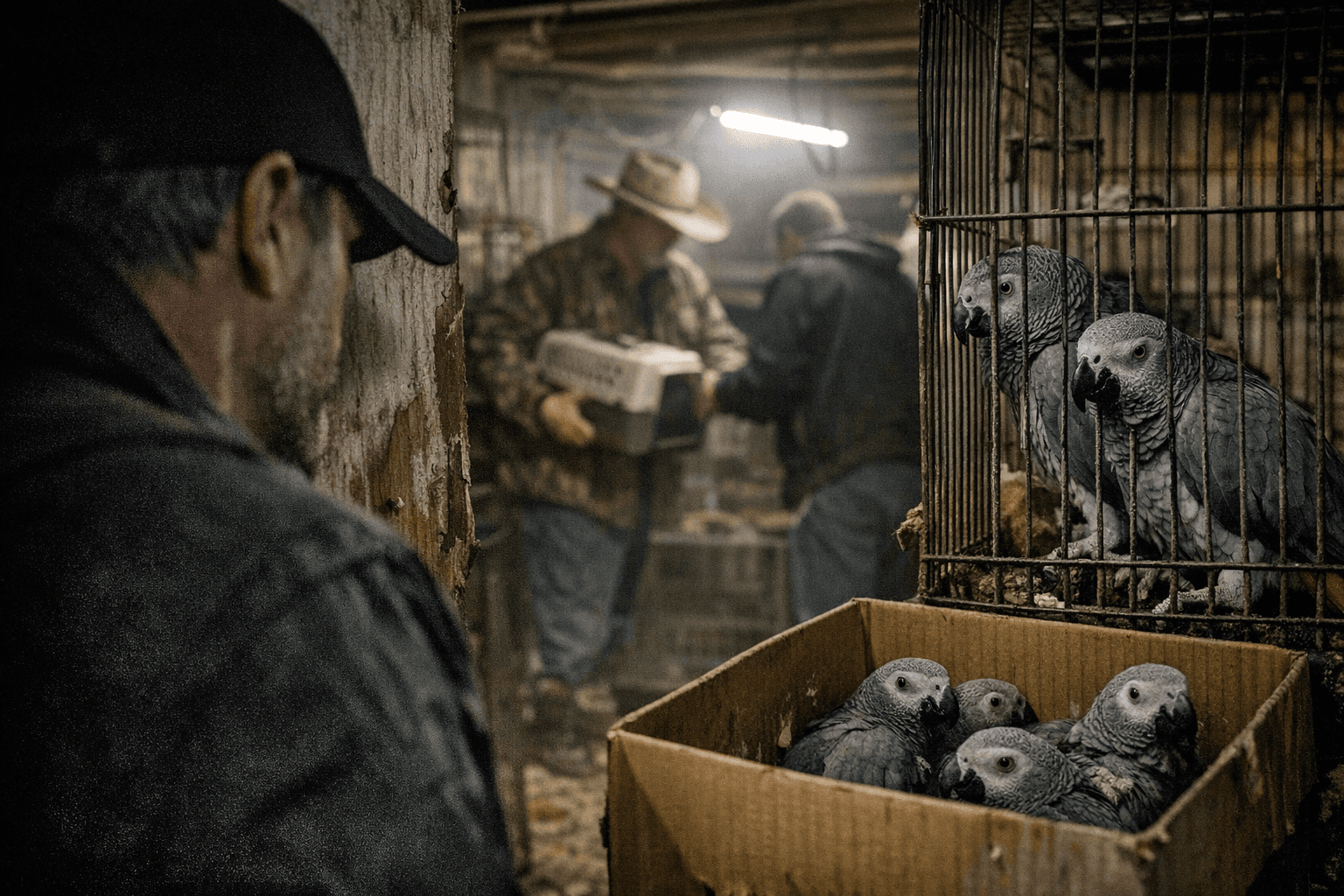
Investigator Pete Paxton, working with World Animal Protection and SEED, used undercover footage to document USDA-licensed parrot breeding operations in Texas and Oklahoma that sources describe as "bird mills." The footage and reporting show large-scale commercial breeding where hundreds of caged pairs produce chicks for sale, raising questions about welfare and regulatory oversight for birds sold into the pet market.
The domestic findings sit alongside a grim international picture. DRC authorities concluded a recent shipment of African greys had been exported illegally by a member of the National League of Congolese Wildlife Exporters. Turkish Airways agreed to fly a repatriation shipment back to Kinshasa at no cost; when wooden crates crammed with greys arrived in November 2024, there were only 113 living birds and 13 others having died on the flight. Earlier incidents add to the alarm: investigators in 2010 traced the deaths of 730 wild African grey parrots on a Johannesburg-to-Durban flight to Byart Birds, a company owned by Martin Byart, and reports say seized parrots sent to Lwiro Sanctuary were later allegedly confiscated at gunpoint and "vanished, likely back into the pet trade."
The scale and price of the market help explain the pressure on wild populations. The rising demand for pet African grey parrots and the price for a single bird - as much as $7,000 - drive rampant poaching in the forests of West and Central Africa. Over decades an estimated 1.3 million wild African greys were traded from 1975 to 2015, and experts warn the true number may be far higher because many birds die in transit.
Social-media popularity is part of the demand story. Viral accounts showcase trained birds and feed demand: Furby the umbrella cockatoo has 450,000 followers; Molly the African grey has more than 4.7 million TikTok likes; Apollo, another African grey, has had more than 6.6 million views. Those clips can mask welfare problems and create buyers who prize novelty over provenance. As one observer put it, "There's a dark side to the hilarious parrot reels."
Criminal activity at the retail level further illustrates risk. In Botley, Southampton, thieves "moved stealthily, under cover of darkness, and were well prepared with bolt-cutters, cardboard boxes, nets and a comprehensive hit list." First they "chopped the padlocks off the main gate of Grange Road Pets in Botley, Southampton, and dipped low past the CCTV." Stolen stock included 40 budgerigars, 20 canaries, two cockatiels, three Bourke parakeets and two red-rumped parrots. Those incidents show how valuable birds can be to organized theft and illicit trade.
Animal-welfare groups say the system is broken; treatment of parrots raised for the pet trade "is cruel and inhumane and should be abolished." For community members who own, sell, or consider buying parrots, the practical steps are clear: verify seller paperwork and health certificates, ask for shipment and care records, and be wary of impulse purchases driven by viral videos. Report suspicious listings and thefts to local authorities and keep provenance documentation with a bird's records.
This story combines local theft, domestic commercial breeding, and international smuggling into a single chain that affects owners and wild populations alike. Expect follow-ups as regulators, sanctuaries, and investigators pursue license and transport records; meanwhile prioritize bird welfare, transparent sourcing, and careful documentation when trading or adopting parrots.
Know something we missed? Have a correction or additional information?
Submit a Tip
