Veterinarian-led Guide to Daily Care for Small Hookbill Parrots
Learn practical, veterinarian-backed daily care for small hookbill parrots, housing, diet, grooming, enrichment, training, health signs, and a usable daily checklist.
1. Cage size and secure bar spacing
Small hookbills need a cage that allows wing extension, movement, and in-cage play; aim for the largest footprint you can accommodate. A minimum for single birds is often around 24" x 24" x 30" (60 x 60 x 76 cm) for smaller species, but larger is always better, prioritize width for hopping and play. Bar spacing should prevent escape and foot/neck entrapment; typically 1/2" to 5/8" (12–16 mm) is appropriate for green-cheeks, caiques and similar species. Secure locks are essential, use parrot-proof latches and check for rust, sharp edges, or loose welds during weekly inspections to keep escape and injury risks low.
2. Perch types and placement for foot health
Rotate multiple perch types and diameters to promote balanced foot muscle use and prevent pressure sores, include natural wood branches, rope, and a smooth dowel. Place perches so the bird can move between food, water, toys and a sleeping spot without obstruction; avoid placing perches directly above food to reduce contamination. Provide at least one textured perch for trimming nails naturally but avoid abrasive surfaces that can crack nails or feet. Proper placement supports foot health and mimics the variety of surfaces birds encounter in the wild, reducing pododermatitis and boredom.
3. Enrichment, toy rotation, and out-of-cage time
Enrichment must be varied and rotated to prevent boredom, offer foraging toys, chewables, swings, and puzzle toys on a schedule to keep novelty high. Rotate toys weekly and introduce new safe materials periodically; inspect toys daily for wear and remove any hazards like frayed ropes or small swallowed pieces. Provide a minimum of at least 2 hours daily out-of-cage time, ideally 3–4 hours of supervised play and exploration, to support mental stimulation and social bonding. This daily outreach strengthens your relationship, reduces stereotypic behaviors, and keeps your bird community-ready for travel, training, or vet visits.
4. Diet structure and practical feeding
Use formulated pellets as the foundation of the diet, aim for pellets to make up roughly 60–70% of daily intake to ensure balanced nutrition. Complement pellets with 20–30% fresh vegetables and fruits, focusing on a wide variety of leafy greens, carrots, bell peppers and safe fruits, offered in rotation for color and texture diversity. Keep seeds and nuts as treats at less than 10% of the diet to avoid obesity and nutrient imbalance, use them as training rewards or for foraging enrichment. Weigh portions or use consistent scoops, monitor body condition, and introduce new foods slowly while observing acceptance and droppings.
5. Toxic foods and immediate avoidance list
Never feed avocado, chocolate, caffeine, alcohol, or excessive salt, these substances are toxic and can be fatal even in small amounts. Avoid alliums (onions, garlic) and raw or undercooked beans, which contain compounds harmful to birds. Also steer clear of xylitol-containing products, moldy foods, and anything with unknown additives or artificial sweeteners. Keep kitchen counters, plates, and dripping pans inaccessible during cooking; toxic exposures commonly occur when birds sample human food or inhale aerosolized fats.
6. Grooming and hygiene protocols
Offer regular baths or misting to maintain plumage and skin health, many small hookbills enjoy a shallow dish bath daily, or misting several times per week if bathing isn’t embraced. Nail trims and wing trims should be performed by an experienced person or avian vet; improper trimming risks bleeding or flight impairment, so consult your avian clinician for technique and frequency. Clean food and water dishes daily and perform a more thorough cage cleaning weekly using bird-safe cleaners, avoid aerosol cleaners, and rinse surfaces thoroughly to remove residues. Regular grooming and hygiene reduce feather-plucking stressors and lower pathogen risks for both bird and household.
7. Training and behavior strategies
Use positive reinforcement as your primary training tool, reward desired behaviors with praise, pellets, or favorite treats to build trust and consistency. Keep sessions short and frequent: 5–10 minute blocks multiple times a day work best for small attention spans and create steady progress. Teach core cues like “step up” first, then basic wings, target training, and simple recall or stationing; these skills help with handling, vet care, and daily management. Consistency across household members and predictable routines reduce stress and unwanted behaviors such as screaming or resource guarding.
8. Health monitoring and signs to see an avian vet
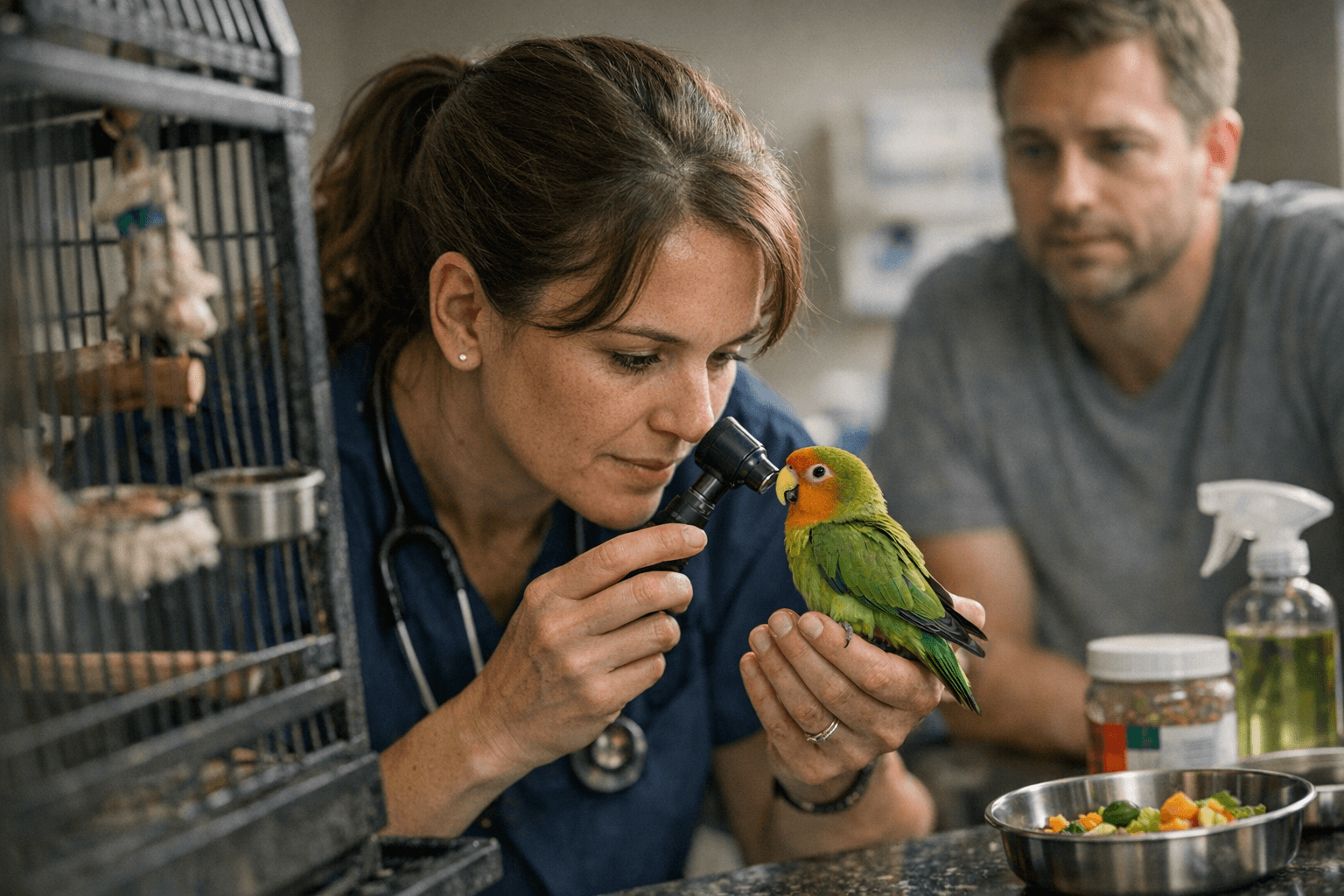
Monitor appetite, weight, droppings, feather condition, breathing, and activity daily, small changes can signal big problems in birds. Seek avian vet attention for appetite loss, persistent fluffed feathers, respiratory changes (tail bobbing, wheeze, nasal discharge), changes in droppings (color, consistency, frequency), unexplained weight loss, or sudden lethargy. Keep a simple weigh scale or note regular body condition so changes are easy to spot; early intervention often means simpler treatment and better outcomes. Regular annual wellness exams with an avian vet help catch silent issues and guide vaccination, parasite control, and behavioral tips.
- Morning: change water, top up pellets, offer fresh veg/fruit, quick cage spot-clean
- Midday: supervised out-of-cage time or training session (5–10 minutes), rotate/refresh toy
- Evening: offer bath or misting if desired, check perches and food dishes, secure cage
- Weekly: thorough cage cleaning, rotate toys, inspect nails/feet; note any changes for vet follow-up
9. Daily care checklist you can use tonight
Create a short, repeatable checklist to make daily care manageable and community-friendly:
Use this checklist as a routine scaffold, consistency reduces stress for you and your bird, and it makes shared care easier for family members or bird-sitters.
Closing practical wisdom Small hookbills thrive on routine, variety, and reliable veterinary oversight: give the cage space, vary perches and toys, feed a pellet-centered diet with fresh produce, and prioritize supervised out-of-cage social time. Start small, add one new veggie a week, rotate one toy every Sunday, and keep a daily checklist on the fridge, and you’ll see behavior and health benefits that make every squawk worth the effort.
This article was produced by Prism’s automated news system from verified source data, official records, and press releases, then run through automated quality and moderation checks before publishing. The system is built and supervised by the people who set the standards it runs under. Read our full AI policy.
Did this article answer your question?