What to Expect at Your Parrot's First Avian Vet Visit
Prepare for a full physical, baseline tests, and husbandry counseling at your parrot's first avian vet visit to set health baselines and improve long-term care.
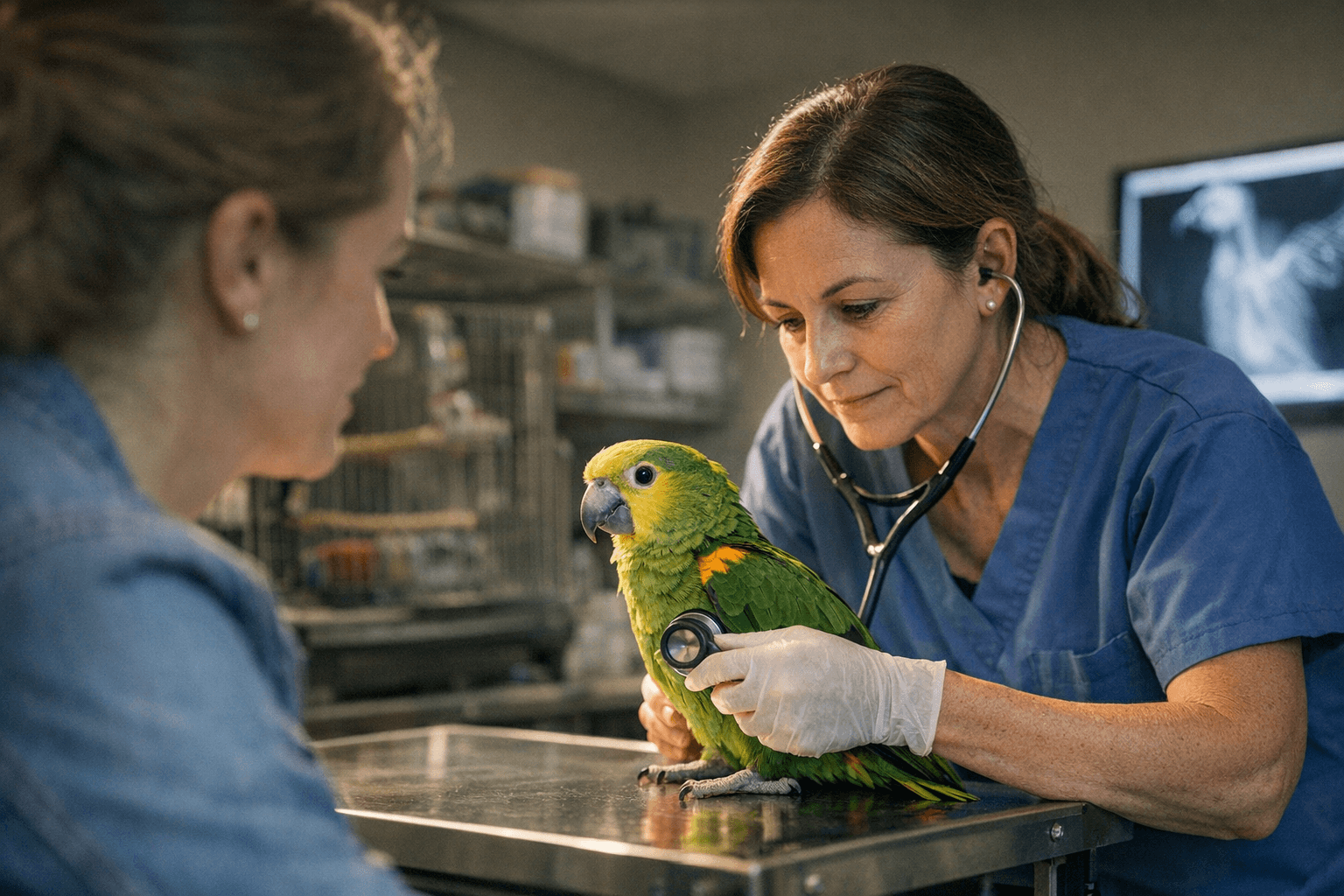
Your parrot’s first avian veterinary visit is a foundational appointment that sets health baselines and starts a long-term care plan. Expect a species-specific, hands-on wellness exam focused on weight, body condition, feathers and skin, beak and nails, a crop check, auscultation of heart and lungs, and a behavioural assessment. These elements give your avian-experienced veterinarian the context needed to interpret findings that would look normal or alarming in other species.
Baseline diagnostic testing is commonly recommended so future changes are meaningful for your bird. A fecal gram stain or culture helps screen for parasites and bacterial issues, while baseline bloodwork establishes the individual’s normal values. Additional diagnostics such as radiographs, targeted cultures, or specialized tests may follow if the physical exam or history raises concerns. Establishing those baselines at the first visit makes follow-up care and emergency decisions faster and more accurate.
Preventive care and husbandry counseling are core parts of the visit. Expect a detailed conversation about diet, cage environment, and enrichment - all factors that drive chronic disease and behaviour. Quarantine recommendations for new birds, vaccination or testing where appropriate, and guidance on routine grooming and nail or beak care are typical topics. The visit is as much about education as it is about exams; building a realistic, bird-specific husbandry plan can prevent many common problems and improve quality of life for companion parrots.
Owners also need to know when a situation is an emergency. Your veterinarian will explain red flags that require immediate care and will work with you to create an emergency plan and a long-term health strategy tailored to your bird’s species, age, and lifestyle. That plan may include frequency of rechecks, follow-up testing, and preventive steps to reduce disease risk.
Practical preparation improves communication and clinic efficiency. Bring your bird’s medical history if available, note recent changes in behaviour or appetite, and be ready to discuss the diet and the bird’s typical environment. Clear, specific information about what your bird eats and how it lives gives the clinician targeted starting points for husbandry changes.
For parrot owners, this first visit is more than a checkup; it’s the start of a partnership with an avian-savvy clinician to keep your feathered friend healthy. A thorough exam plus baseline tests and focused husbandry advice create measurable benchmarks you can use to spot trouble and make informed care choices going forward.
This article was produced by Prism’s automated news system from verified source data, official records, and press releases, then run through automated quality and moderation checks before publishing. The system is built and supervised by the people who set the standards it runs under. Read our full AI policy.
Did this article answer your question?