World Parrot Trust Guide Reveals How to Build a Balanced Parrot Diet
Seed bowls are slowly harming your parrot. The World Parrot Trust's nutrition guide explains exactly how to build a species-tailored diet that keeps birds thriving for decades.
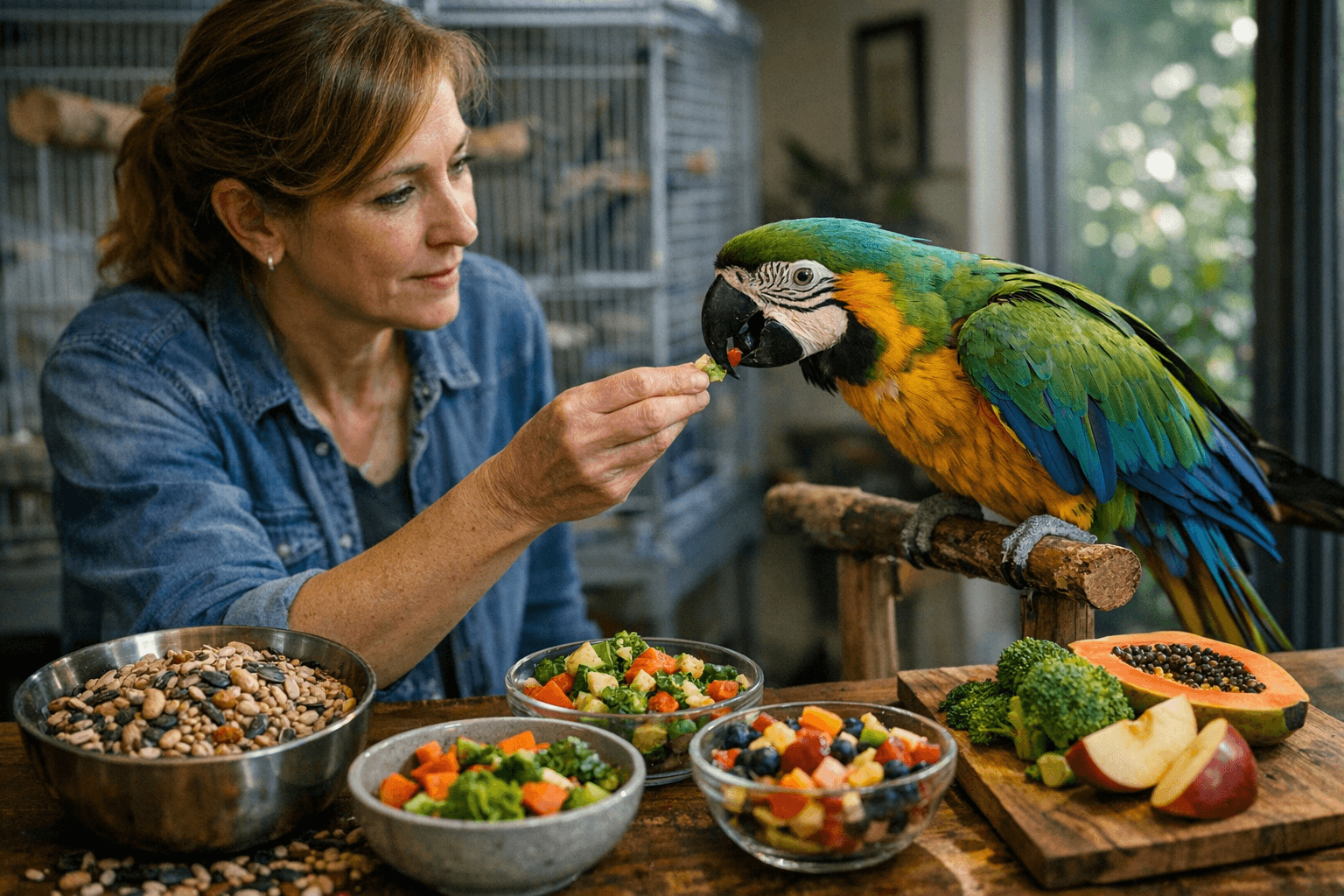
A bowl of sunflower seeds looks generous. To a cockatoo or amazon living alongside you for the next 40 years, it's closer to a slow-moving health crisis. Parrot nutrition is one of the most consequential decisions a keeper makes, and the consequences don't always show up quickly. That's what makes the World Parrot Trust's comprehensive nutrition guide, available through Parrots.org, such a valuable reference: it synthesizes decades of avian nutritional science and field experience into practical, species-aware guidance that covers everything from pellet ratios to puzzle feeders.
The Problem With Seeds as a Staple
The seed-only diet is the most common nutritional mistake in companion parrot keeping, and the World Parrot Trust guide addresses it directly. Seeds are energy-dense and palatable, which is exactly why parrots will choose them over almost anything else if given the option. But a diet built primarily around seeds creates a predictable cluster of problems: obesity, fatty liver disease, and micronutrient imbalances that compound over years. Calcium deficiencies, vitamin A shortfalls, and inadequate protein are common outcomes in birds kept on seed-heavy regimens. The fact that a bird enthusiastically eats a seed diet is not evidence that the diet is adequate; it's evidence that seeds taste good.
The guide doesn't frame seeds as villains to be eliminated entirely. It frames them as a component that needs to be moderated and placed in proportion, not used as a foundation.
Building the Foundation: Pellets and Why They Work
The centerpiece recommendation of the World Parrot Trust guide is to make high-quality, formulated pellets the dietary base for most companion parrots. Depending on species, this means pellets should represent roughly 60 to 80 percent of a bird's daily ration. This isn't an arbitrary figure; it reflects the logic of formulated nutrition. Pellets are engineered to deliver consistent protein, calcium, vitamins, and trace minerals in every bite, removing the variability that comes with fresh food alone and the deficiency that comes with seed dependence.
The guide's focus on formulated diets is grounded in the understanding that companion parrots cannot self-select a complete diet the way a wild bird might across a vast and diverse foraging range. In captivity, what goes in the bowl is the entire menu. Pellets close the nutritional gaps that seeds leave open.
Fresh Food: Vegetables Are the Priority
Pellets handle the nutritional baseline, but fresh food adds variety, hydration, and micronutrients that complement the formulated diet. The guide's hierarchy is clear: leafy greens and brightly colored vegetables should be a daily presence in the bowl, not an occasional garnish. Think dark leafy greens, orange and red vegetables, and a wide range of plant material that mirrors the dietary diversity a parrot would encounter foraging across different altitudes and seasons in the wild.
Fruit gets more moderate treatment. High-sugar fruits should be limited to occasional treats rather than daily staples. The sugar content is the concern, particularly for species prone to weight gain, but fruit in small portions does contribute vitamins and enrichment variety. The key is proportion: vegetables first, fruit as an accent.
Seeds, when included, follow the same logic: small portions, high quality, used as a flavor or reward element rather than a meal anchor.
Species Matter More Than Most Owners Realize
One of the guide's most important contributions is its insistence on species-specific thinking. Conures, amazons, macaws, and cockatoos do not have the same nutritional requirements, and they do not have the same metabolic rates. An african grey's calcium needs differ from a macaw's protein requirements. A cockatoo's tendency toward obesity demands tighter portion management than some other species. The guide provides species-group advice across these dimensions, covering protein, calcium, and vitamin requirements in practical terms.
This matters because generic parrot care advice often gets extrapolated across wildly different birds. A feeding plan that works well for a small conure may be inadequate or even harmful for a large amazon. The World Parrot Trust guide treats species diversity as a core variable, not a footnote.
Foods That Should Never Touch the Bowl
The guide includes clear safety notices on toxic foods, and these deserve emphasis because the consequences of exposure can be severe and fast. Avocado is toxic to parrots and should never be offered in any form. Chocolate contains compounds that are dangerous to birds. Caffeine, found in coffee, tea, and many sodas, is also on the avoid list. These aren't edge cases or overcautious warnings; they are documented hazards that have harmed companion birds.
When in doubt about a new food, the guide's implicit advice is conservative: research before offering, and when the research is unclear, skip it.
Foraging: Feeding the Mind While Filling the Crop
Nutrition isn't only about what's in the bowl; it's also about how the bird accesses it. The World Parrot Trust guide gives meaningful attention to foraging enrichment, recommending puzzle feeders, foraging toys, and other mechanisms that make a bird work for its food. This isn't decoration. It directly addresses behavioral issues that emerge from under-stimulation and from excessive treat feeding, two problems that often travel together in captive parrot settings.
A bird that forages actively is a bird that's cognitively engaged, physically occupied, and eating at a pace that more closely mirrors natural behavior. Introducing foraging enrichment is one of the most impactful low-cost changes a keeper can make alongside dietary reform.
Making the Transition Without a Fight
Switching a seed-addicted bird to a pellet-based diet requires patience and a plan. The guide recommends a gradual transition under veterinary guidance rather than an abrupt change, which can cause stress and, in some cases, food refusal. The process involves slowly increasing the pellet proportion while decreasing seeds over several weeks, monitoring intake carefully throughout.
Practical steps for building a better diet:
1. Begin transitioning from seeds to pellets gradually, with veterinary input on pace and portion sizes
2. Introduce a daily serving of leafy greens and colorful vegetables alongside the pellet base
3. Limit high-sugar fruits to occasional offerings rather than daily staples
4. Replace some stationary feeding with foraging toys or puzzle feeders to add behavioral enrichment
Tracking What Changes
One recommendation that often gets overlooked: document everything. The World Parrot Trust guide suggests keeping records of dietary changes and body weight to support veterinary assessment. Long-lived parrots can mask health problems for extended periods, and a weight chart combined with a feeding log gives a vet far more to work with than a verbal summary. Subtle weight trends, changes in food preference, and shifts in energy level become visible patterns in a log that would be invisible in memory.
Because nutritional mistakes compound quietly over years in a species that can live for decades, this kind of preventive record-keeping is exactly the investment it sounds like: low cost, high return. The World Parrot Trust's nutrition guide, available as a free PDF through Parrots.org, is the place to start building that foundation.
This article was produced by Prism’s automated news system from verified source data, official records, and press releases, then run through automated quality and moderation checks before publishing. The system is built and supervised by the people who set the standards it runs under. Read our full AI policy.
Did this article answer your question?