Foundry module spotlights Pathfinder 2e buffs and penalties that swing rolls
A new Foundry module makes Pathfinder 2e’s smallest modifiers visible, showing exactly when a frighten, poison, or Aid changed the roll.
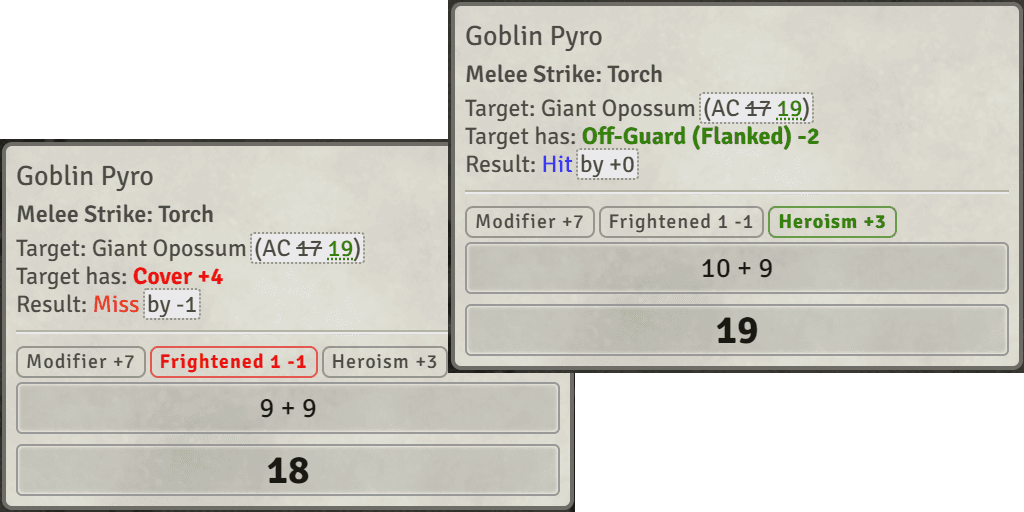
A small Foundry module made one of Pathfinder 2e’s easiest-to-miss truths impossible to ignore: a frightened goblin, a poison penalty, or one well-timed Aid can be the difference between a hit and a miss. Pf2E Modifiers Matter is built for that exact moment, flagging when status effects, buffs, debuffs, and conditions actually changed the outcome of a roll.
The module was last updated 4 days and 23 hours ago on Foundry Virtual Tabletop, and its GitHub project showed version v1.16.6 with a recent commit from two days ago. Authored by shemetz, it is aimed at the PF2e system and, according to its README, also supports Starfinder 2e. The core idea is simple but useful at the table: instead of letting the reason for a result disappear into the modifier stack, the interface highlights when one character’s help or a condition on the battlefield really mattered.
That fits Pathfinder 2e’s rules language closely. The system uses typed bonuses and penalties, and when more than one bonus of the same type applies, only the highest bonus counts. Penalties work the same way in reverse, with only the worst penalty of a given type applying. Frightened is a clear example of why the math matters: it applies a status penalty equal to its value on all checks and DCs, then decreases by 1 at the end of each of the afflicted creature’s turns unless something says otherwise. A fighter landing a critical hit because a druid frightened the goblin, or missing because a poison penalty finally kicked in, is exactly the sort of swing this module is built to expose.
Aid also becomes easier to read in play. Pathfinder 2e says the helper has to explain how they are helping, the GM decides whether the aid is appropriate, and a critical success grants a +2 circumstance bonus to the triggering check. When that bonus matters, Pf2E Modifiers Matter gives the table a visible prompt that the result was not just a lucky die.
The timing also fits the wider Foundry ecosystem. The PF2e system is volunteer-developed and officially supported through an agreement between Paizo Inc. and Foundry, so third-party modules like this can focus on presentation and table clarity without rebuilding the rules engine itself. In practice, that means the hidden math behind Pathfinder 2e stops feeling hidden, and the small modifiers that shape the game’s biggest moments finally show up where players can see them.
Know something we missed? Have a correction or additional information?
Submit a Tip