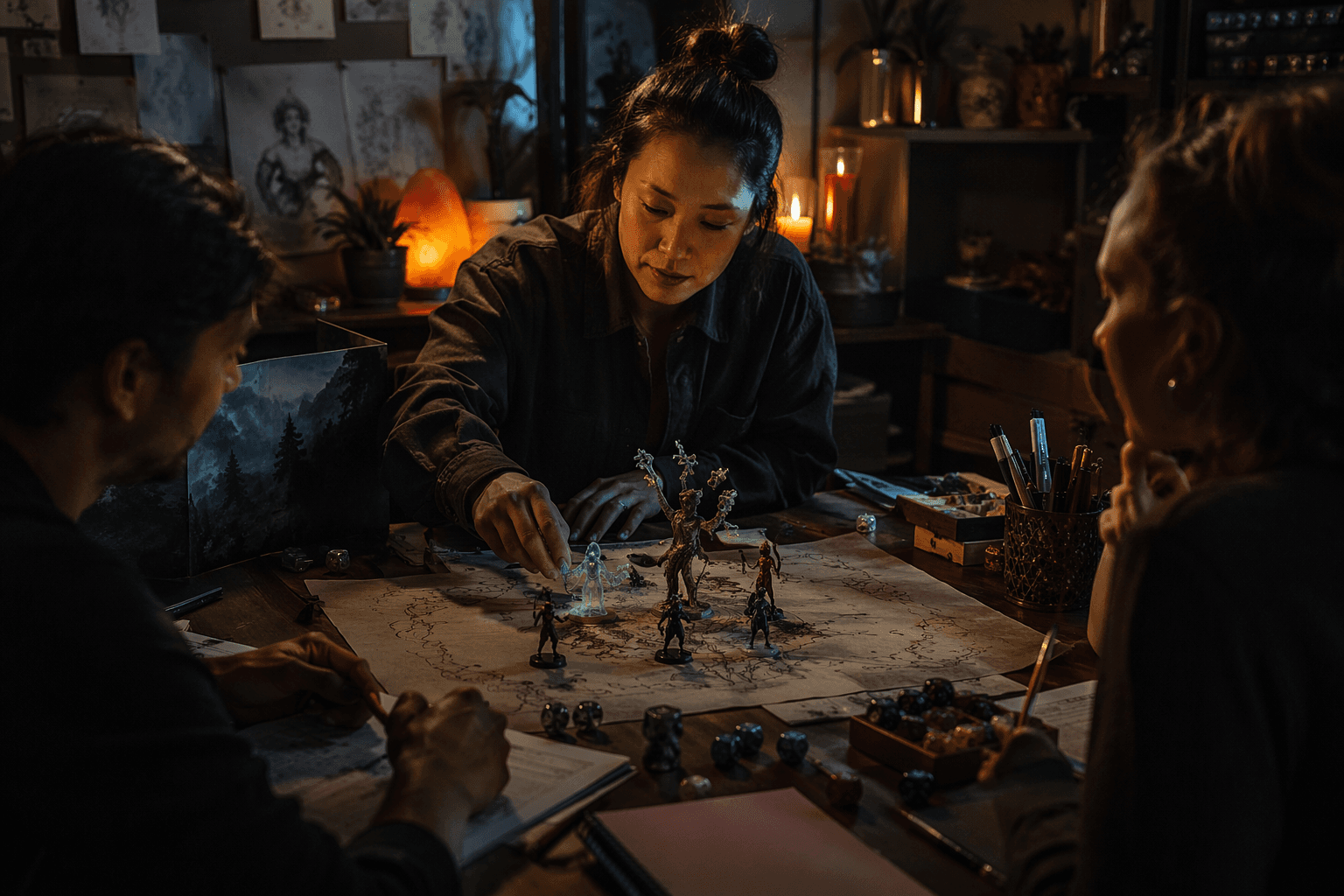
Hellfinder turns Pathfinder 2E into a modern horror game
Hellfinder shows Pathfinder 2E can power modern horror without a new core system. Its point-based rules and sealed dossiers make the genre shift feel built in.
Hellfinder turns Pathfinder 2E into a modern horror game
Hellfinder is interesting because it is not just another oddball Kickstarter-style spin on a familiar name. It takes Pathfinder 2E’s rules engine and asks a sharper question: how far can that system go when you strip away the default fantasy frame and push it into modern horror?
That is the real story here. Jason Bulmahn, who Paizo identifies as its Director of Game Design and the Lead Designer for the first edition of Pathfinder RPG, is using the PF2E chassis to support a very different kind of campaign, one built around tension, investigation, and survival rather than heroic dungeon-crawling. The project is not Pathfinder in the branded, canonical sense, but it is clearly Pathfinder-derived, and that alone makes it a useful signal for anyone watching system flexibility.
What changes at the table
Hellfinder keeps the core logic of Pathfinder 2E recognizable, then rewires the parts that matter most for horror play. BackerKit describes it as using point-based character creation and leveling, modern skills and gear, and a full stress and trauma system. That is a major tonal shift from the usual class-and-level fantasy structure, because it makes characters feel like people trapped in a dangerous contemporary setting instead of archetypes marching through a mythic campaign.
The practical effect is straightforward: the game is built to reward caution, investigation, and problem-solving. Rascal reported that combat is meant to be deadly and best avoided, which is exactly the sort of design decision that changes how a PF2E table behaves. If you enjoy Pathfinder for tactical depth, but want that depth aimed at dread, pressure, and resource management instead of sword-and-sorcery spectacle, Hellfinder is trying to occupy that lane.
The dossier format is part of the horror
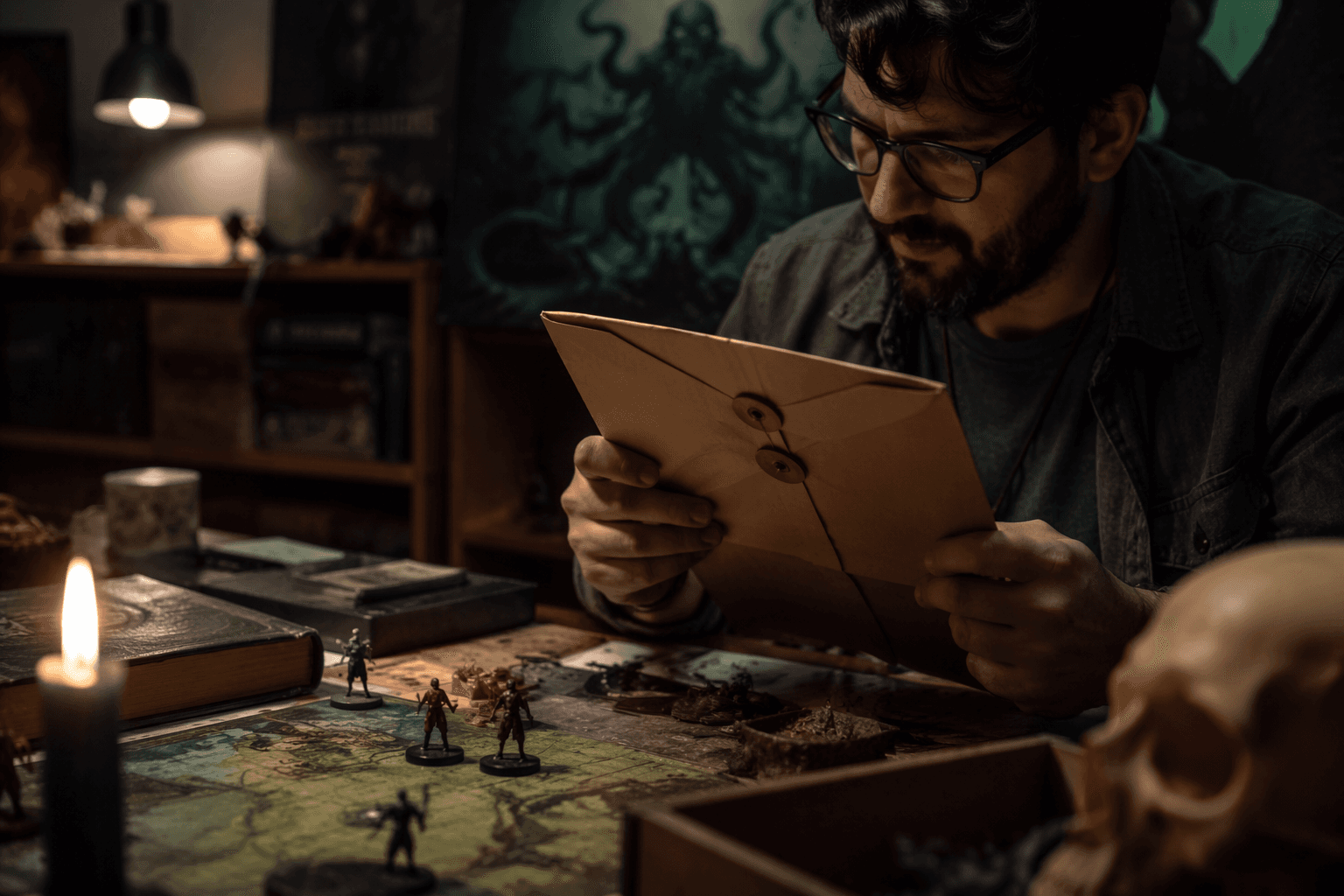
Hellfinder is also notable for how it is packaged. The game comes in three sealed dossiers, and the first packet contains character creation rules plus the opening chapter of the campaign. The later dossiers are only opened when the story tells players to do so, which turns the physical product into part of the experience instead of a simple delivery method.
That structure does real work for the table. It gives the campaign a thriller-movie rhythm, where revelation is staged and controlled rather than front-loaded in a rulebook. Campaign updates and forum material also frame this as a likely one-time print opportunity, which makes the physical edition feel less like a standard RPG release and more like an event object, something you open as the game opens itself.
The deluxe version pushes that feeling even further. It adds a binder for the dossiers, folders, stickers, dice, and a cultist pin, which makes the whole package feel collector-friendly without losing the game’s procedural horror identity. For groups that care about presentation, it is hard not to read that as part box set, part prop kit, part campaign.
Why this matters for Pathfinder 2E
Hellfinder’s bigger significance is what it suggests about Pathfinder 2E itself. The project shows that PF2E can function as a flexible chassis for genres far outside classic fantasy if a designer is willing to rethink class structure, recovery, advancement, and tone. The result is not a skin job; it is a rules-engine adaptation that changes how the game feels moment to moment.
That matters for Pathfinder tables because it speaks directly to the system’s reach. Groups that like PF2E’s tactical foundation, action economy, and structured play are not limited to dragons and dungeons if they are willing to follow the engine into another genre. Hellfinder is especially interesting because it is not trying to teach a brand-new system to those players. Instead, it asks them to trust a familiar mechanical language while moving the fiction into a modern horror register.
There is still a practical catch. BackerKit says the project is released under the ORC license, and the campaign materials make clear that you need an understanding of Pathfinder 2E to play. So this is not a beginner-friendly gateway product in the broad sense. It is a usable option for groups already comfortable with PF2E who want horror without abandoning the system they know.
The campaign numbers back up the interest
The BackerKit campaign closed on August 19, 2025 at 5:15 pm PDT with $37,219 pledged from 464 backers, far beyond its $10,000 goal. That kind of overperformance says something useful about demand: this was not a niche curiosity that barely cleared funding, but a project with enough momentum to push toward its second stretch goal and justify a broader look at what Pathfinder-adjacent design can do.
That traction also helps explain why Hellfinder feels like more than a collector’s oddity. Bulmahn has a long enough Pathfinder pedigree that the project reads as an extension of the brand’s design lineage, even if it sits outside the mainline setting and tone. It is a modern horror RPG built on the core rules engine of Pathfinder 2E, and the funding response suggests there is a real audience for that idea.
A Foundry package makes it table-ready
Hellfinder also has a virtual tabletop angle, and that makes the release more usable for actual play. A BackerKit update says Bulmahn partnered with Ian Blackstone on a Foundry Virtual Tabletop module that will include the agent generation rules, agent advancement, all three dossier adventures, and the Half Past intro adventure.
That is the kind of detail Pathfinder players care about because it reduces the friction of trying something new. Supporters at the Field Operator or Overmind level get the Foundry module for free, while other backers could add it for $15. In practice, that means the game is not only a physical curiosity or a shelf trophy. It is being built with the actual habits of Pathfinder groups in mind, especially those who already run on Foundry.
Hellfinder ends up feeling like a proof of concept for what Pathfinder 2E can become when designers stop treating fantasy as the only destination. The sealed dossiers, the stress system, the modern gear, and the Foundry support all point to the same conclusion: this is not just Pathfinder with a horror coat of paint, it is a serious attempt to show that PF2E can carry a different genre without losing its identity.
Know something we missed? Have a correction or additional information?
Submit a Tip