Paizo’s Pathfinder accessories speed up play with cards and pawns
Paizo’s cards, pawns, and maps are built to cut table time, not just decorate it. The smartest buys depend on whether you need faster combat, clearer boards, or simpler GM tracking.
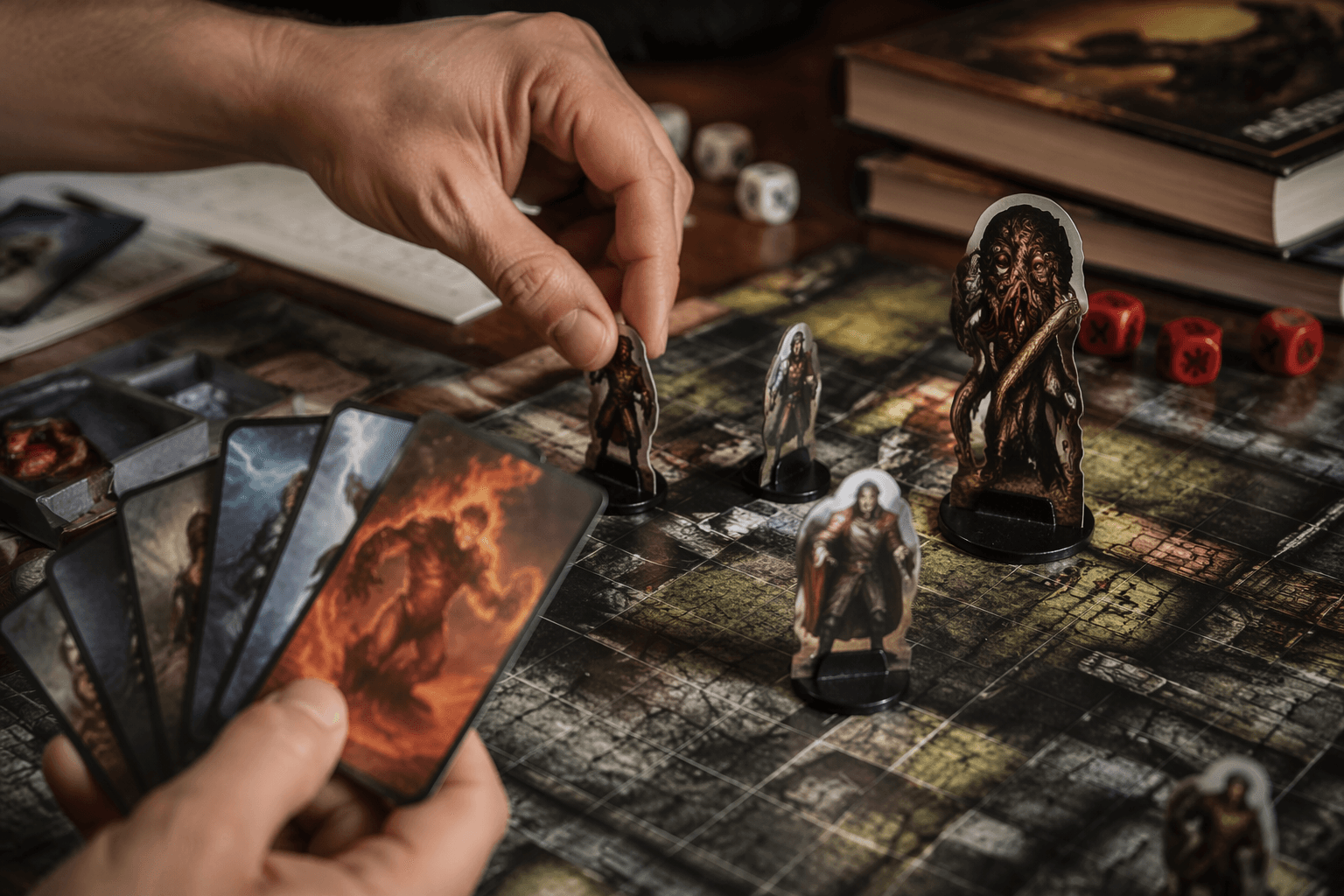
Pathfinder NPC Core Battle Cards put full-color art on one side and vital game stats on the other. Paizo’s accessory line is at its best when it behaves like a workflow tool. The cards, pawns, and maps are the parts of a Pathfinder table that remove the slow bits: page-flipping, sketching, and constantly explaining what everyone is looking at.
What actually saves time at the table
Paizo’s Pathfinder Accessory Subscription groups battle cards, pawns, and cards as aids meant to enhance the roleplaying experience. Battle cards handle monster lookup, pawns handle visible positioning, and the broader card line covers reference material, NPC prompts, and setting flavor that would otherwise live in a book.
Faster combat without exposing the whole stat block
Battle cards are the clearest example of utility-first design in Pathfinder, where monster identity and monster mechanics often need to stay separate until the fight is underway.
Pathfinder NPC Core Battle Cards come as a box of over 350 cards, while the Fists of the Ruby Phoenix Battle Cards set includes 200 reference cards. Both use the same 4 x 6 inch format, which makes them easy to sort, fan out, and keep near the screen instead of buried in a book.
The newer NPC Core cards cover both combat and roleplaying scenes, which makes them useful when a table wants a quick visual and a quick mechanical reminder in the same object. In Adventure Paths, recurring foes and named NPCs can come back often enough that reference speed matters.
Clearer battlefield visuals with pawns and maps
If battle cards solve the lookup problem, pawns and maps solve the placement problem. Pathfinder and Starfinder Pawns are heavy chipboard paper pawns printed with official artwork, offered as an alternative to miniature figurines in sizes from small to huge. They slot into plastic bases, and some products also have downloadable PDF editions, which gives the line more flexibility than a single boxed format.
Paizo’s map line covers both Flip-Mats and Map Tiles. GameMastery Flip-Mats unfold to 24 x 30 inches and can be marked with dry-erase, wet-erase, and permanent markers, which makes them a reusable battle surface rather than a one-scene prop. GameMastery Map Packs include 15 5 x 8 inch cardstock tiles, giving GMs modular pieces for custom layouts.
Pathfinder Flip-Mat: Basic is a blank canvas for dungeons, battlegrounds, and adventure set pieces, while older sets such as Cathedral and River Crossing were built around specific encounter spaces. Choose a blank surface if you want flexibility, or a scene-specific map if you know your campaign keeps landing in similar locations.

Smoother player reference when the table needs a card instead of a book
Not every accessory in the line is about combat speed, and that is where the cards become more optional but still useful. The Harrow Deck is a 54-card fortune-telling set tied to the Age of Lost Omens setting, so it fits tables that like Golarion flavor, prophecy, or in-world divination. It is not a must-buy for every group, but it gives GMs a ready-made prop when a scene needs atmosphere as much as mechanics.
The Deck of Endless NPCs is more directly practical. The backs of the cards supply a character’s role, goal, traits, and secret agenda, which turns the deck into a compact improvisation tool. That makes it handy for GMs who want a fast way to generate memorable strangers without stopping the session to write out an entire profile.
Paizo’s broader card line also includes sets tied to specific Adventure Paths, such as Abomination Vaults and Fists of the Ruby Phoenix. That link to published campaigns is useful for groups that run Paizo material as written, because it lets the table keep campaign-specific information in a form that is easy to pass around and reference.
How the line fits different tables
The line fits use cases better than collectibles. If your table loses time during combat, battle cards and a Flip-Mat do the most obvious work. If you want a visible board without a full miniatures collection, pawns are the strongest buy because they cover monsters, NPCs, and terrain pieces with one system. If you like improvising NPCs or leaning into setting flavor, the card sets are the pieces that add structure without adding much setup time.
- For faster combat: battle cards and a reusable map surface
- For clearer battlefield visuals: pawns with bases and scene-specific maps
- For easier GM tracking: Deck of Endless NPCs and Adventure Path card sets
- For player-facing reference: cards that can sit on the table instead of staying in a book
A design philosophy with deep roots
This approach is not new for Paizo. Its archive lists GameMastery maps as full-color, miniatures-scale play surfaces, and older Flip-Mat material treats the format as a reusable, marker-friendly battle tool. Paizo has also long sold pawns as a practical alternative to traditional miniatures.
In July 2026, Paizo laid off eleven employees and reduced Organized Play output.
This article was produced by Prism’s automated news system from verified source data, official records, and press releases, then run through automated quality and moderation checks before publishing. The system is built and supervised by the people who set the standards it runs under. Read our full AI policy.
Did this article answer your question?