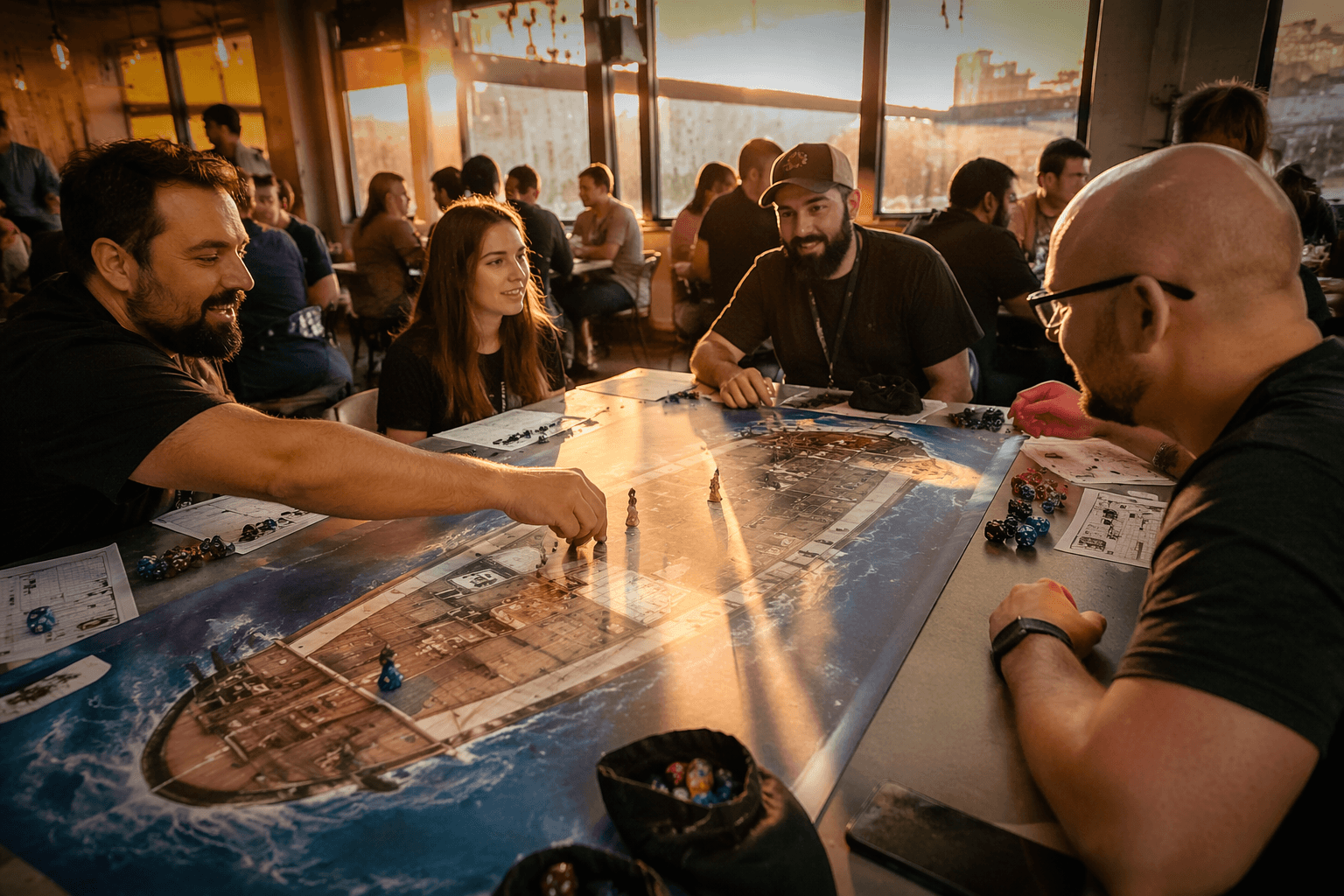
Pathfinder 2E encounter budget system makes combat balance predictable
Pathfinder 2E gives GMs a rare combat math they can trust: five threat levels, fixed XP budgets, and a fast way to build fair fights tonight.

Pathfinder 2E builds its encounter math around a party of four characters. Five threat levels and a fixed XP budget turn encounter prep into a repeatable process instead of a guessing game.
The budget that does the heavy lifting
The core encounter math is built around a party of four. For that standard group, the official encounter budgets are 40 XP for trivial, 60 XP for low, 80 XP for moderate, 120 XP for severe, and 160 XP for extreme encounters. If your table has more or fewer PCs, the budget shifts by 10, 15, 20, 30, or 40 XP per additional character, depending on the threat level, while the rest of the rules stay the same.
The threat level tells you what kind of scene you are building before you start choosing monsters. A trivial fight is a warm-up, a low-threat fight taxes resources, a moderate encounter is the baseline hard-but-fair test, severe is the kind of battle you save for a major set piece, and extreme is where the table should expect serious danger.
How monster choice turns into design
The system becomes especially useful once you start thinking in creature levels instead of loose intuition. A creature four levels below the party is worth 10 XP, while a creature four levels above the party is worth 160 XP. In between, the scale stays readable: a creature at party level is worth 40 XP, a creature one level above party level is worth 60 XP, and a party-level-minus-3 creature is a 15 XP lackey.
That structure gives you a fast way to assemble encounters with a clear shape. One level-appropriate monster can anchor a scene, while lower-level creatures fill out the action economy, and a single higher-level foe can create a boss fight without forcing you to invent the balance from scratch. In Paizo’s rules math, each PC is effectively worth about 40 XP, which is why a 160 XP encounter tracks so closely with a full party’s equal footing.
A worked encounter you can run tonight
Take a 5th-level party of four. A moderate encounter for that group is 80 XP, so you want a fight that lands near that total. One clean build is a 5th-level creature for 40 XP, plus two 3rd-level creatures at 15 XP each, for a total of 70 XP. If you want to bring it closer to the target, add a 1st-level creature for 15 XP and you hit 85 XP, which is still close enough to feel like a moderate fight under the system’s own guidance.
In practice, you start with the monster or NPC that matters most, then spend the rest of the budget on supporting threats, reinforcements, or minions. Archives of Nethys directs GMs to begin with the most important monsters or NPCs, then decide how to use the remaining budget, and not to worry if the final total is not exact, because many encounters will come close rather than match perfectly.
Why the math stays useful when the table size changes
The encounter budget assumes four PCs, but it is built to flex when the group is larger or smaller. You do not rewrite the underlying rules, and you do not change the XP rewards just because attendance shifted that night. You adjust the budget, build the encounter to fit, and keep the reward structure intact.
That flexibility is especially valuable at tables with irregular attendance, smaller home groups, or larger-than-average parties. It also keeps the GM from having to retune every fight manually when one player misses a session. The reward stays tied to the difficulty of the encounter, not to the number of enemies on the map or the number of people who happened to show up.
Where the system can still swing hard
The encounter budget is dependable, but it is not a force field against bad matchups. Solo bosses are the clearest example. A single high-level enemy can be mathematically “fair” and still feel brutal because of action economy, especially if the party cannot reliably debuff, flank, or control the target. That is why severe and extreme encounters deserve special care even when the XP total looks correct on paper.
Extreme monster abilities can also bend the experience in ways raw XP does not fully capture. A creature with hard crowd control, devastating area damage, or unusually punishing defenses can feel tougher than its level suggests, while a lower-level enemy with the right synergies can punch well above its weight.
A tool built for real campaigns, not theory
Pathfinder Second Edition launched on August 1, 2019, and the system’s GM-facing design has always treated encounter building as a craft, not an improvisation test. Paizo’s Gamemastery Guide treats the GM as the architect of the adventure and provides tools to build monsters, hazards, and custom content without starting from zero every time.
Pathfinder Society, Paizo’s worldwide living campaign, writes adventures for four to six PCs, with table-size adjustments made before play.
This article was produced by Prism’s automated news system from verified source data, official records, and press releases, then run through automated quality and moderation checks before publishing. The system is built and supervised by the people who set the standards it runs under. Read our full AI policy.
Did this article answer your question?