PF2e Summons Assistant streamlines summoning in Foundry for Pathfinder Second Edition
PF2e Summons Assistant takes one of Pathfinder 2e’s slowest Foundry chores and turns it into a fast, repeatable summon flow for busy tables.

The summons problem every PF2e table knows
Summoning is one of those Pathfinder 2e jobs that can quietly eat a whole turn. You are not just placing a token and moving on. You are matching the right creature, checking what it can legally do, figuring out where it should appear, and making sure the table stays synced on rules that are easy to miss when everyone is waiting for the next initiative count.
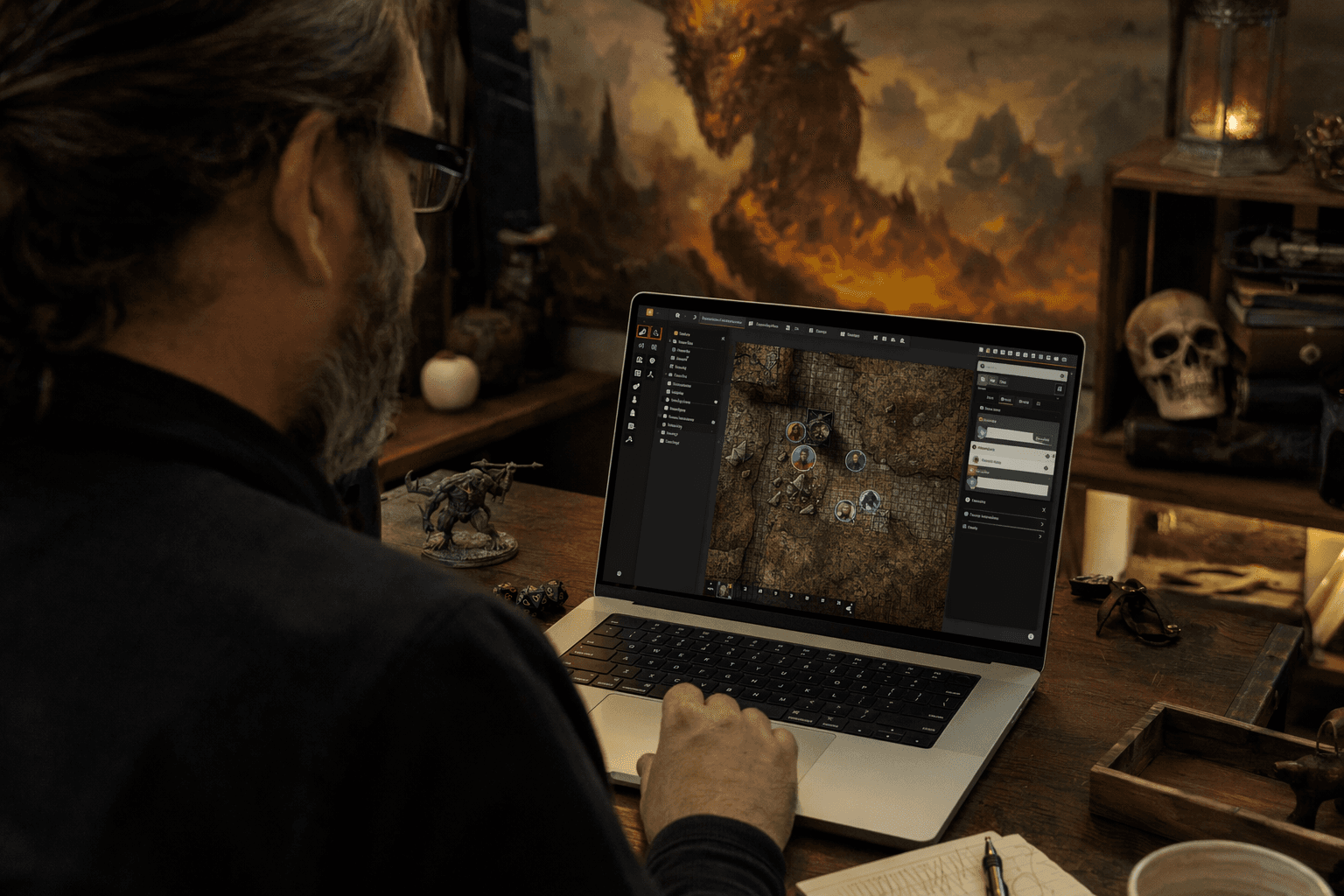
That is exactly where PF2e Summons Assistant comes in. The Foundry add-on is built for Pathfinder Second Edition groups that want summoning to work out of the box, without turning a temporary ally into a pre-session chore or a mid-combat slowdown. For conjurer-heavy parties, summoner tables, pet-heavy builds, and online GMs who have seen one summon turn into a rules digression, the appeal is immediate: faster setup, cleaner turns, and fewer moments spent digging through tabs.
What PF2e Summons Assistant actually does
At its core, PF2e Summons Assistant is a combat-enhancement module for Foundry Virtual Tabletop. Foundry lists the module with support for Foundry Versions 12 and up, and it is verified for Foundry 14. The package page names Chasarooni as the author and lists version 2.0.4 as the latest release, with 2.0.0 through 2.0.4 arriving in a very short window. That quick release cadence suggests a tool that is being actively tuned while people are using it at real tables.
The module’s README describes it as a mini module that makes summoning in PF2e a lot easier. It detects supported spells, feats, items, or monster actions, then either prompts the user to choose among summon options or places the chosen summon directly on the board. In practice, that means less hunting for the right creature entry and less handholding from the GM when the action starts to get busy.
A few practical benefits stand out immediately:
- Faster prep, because supported summon effects can be handled in a repeatable way.
- Faster turns, because the system can guide or automate the summon placement step.
- Better rules accuracy, because the module is built around known PF2e summon triggers rather than improvised table memory.
Why this matters so much in Pathfinder 2e
The reason summoning is fiddly is built into the rules themselves. Archives of Nethys describes summoned creatures as having both the summoned and minion traits. Minions generally act on your turn, can use only 2 actions, and cannot use reactions. For spell-based minions, the controller commands them by Sustaining the Spell or a similar effect.
That matters because summoning is not a single decision, it is a stack of decisions. A summoned creature also has restrictions attached to the summoned trait: it cannot summon other creatures, create things of value, or cast spells that require a cost. Once you add positioning, action economy, and communication into the mix, the whole mechanic becomes one of the easiest places for a virtual table to bog down.
PF2e Summons Assistant is aimed directly at that friction. It does not try to replace the rules. It helps make the rules easier to apply cleanly, which is often the difference between a smooth online encounter and one that stalls every time a spellcaster reaches for a summon.
How it fits into the Foundry summoning ecosystem
PF2e Summons Assistant is not trying to reinvent summoning from the ground up. It sits on top of Foundry Summons, the broader project that describes itself as an all-in-one summoning solution and avoids the need to import actors manually. That foundation matters, because it lets PF2e Summons Assistant focus on the Pathfinder-specific layer instead of redoing the entire workflow.
Foundry Summons also exposes hooks such as fs-preSummon, fs-postSummon, fs-loadingPacks, fs-addWrapperClasses, and fs-addCustomPacks. That is the sort of architecture that tells you a project expects to grow, not just exist. PF2e Summons Assistant benefits from that structure by plugging into a system that already thinks in terms of summon flows, custom content, and modular expansion.
The README also credits Vauxs for updating Foundry Summons and Sasano for the original partial macro. That lineage matters because it shows the tool emerging from actual table use and community tinkering, not from a detached design exercise. In Pathfinder circles, that kind of provenance usually predicts something useful.
Why groups notice the difference right away
The tables that feel this most are the ones already living with a lot of creature management. A summoner, a druid with summoned help, a party built around temporary allies, or even a GM running organized play where consistency matters all put pressure on the same bottleneck: how quickly can the new creature appear, be understood, and start behaving correctly?
That is where an out-of-the-box helper earns its place. Instead of treating every summon as a special case, PF2e Summons Assistant aims to make the interaction repeatable. The payoff is not flashy, but it is real. Prep gets lighter because there is less manual setup. Turns move faster because the table is not stopping to reconstruct the same process. Rules accuracy improves because the module is aligning with supported PF2e summon effects rather than asking the group to improvise under pressure.
The result is especially valuable in online play, where friction adds up fast. A small delay in a live room is a brief pause. In Foundry, it can become a sequence of clicks, searches, and clarifications that breaks the pace of combat.
Where it sits alongside other PF2e tools
PF2e Summons Assistant is part of a larger pattern in the Pathfinder 2e Foundry ecosystem. Foundry’s PF2e wiki includes it in its recommended module list, which is a strong sign that it is seen as a practical helper rather than a novelty. It also sits alongside other tools that tackle adjacent problems from different angles.
Foundry Hub lists a separate PF2e Summons Helper module, which focuses on dismissing and sustaining minions, plus specific features like Phantasmal Minion, Manifest Eidolon, Protector Tree, and Timber Sentinel. PF2e Companion Compendia goes after another slice of the same workload by automating animal companions, construct companions, and summoner eidolons. Taken together, these modules point to the same reality: in PF2e, creature management is a recurring pain point, and the community keeps building tools to shave time off it.
PF2e Summons Assistant does one thing in that ecosystem and does it well. It helps summon handling feel native inside Foundry, which is exactly what a busy Pathfinder table needs when the battle is already in motion.
This article was produced by Prism’s automated news system from verified source data, official records, and press releases, then run through automated quality and moderation checks before publishing. The system is built and supervised by the people who set the standards it runs under. Read our full AI policy.
Did this article answer your question?