Why Pathfinder Adventure Paths remain the easiest way to start a campaign
Need a campaign next week? Pathfinder Adventure Paths package story, encounters, and leveling into ready-made arcs, from one-session starters to 1-20 epics.

Paizo packages Pathfinder Adventure Paths as full story arcs with monsters, encounters, treasure, and backstory already in place. The format can be used in Golarion or transplanted into any fantasy setting. That makes them especially useful for busy GMs and for groups that want a real campaign shape, not just a stack of disconnected sessions.
What an Adventure Path actually solves
The core advantage is structure. Paizo breaks these stories into levels 1-10 and 11-20, which tells you immediately how much table time you are signing up for and what kind of campaign you are getting. A low-level AP gives you a launch point and a local problem; a higher-band AP can carry a party into the endgame, and Paizo describes these stories as the kind that can “shatter nations” and change the face of the world.
That is very different from homebrew, where the GM has to invent the premise, the factions, the dungeons, the villains, and the connective tissue between them. An Adventure Path gives you the connective tissue already built in, along with encounter material that can be run as written or adapted to your own setting. It is also different from a one-shot anthology, because the campaign identity is the point: each volume advances the same story, and each volume tends to add new monsters, rules, and setting details that make the whole arc feel like one linked experience rather than a loose collection of adventures.
Paizo’s subscription line also matters if you care about cadence. The Adventure Path subscription normally releases four Adventure Path products per year, which means the line stays active enough to support ongoing campaigns without flooding the shelf. If you like the rhythm of a serialized game, that schedule gives you a steady pipeline of ready-made content.
How to choose the right AP for your table
The easiest way to pick an Adventure Path is to start with your group’s actual appetite for commitment. Abomination Vaults, Sky King’s Tomb, and Season of Ghosts are among the Adventure Paths Paizo points new players toward, which makes those useful first stops if you want a campaign with a clear entry point and a strong on-ramp. If you want something shorter, Rusthenge and Crown of the Kobold King sit in a more compact space, and Pathfinder Game Night: Dawn of the Frogs gives you a single-session Pathfinder experience when you need a low-risk test run.
If your table has lapsed players, a shorter quest can get everyone back into the habit before you commit to a larger arc. If you know your group wants a long haul, the level bands tell you whether you are buying a regional story that will live in the 1-10 range or a broader epic that can keep climbing toward 20th level.
The hardcover compilations make that choice even clearer. Gatewalkers is a complete 288-page hardcover campaign for characters level 1-10, while Vaultlines is a complete 11th- to 20th-level campaign in a single volume. Those books are built for groups that want the campaign in one place, which is useful if you prefer table-side convenience over juggling multiple monthly installments.
Why serialized campaigns still work so well
Adventure Paths have been engineered around the way real groups actually play for a long time. Paizo reshaped the format into six consecutive monthly volumes in 2007, when it moved away from magazines and into a dedicated campaign model. The shift happened as Wizards of the Coast was launching 4th Edition D&D, which helps explain why Pathfinder’s campaign-first identity became such a central part of the line.
That history still shows up in how the APs are built. The early Pathfinder line was designed as a monthly sequence, with the first Pathfinder Adventure Path presented as a six-part campaign that began in Sandpoint. Rise of the Runelords now stands as a level 1-18 campaign, and Paizo’s Anniversary Edition packages all six chapters together with updated material.
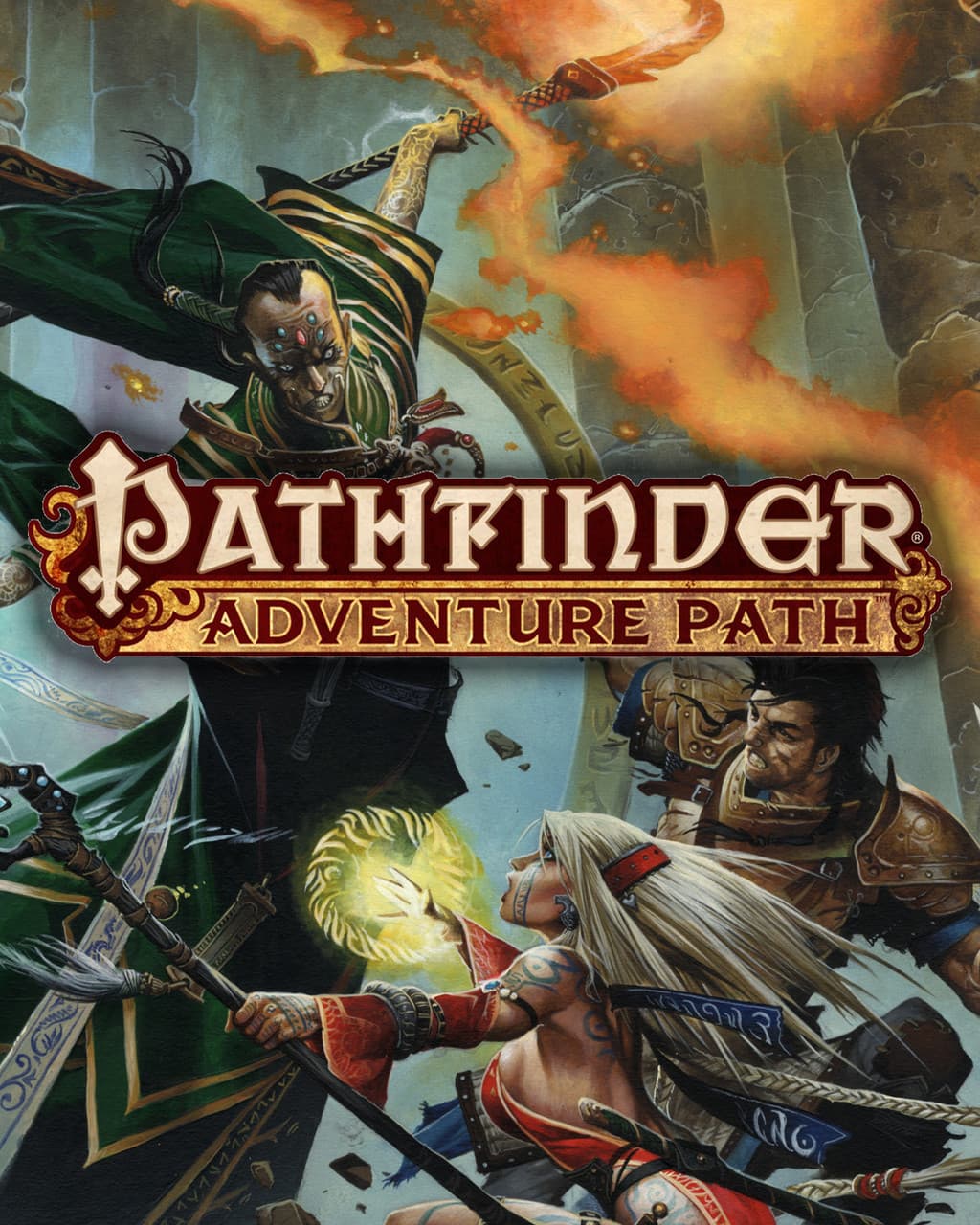
If you want an AP that feels manageable, look for the version that matches your workflow. A monthly release can be great for groups that like anticipation and a slower ramp, while a consolidated hardcover is better if you want fewer moving parts and one book on the table.
How to evaluate an AP before you buy in
Before you commit, check three things: level range, length, and table temperament. The level range tells you whether the campaign starts at the ground floor or drops into the middle of a party’s career. The length tells you whether you are buying a starter, a mid-length run, or a full endgame push.
Then look at whether the AP matches the kind of prep you want to do. If you want that framework already built in, the standard Adventure Path line is built for that. If you want a single-book campaign, Gatewalkers and Vaultlines show how Paizo now condenses the format into hardcover form without losing the campaign spine.
Finally, match the tone to your group. A table that wants to start fast and stay grounded may be happiest with one of the newer beginner-friendly entries or a shorter quest, while a group that wants to see a story scale up across levels should lean toward the bigger arcs.
This article was produced by Prism’s automated news system from verified source data, official records, and press releases, then run through automated quality and moderation checks before publishing. The system is built and supervised by the people who set the standards it runs under. Read our full AI policy.
Did this article answer your question?