Camera Trap Reveals Hidden Wildlife Highway in Kenya’s Maasai Mara
A remote camera trap in Maasai Mara spent three months rolling on a forested river crossing, exposing lions, rhinos, leopards and a hidden wildlife highway.
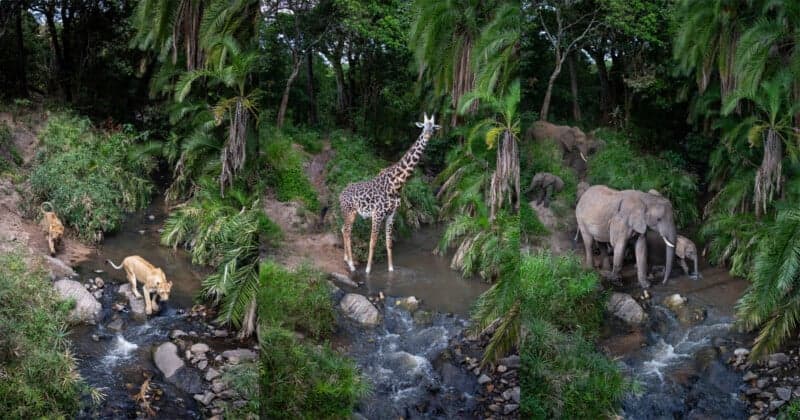
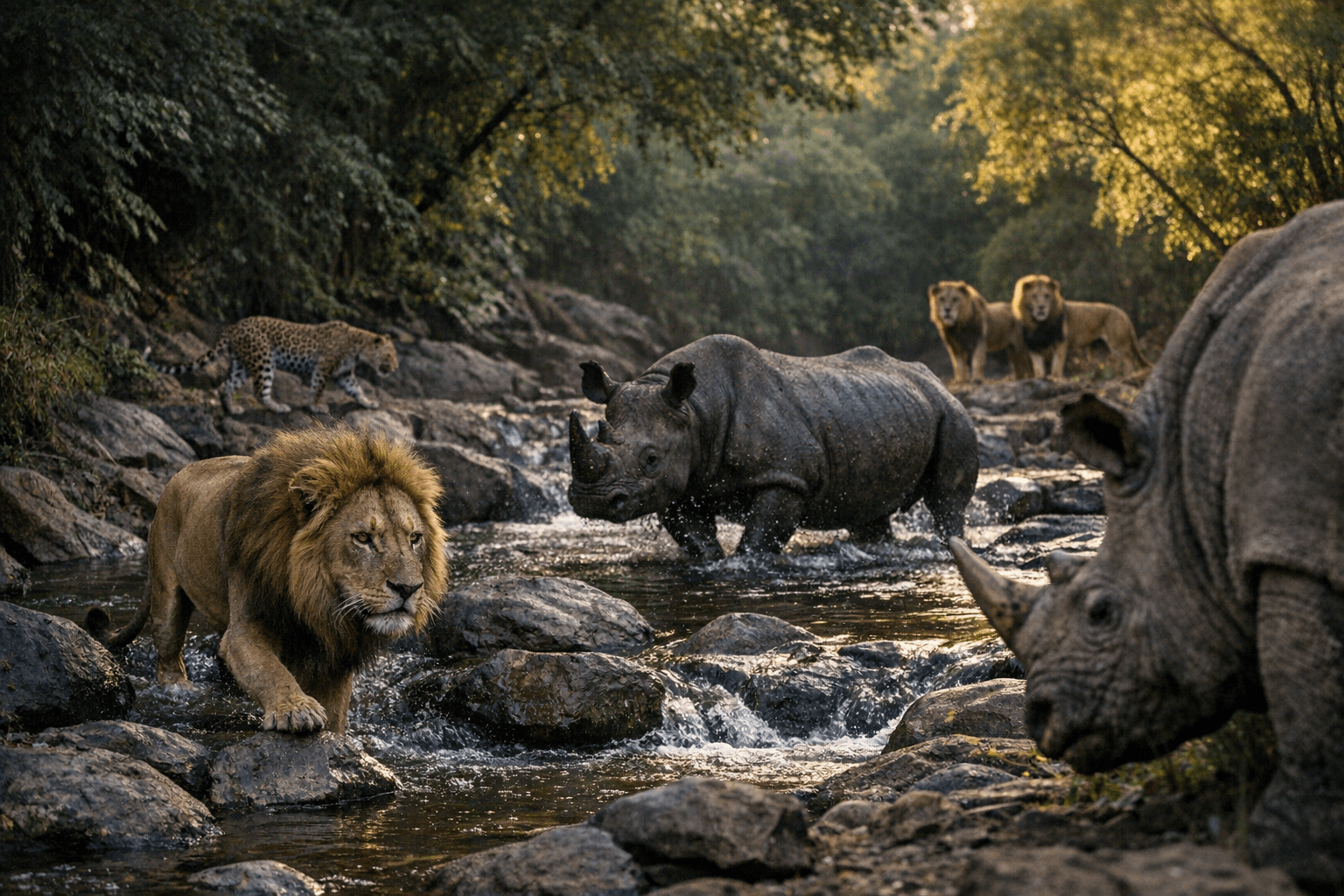
A camera left on a secluded river crossing in Kenya’s Maasai Mara uncovered a route that most visitors never see, turning a quiet patch of forest edge into a living wildlife highway. Will Burrard-Lucas spent a year documenting the crossing and captured a sequence that moved from spectacle to pattern, with lions, giraffes, elephants, rhinos, leopards, hyenas and baboons all using the same hidden corridor.
The series, titled Crossing Point, was produced with rhino rangers monitoring eastern black rhinoceroses through a key passage linking feeding areas and water sources. The World Photography Organisation said the remote camera trap was installed at a forested river crossing in Maasai Mara National Reserve and left running continuously for three months. The Safari Collection said the project came together through the Maasai Mara Rhino Unit, Narok County Government, The Safari Collection’s Footprint Trust and support from Sala’s Camp, placing the work inside a county-managed conservation system rather than a tourism backdrop.
That location matters as much as the species in front of the lens. The crossing sits in an area closed to the public, beside dense forest that animals use like a road network through the reserve. Burrard-Lucas described the place as primordial, a landscape of scent and heat that feels older than tourism itself. He tested several camera angles and lighting setups before settling on an elevated riverbank position that let him photograph the movement from above, a reminder that the best wildlife sequences often come from careful placement long before the shutter is ever fired.
The technical setup was built for that kind of waiting. Burrard-Lucas used a Camtraptions system with multiple flashes and a PIR motion sensor, allowing the camera to react to movement without anyone nearby. That low-interference approach preserved the dark, atmospheric character of the scenes while still producing clean, intimate frames of animals crossing at night and in low light. For photographers, the lesson is blunt: the image is often won by patience, not by presence.
The conservation context gives the pictures even more weight. WWF-Kenya said 83.7 percent of wildlife counted in the 2021 Maasai Mara ecosystem census lived in community conservancies, while the same census counted 2,595 elephants across the area. WWF said Kenya’s black rhino population had climbed to more than 1,000 by February 2024, with a national target of 2,000 black rhinos by 2037 and about 80 percent of the eastern black rhino subspecies living in Kenya. In that light, Crossing Point is not just a striking set of wildlife frames. It is a record of how much depends on keeping these hidden corridors open.
This article was produced by Prism’s automated news system from verified source data, official records, and press releases, then run through automated quality and moderation checks before publishing. The system is built and supervised by the people who set the standards it runs under. Read our full AI policy.
Did this article answer your question?