Félix Nadar's 1863 Balloon Crash Nearly Ended Aerial Photography Forever
A broken valve line sent Nadar's Le Géant dragging 25 miles across France in 1863, nearly killing everyone aboard and almost ending aerial photography before it began.
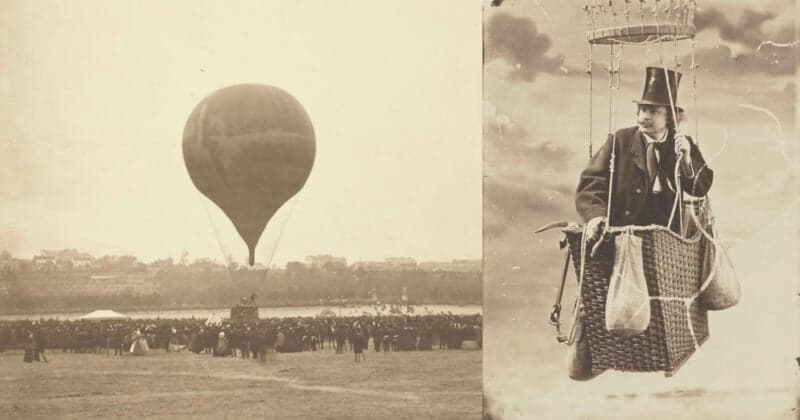
A broken valve line and empty ballast turned a 196-foot balloon into a 25-mile battering ram through the French countryside, nearly killing Félix Nadar and, with him, the infant practice of aerial photography.
Le Géant was never a modest project. The gas balloon Nadar commissioned in 1863 carried a two-story wicker gondola fitted with a darkroom, a kitchen, sleeping quarters and a printing press. That last item speaks to Nadar's showmanship, but the darkroom was pure necessity: the wet collodion process of the era required photographers to coat their plates, expose them and develop them before the chemistry dried, typically within ten minutes. There was no such thing as shooting from altitude and processing on the ground. You brought the darkroom with you, or you brought nothing.
The first flight offered the kind of triumph that makes the sequel devastating. Passengers drank coffee on the observation deck as France unspooled beneath them. The second flight unraveled during descent. The valve line snapped, stripping the crew of any controlled means of venting gas. With insufficient ballast remaining, Le Géant became a bouncing wreck: repeatedly lofted by wind and then thrown back to earth, dragging across countryside, trees and hedges for 25 miles. Passengers were hurled around the gondola. The balloon narrowly missed a high-speed train.
Anika Burgess reconstructs the chaos in Flashes of Brilliance, capturing the violence of those impact rebounds and the frantic crew attempts to dig grapnels into the earth to halt the drag. That the grapnels largely failed is its own measure of how far aviation engineering had to develop before the sky became a reliable photographic workplace.
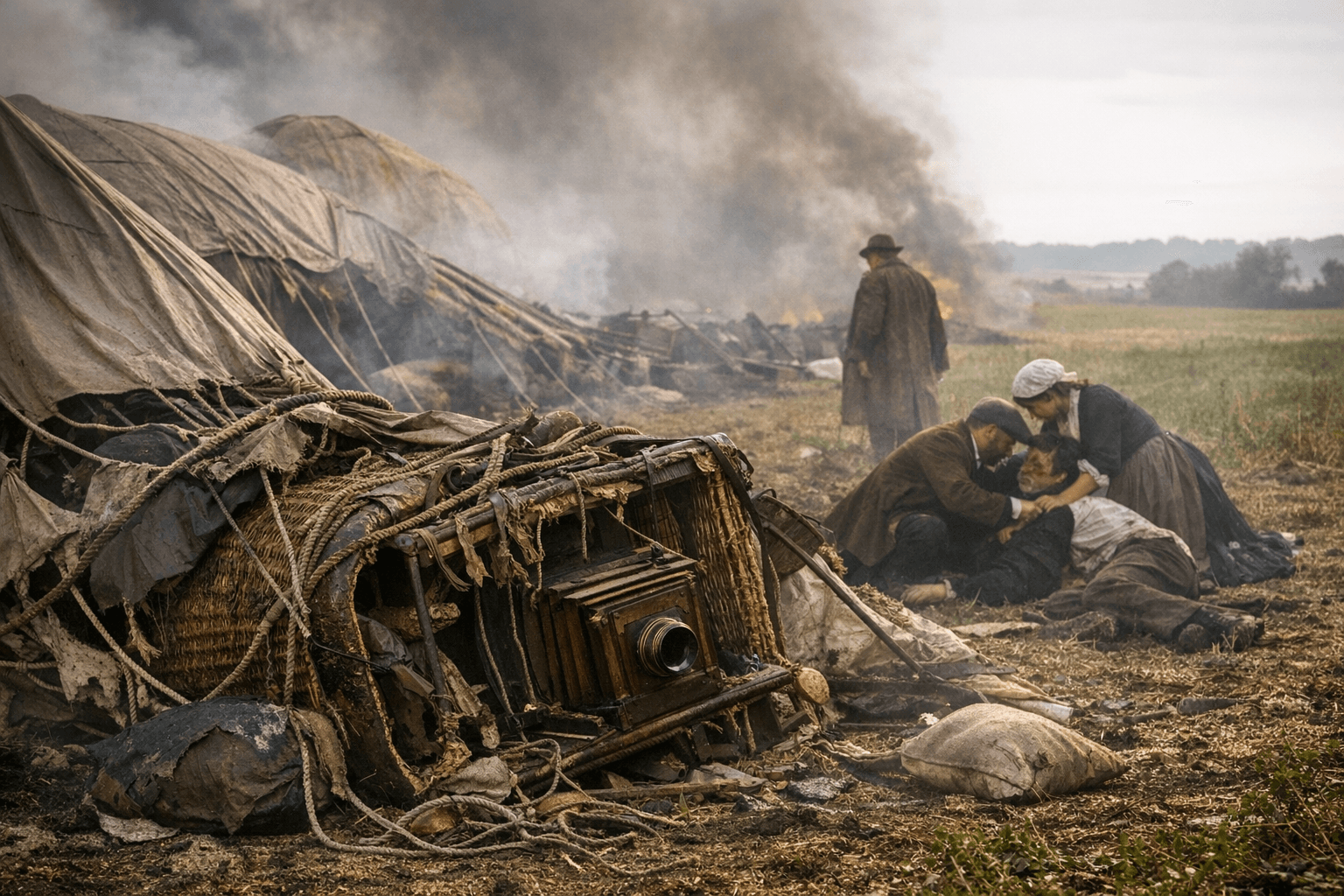
The connection between technical constraint and creative ambition runs through all of it. Nadar's airborne darkroom was not bravado for its own sake; it was the only available solution to an unforgiving chemical process. The basket's size and weight, dictated by what wet collodion photography required, made Le Géant's crash more destructive than it might otherwise have been.
Every stabilized drone gimbal and high-altitude imaging platform deployed today carries that inheritance. The broken valve and the 25-mile drag were part of the cost of inventing a practice that would go on to reshape cartography, military reconnaissance and artistic vision alike.
This article was produced by Prism’s automated news system from verified source data, official records, and press releases, then run through automated quality and moderation checks before publishing. The system is built and supervised by the people who set the standards it runs under. Read our full AI policy.
Did this article answer your question?