Remote cameras reveal hidden resting caves of Mediterranean monk seals
Remote cameras found monk seals resting in submerged cave chambers humans would miss. The method shows why low-impact imaging is becoming essential to wildlife photography.
Remote cameras where human presence failed
The breakthrough began with a very familiar field problem: the animals kept disappearing the moment people showed up. In Greece’s Ionian Islands, Mediterranean monk seals were known to use coastal caves, but open beach caves came up empty and early searches never explained where the seals were going. The answer only emerged when researchers from the Tethys Research Institute and the Octopus Foundation placed waterproof remote cameras in hard-to-reach cave sections and let the site speak for itself.
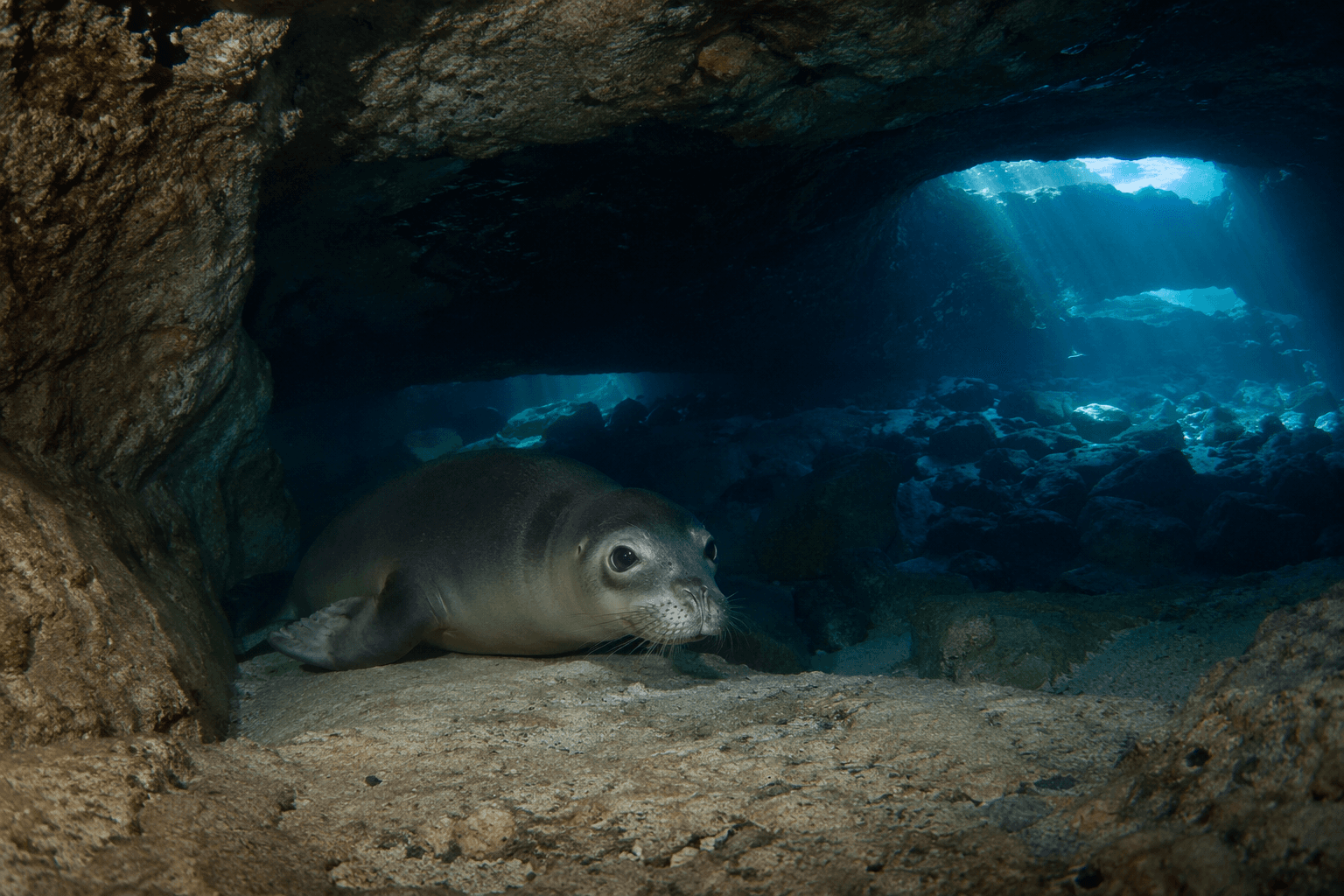
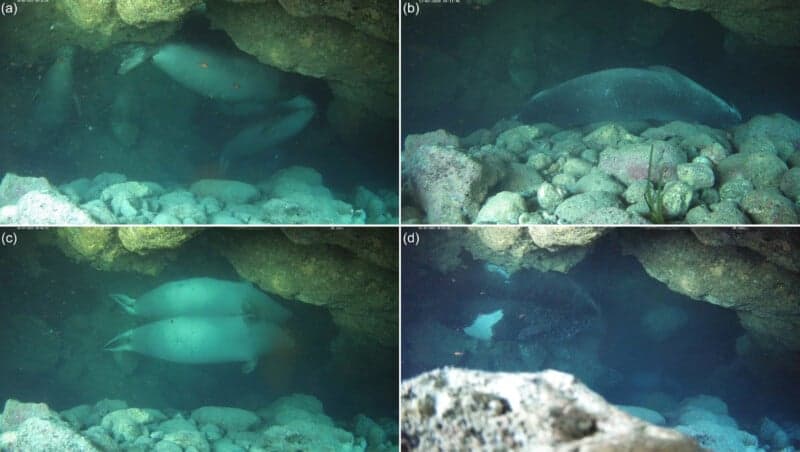
What the cameras found changes the way photographers should think about access. Instead of a dry cave with a visible haul-out ledge, the team located a submerged passage leading into a sealed chamber with a trapped air pocket at the top. That hidden space, which the study describes as a bubble cave, was effectively invisible from the kind of human visit that would normally be required to document it. For anyone working in wildlife imaging, that is the key lesson: some subjects can only be photographed honestly when the camera goes where the body should not.
What the footage revealed
The cameras did more than prove the seals were there. They captured a resting scene that direct observation would almost certainly have missed, including seals floating at the surface, sleeping on the seafloor, lying sideways underwater, and bottling, the upright floating posture where the nose can sit just below the surface. Those behaviors matter because they show the chamber was not a brief transit point, but a place where the animals were settling into a rest cycle.
One of the most striking moments came almost immediately. The researchers found that the seals inspected the camera less than an hour after installation, a vivid sign that the setup was finally in the right place. That kind of response is a reminder that remote systems can do more than record behavior quietly, they can confirm habitat use in real time without forcing a human observer to enter and alter the scene.
The study behind the discovery is a short communication by Joan Gonzalvo, André Guinand, Julien Pfyffer, Cédric Georges, Carmen Andrés-Hervías and Manel Gazo. It also makes the conservation argument plainly: bubble caves may function as refuge from human disturbance and as resting sites, which means they are not just curiosities, they are habitat that needs to be counted.
Why bubble caves matter to photographers
For photographers, bubble caves are a useful case study in why remote imaging keeps expanding the edge of what can be documented. The caves are fully submerged chambers or domes reached through underwater passages, with no dry haul-out platform and seals remaining in the water. In practical terms, that makes them “wet, less accessible and inconspicuous” spaces, the kind of location that defeats traditional scouting and rewards a camera that can stay put.
That is also why the technology angle matters as much as the animal behavior. The Octopus Foundation says it spent five years developing an open-source monitoring kit for monk seals before this work came together, and that kind of tool-building is increasingly central to wildlife photography, not separate from it. When the subject is shy, sensitive, or tied to fragile habitat, the most useful camera may be the one that never asks the animal to perform for a person.
For image-makers, the broader takeaway is not that remote setups replace field craft, but that they extend it. They let photographers document behavior in places that would otherwise only be guessed at, and they do it with far less disturbance than a diver, boat crew, or daytime cave check might create. In species as cautious as monk seals, that difference is the line between a missed encounter and a meaningful record.
A species pushed deeper into harder places
The hidden cave footage also fits a wider pattern. Mediterranean monk seals have been shifting away from open beaches and into remote marine caves as human disturbance increases, and that pressure is part of why the species remains so difficult to study. The IUCN lists the species as Vulnerable, and recent conservation estimates put the global population at roughly 815 to 997 individuals, including about 443 to 599 mature animals.
The U.S. side of the picture is just as sobering. NOAA Fisheries lists the Mediterranean monk seal as endangered under the Endangered Species Act, says a 2024 five-year review based on data through October 2024 found no change to that listing warranted, and identifies habitat destruction, habitat degradation, entanglement in fishing gear, harassment, and pollution as threats. When a species is forced into more hidden habitat and then threatened inside that habitat too, remote imaging becomes not just useful but necessary.
That is why a 2025 camera-based study in the Ionian Sea matters alongside the cave footage. It monitored one adult male monk seal from August 2021 to December 2023 in southern Kefalonia, then again in caves and overhangs in northwestern Zakynthos in September 2023 and May 2024, with the two locations about 15 km apart. The authors argued that the area should be treated as a single conservation unit, which is exactly the sort of insight camera monitoring can surface when direct human observation is too blunt to trace movement across a region.
Protection now has to follow the cameras
The conservation response is already getting more specific. In 2024, a ministerial decision created a 200-meter restricted-access zone around Formicula islet in the Inner Ionian archipelago, an 8.7-hectare site that conservation groups describe as a vital refuge. That kind of measure makes sense when you consider how easily tourism and casual access can push seals deeper into caves that are harder to locate and harder to protect.
Tethys Research Institute brings long-term weight to the story. It says it has worked on marine mammal conservation since 1986, has produced more than 800 publications, and has run its Ionian Dolphin Project in the eastern Ionian Sea since 1991. Put together, the new hidden-cave footage and the older regional monitoring show the same truth from two angles: the camera is no longer just a way to make a pretty frame, it is how the habitat itself becomes legible.
The empty cave at the start of the story was never empty at all. Remote cameras simply revealed that the real resting room sat below the obvious entrance, in water, air, and shadow that human presence would have missed.
Know something we missed? Have a correction or additional information?
Submit a Tip