Backhand flick fixes that stop pickleball shots hitting into the net
If your backhand flick keeps dying in the net, the fix is usually in your prep: lower the paddle, tilt for topspin, and let geometry do the work.
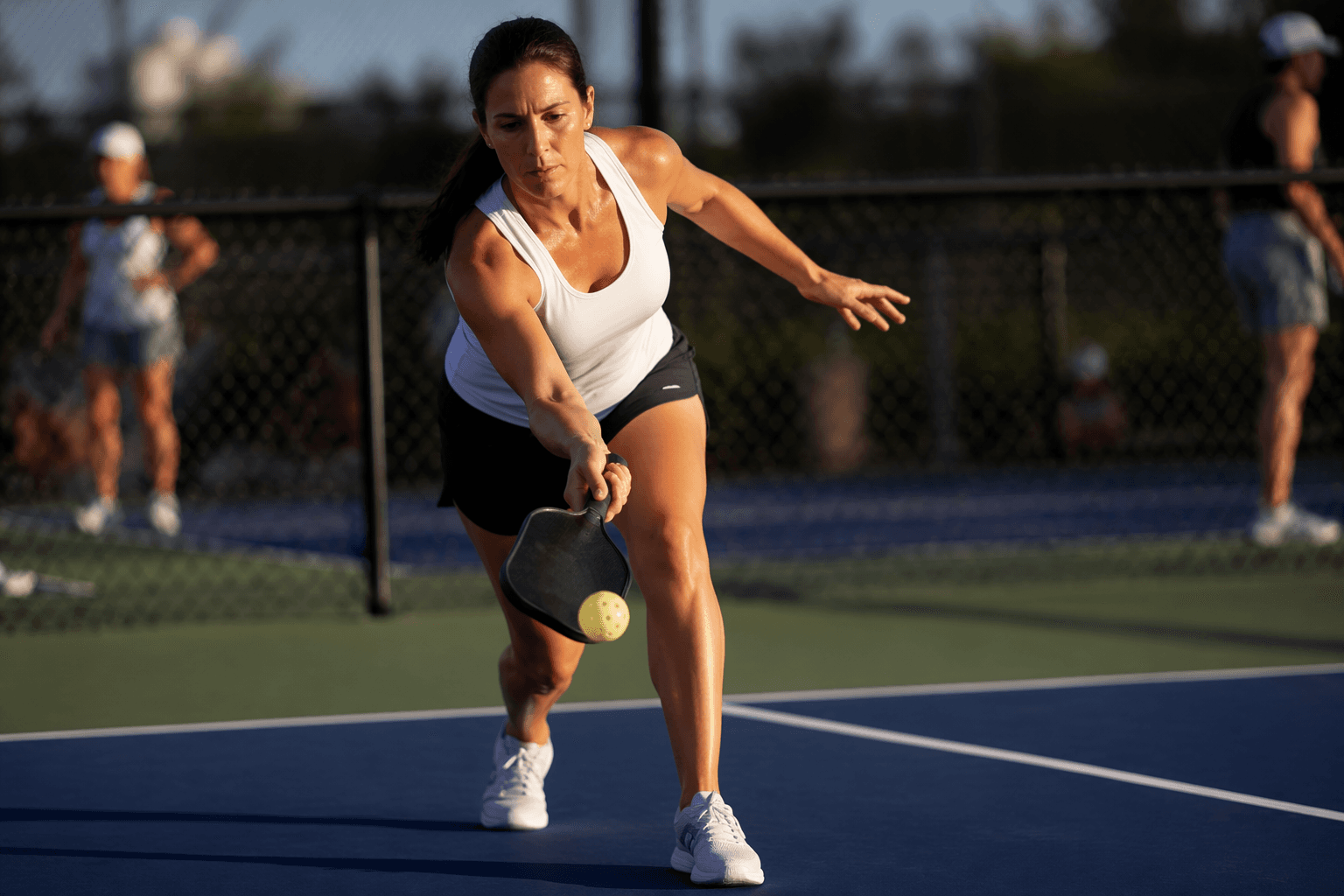
In Cori Elliott’s lesson with Dave, his paddle face sat too parallel to the net, turning a backhand flick into a flat punch that sank into the tape. The backhand flick is supposed to be an attack shot, not a panic swipe. The fix lives in setup, not brute force.
Why the ball keeps catching the net
The biggest mistake is usually early paddle prep. When the paddle face starts too open to the net, the ball comes off flat, without the upward brushing action that gives a flick its lift and its bite. That is why a harder swing often makes the miss worse, because speed without shape just drives the ball forward on the same low line.
USA Pickleball teaches that the flick volley works by accelerating from low to high with topspin, which helps the ball clear the net and then dip down fast. If you try to force a punch-style contact on a ball that is sitting low, you are asking a shot built for a higher contact point to solve the wrong problem.
What a backhand flick actually is
The backhand flick is a wristy attack shot used on balls around chest height or lower. It is not meant to be a last-ditch scoop from your shoes, and it is not the same thing as a pure block or a drive. Its job is to create controlled offense from a compact motion.
The softer cousin of that motion is the roll, which still uses the same family of mechanics but with a gentler path and less direct pop. Expert Pickleball’s June 1 explainer separates the backhand volley into three distinct shots: punch, flick, and roll. Once those categories blur together, players start guessing in the middle of points.
The two setup cues that matter most
The first correction is simple: drop the paddle tip below the level of the ball before contact. That gives the paddle room to travel up and through the hit instead of just pushing straight forward, which is where a lot of net balls are born. If the paddle starts too high or too flat, there is nowhere for the shot to climb.
Start from a ready position with the shoulders stacked over the knees and the paddle head kept lower, so the swing can brush up through the ball. That posture helps create topspin, and topspin is what lets the ball dip back into the court after it clears the tape.
A useful self-check is to look at where your paddle face wants to go before contact. If it feels like a punch toward the net, you are probably preparing a punch. If it feels like the paddle can slide up the back of the ball, you are much closer to the actual flick.
Why spin matters more than raw speed
The whole shot depends on spin doing part of the work. Without topspin, a hard backhand flick has little help bringing the ball back down, especially when the contact point is low and the margin over the net is tiny. That is why brushing action matters more than muscle.
USA Pickleball notes that punch and roll volleys are better suited to higher balls and can produce errors when the incoming ball is low. The error is often baked into the shot choice before the swing begins. A low ball asks for a low-to-high path, not a flat collision.
What elite players are showing now
Pickleball.com featured Anna Bright’s backhand flick tutorial on April 27, 2026, and Bright said she was "strictly a two-handed player" before developing her one-handed backhand attack.
Pickleball.com also featured Mari Humberg’s backhand flick tutorial on December 13, 2024, and Humberg recommended "the continental grip or the handshake grip." Grip choice shapes how naturally the paddle can stay compact and still create the upward brush the shot needs.
How to test the fix in your next game or clinic
You do not need a total rebuild. Start by checking three things before the next backhand flick attempt:
- Paddle tip below the ball
- Shoulders stacked over knees in a balanced ready position
- Paddle head low enough to brush up, not punch forward
Then hit the ball with the intention of lifting through it, not blasting through it. If the ball clears the net and dives, the topspin is doing its job. If it still dies short, the paddle is probably arriving too flat, which sends you right back to the same geometry problem Dave had.
A good drill is to feed yourself or a partner a series of balls around chest height or lower and make the goal a clean upward brush, not a winner.
The bigger coaching picture
USA Pickleball’s Official Rulebook was first published in 1984 and is updated at the beginning of each year.
This article was produced by Prism’s automated news system from verified source data, official records, and press releases, then run through automated quality and moderation checks before publishing. The system is built and supervised by the people who set the standards it runs under. Read our full AI policy.
Did this article answer your question?