Chennai's Smash 24 Opens as India's First 24/7 Pickleball and Activity Hub
India's first 24/7 pickleball hub in Chennai offers court time for roughly $9 an hour, a price point that could put South Asia on every retreat planner's shortlist.
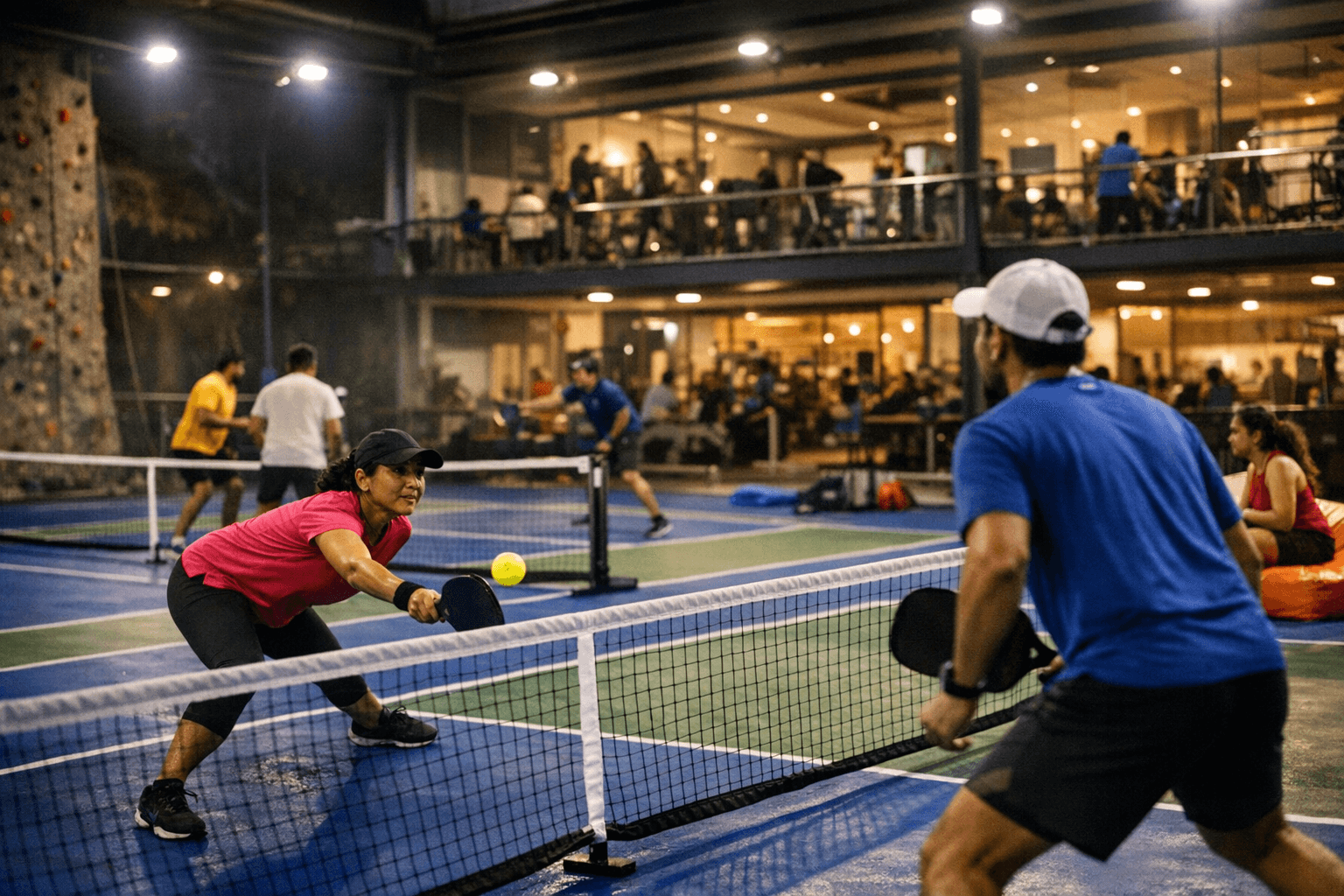
The 24/7 pickleball hub is no longer a novelty confined to American markets. From Sugar Land, Texas to Fishers, Indiana, round-the-clock court access has proven it can reshape play patterns, extend facility revenue windows, and quietly become the most practical format for serious retreat itineraries. With Smash 24 now open at Uptown @ Kathipara in Chennai, that model has landed in India at precisely the right moment.
The timing matters. India's court count climbed from roughly 200 in early 2024 to more than 1,200 by mid-2025, with three to four new venues coming online weekly in major urban metros. Active player projections put the base at one million by 2028. What the country has lacked is not enthusiasm but infrastructure that supports the kind of flexible, high-frequency play that converts casual participants into committed ones. Smash 24 is a direct answer to that gap.
The economics are worth pausing on. At ₹750 per hour, approximately $9 at current exchange rates, Smash 24 sits dramatically below comparable indoor court fees in the United States or Europe. Bookings run through Turftown, a Chennai-based court-management platform, which means retreat organizers can lock in blocks well ahead of arrival. For a multi-day itinerary built around coaching sessions, match play and local sightseeing, a centralized reservation system is not a convenience; it is a logistical prerequisite.
The 24/7 access directly solves the jet-lag problem that has historically made South Asian retreat destinations harder to program. An international coach flying in from the East Coast lands with usable court time at 3 a.m. if needed. Off-peak hours open pricing windows that allow operators to build budget-tier retreat packages without sacrificing court quality, a structural advantage that daytime-only facilities simply cannot replicate.
Smash 24's mixed-use design adds another layer to the argument. The facility pairs pickleball courts with food-and-beverage and entertainment options inside a single complex, following the same commercial logic refined at facilities across the U.S.: anchor with sport, extend the visit through ancillary spending, and create a social environment that keeps players on-site longer. Retreat groups benefit most from that consolidation.
Jaeden Mathew, a 14-year-old pro pickleball player who attended the opening, described it as "a great space for families and kids to have a good time." The youth-first framing is strategically significant. A junior pipeline built through a facility that never closes and charges single-digit-dollar hourly rates can feed regional tournaments and attract international brand sponsorship at a scale that slower-growing markets cannot match.
One constraint worth noting: Smash 24 launched without paddle rental, so players currently need to bring their own equipment. For retreat operators building all-inclusive packages for first-timers, that means arranging gear separately until a rental fleet comes online, a move that would substantially widen its accessible audience.
India added more than 1,000 pickleball courts in roughly 18 months. Smash 24 is the first to run around the clock. The gap between those two data points is exactly the kind of infrastructure arbitrage that builds a destination.
This article was produced by Prism’s automated news system from verified source data, official records, and press releases, then run through automated quality and moderation checks before publishing. The system is built and supervised by the people who set the standards it runs under. Read our full AI policy.
Did this article answer your question?