FLiK’s F3 paddle challenges pickleball’s premium price trap
FLiK’s F3 pitches a $126, triple-core alternative to $250-plus paddles, betting that control, forgiveness, and USAP approval beat brand flash.

A $126 paddle is taking direct aim at the idea that serious pickleball has to come with a $250-plus price tag. FLiK’s F3 makes that case with a triple-core build, a control-first design, and USAP approval across three shapes, a combination aimed at players who want one paddle to handle clinics, open play, and all-court travel sessions without paying for prestige.
What FLiK is arguing against
The F3 lands in a market that has pushed prices higher even as buyers have gotten more skeptical. A 2026 paddle-market writeup puts the median paddle price at $160, while premium models over $250 rose 14% year over year. That is the backdrop for FLiK’s pitch: serious play does not automatically require a premium sticker, especially if the paddle can deliver the kind of control and consistency players actually use.
FLiK’s own framing is pointed. The company positions the F3 around touch, placement, and control rather than raw power, which is a direct rebuke to the “bigger spend, bigger game” logic that still hangs over the category. For retreat players and traveling rec players, that matters because one paddle often has to work across drills, social play, and more competitive matches in the same weekend.
How the Triple Core changes the feel
The F3’s main selling point is its triple-core construction. FLiK says the paddle uses a primary foam core suspended inside two foam rings of different densities, with each layer doing a different job. The center core stabilizes the hit, the middle ring helps transfer energy and manage vibration, and the outer ring is there to improve forgiveness.
That structure is meant to expand the usable hitting area, and FLiK says the design aims for a consistent PBCoR score across the full face. The company goes even further, describing the entire paddle face as the sweet spot. In practical terms, that is the kind of claim that matters most to players who do not flush every reset, dink, or counter from the center of the face.
The design choice also fits a larger shift in the paddle conversation. After years of obsession with raw pop, the market is giving more attention to balanced, all-court paddles that feel stable and predictable. Similar floating-core ideas are starting to show up in products from bigger brands, which suggests FLiK is not just chasing a niche fad but leaning into where paddle design is heading.
Why approval and compliance still matter
The F3 is not just a feel story. FLiK says the paddle is USAP approved in all three shapes, elongated, hybrid, and standard. That matters because USA Pickleball’s approved paddle list is the official certification list for sanctioned tournament play, so a paddle has to clear that gate before it can be used where rules compliance is non-negotiable.
USA Pickleball’s rulebook adds the broader context. The official rulebook first appeared in 1984 and is updated annually, which underscores how closely equipment and rules now sit together in the modern game. For buyers, that means the question is not only whether a paddle feels good on the first few drives. It is also whether it stays legal, consistent, and usable in sanctioned play if a retreat weekend or local event turns competitive.
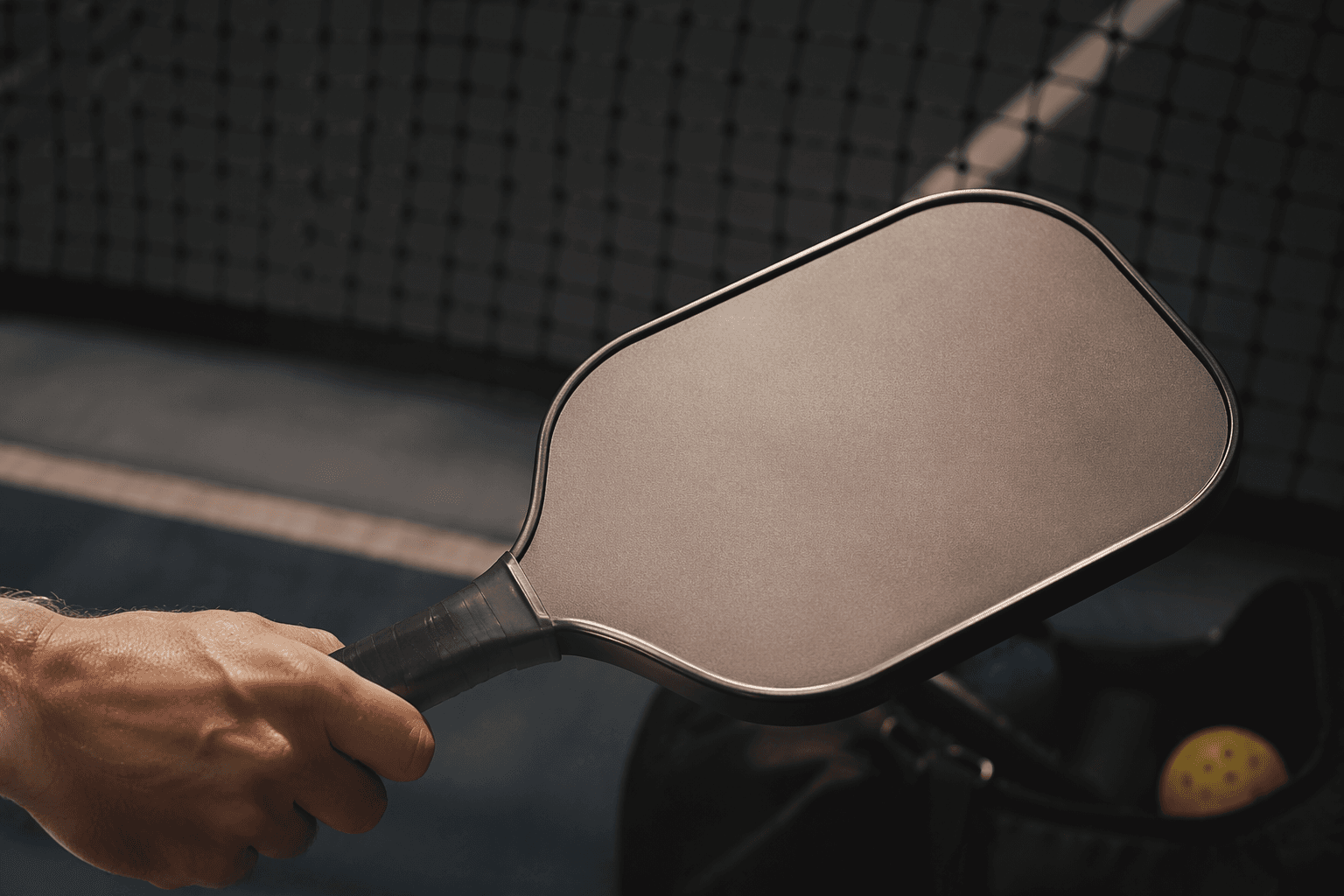
That is where FLiK’s pitch becomes more practical than flashy. Three approved shapes give players room to choose between reach, balance, and maneuverability without leaving the approved-equipment lane. In a market crowded with marketing language, that is a simpler selling point than most: buy the shape that fits your game, and keep it tournament-ready.
The builder behind the brand
Fred Robinson is not entering pickleball as a pure outsider. Body Helix says he founded the company in 2008, and both Body Helix and FLiK describe him as a 101st Airborne veteran. A 2016 profile adds another layer, identifying him as a decorated tennis player with 67 world and U.S. medals.
That background helps explain why FLiK reads less like a hype brand and more like a builder’s project. Robinson’s path runs through athletics, product design, and performance gear, which gives the F3 launch a different tone from the usual launch cycle built around loud claims and glossy graphics. The company’s message is more grounded: make something that performs first, then let the marketing follow.
For players who have spent enough time around paddles to know how quickly a hot launch can cool off, that approach will sound familiar in the best way. It is the language of someone trying to solve a playing problem, not just sell a trend.
What to look for if you are shopping like a traveler
If you move from retreat to retreat, or bounce between open play, clinics, and weekend round robins, the F3’s appeal is easy to understand. The sweet-spot story, the foam-based build, and the control-first pitch all point toward a paddle that is meant to stay predictable when the game changes speed. That kind of consistency often matters more than a power number or a premium badge.
- Look for USAP approval if sanctioned play is even a possibility.
- Pay attention to how the face handles off-center contact, not just how hard it drives.
- Treat foam-core construction as a sign that control and forgiveness are part of the design brief.
- Compare price against the current market, where $160 is already the median and $250-plus is clearly premium territory.
A practical shopping checklist for this moment in the market is straightforward:
The F3 does not solve every equipment debate, and it does not need to. Its real challenge is simpler and more useful: if a $126 paddle can deliver touch, placement, control, and legal compliance in three shapes, then the premium-price story starts looking a lot less certain. For players packing one paddle for the road, that is the sort of claim worth testing on court, not in a marketing deck.
This article was produced by Prism’s automated news system from verified source data, official records, and press releases, then run through automated quality and moderation checks before publishing. The system is built and supervised by the people who set the standards it runs under. Read our full AI policy.
Did this article answer your question?