Mixed doubles pickleball demands connected play and smarter court positioning
Mixed doubles gets simpler when you own the middle, move as one, and choose drives, drops, and dinks from the same shared plan.
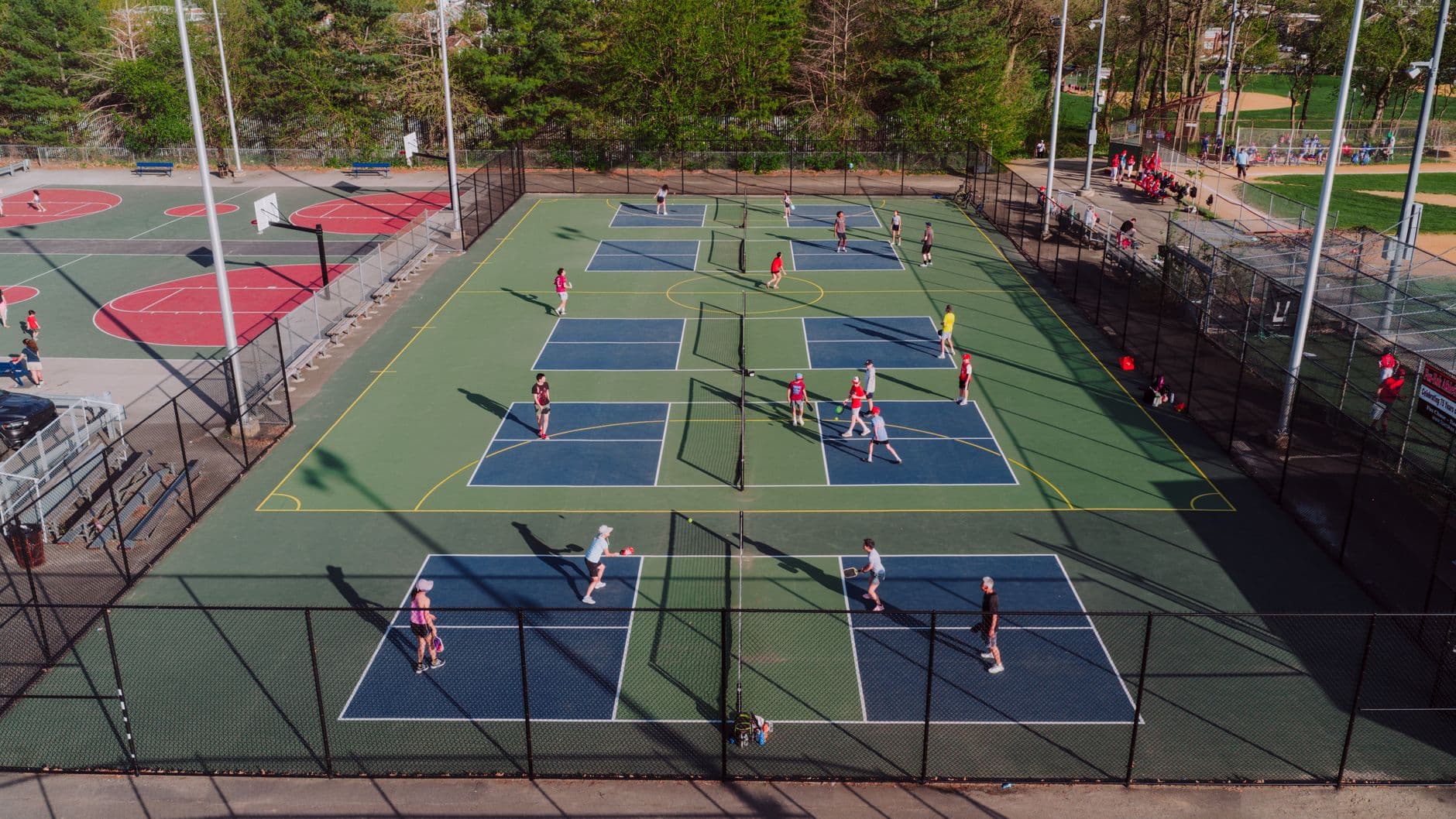
Mixed doubles stops feeling casual the moment the middle ball starts flying, and that is exactly why retreat players benefit from treating it as its own game. The best mixed teams are not just two good hitters on the same court. They are one unit that knows who covers what, where the forehand belongs, and when a rally should be sped up, slowed down, or reset.
Mixed doubles is not just doubles with a different partner
The biggest mistake recreational players make in mixed is assuming it works like standard doubles with a different lineup. USA Pickleball’s official rulebook, first published in March 1984 and updated at the beginning of each year, makes doubles and singles the standard forms of play, and it defines mixed doubles as one male player and one female player on a team. That matters because the role balance, attack patterns, and pressure points change as soon as the pairing changes.
The game is also growing fast enough that these details now show up everywhere, from resort round-robins to sanctioned events. The Sports & Fitness Industry Association reported that 24.3 million Americans played pickleball in 2025, up from about 4.2 million in 2020, and said the sport has been the fastest-growing in the United States for five consecutive years. Women accounted for 42.9% of players in 2025, and CORE players, those who play eight or more times a year, jumped from 1.4 million to 7.5 million. In that kind of player pool, mixed doubles is no longer a niche specialty. It is a common language at retreats, clubs, and tournaments alike.
USA Pickleball also notes that sanctioned tournaments can produce ratings on a national or international basis, which helps explain why mixed strategy has become so standardized. The 2026 rulebook says the 2027 revision process closed on June 1, 2026, a reminder that the official framework is still very much alive and current. For players rotating through unfamiliar partners, that framework gives you a reliable starting point: play connected, play disciplined, and stop pretending both halves of the court are equal jobs.
Start with the middle, not with ego
If you want one adjustment that pays off immediately in partner rotations, make it this: put the stronger forehand in the middle. In many right-handed pairings, that means the male player belongs on the left side so the team can meet middle balls with a cleaner forehand, protect backhands, and hold shape at the kitchen line. The idea is not about status or style. It is about making the two-player shape as stable as possible.
The most common mixed doubles error is drifting apart and leaving a seam between partners. That gap invites balls, creates hesitation, and makes both players feel like they have to cover too much ground alone. The better pattern is connected movement, with both partners sliding and recovering together so the court stays small and the middle stays owned.
That connection matters even more when you do not know your partner well. On a retreat court, you may only have a few points to build chemistry, so the simplest cue works best: move as a pair, protect the middle, and do not let one player get stranded while the other hunts a ball.
Attack the pairing, not just the ball
Once your spacing is sound, mixed doubles becomes a game of deliberate targeting. The article’s core attacking idea is to aim across from the stronger attacker, then use depth, placement, and unpredictability to force mistakes. If the opposing male player is leaning too hard toward the middle, dinking behind him can reset the geometry of the point and make him turn and recover. If an opponent keeps sliding into backhand counters, a ball aimed to the right shoulder can be more effective than a body shot to the chest.

That is useful for recreational mixed because it reduces the need for perfect pace. You do not have to hit harder than everyone else to create trouble. You need to make the wrong player stretch, turn, or defend from the wrong spot. In social play, where partners change every game, this is one of the easiest ways to stay compatible with someone new: agree on a target, trust the pattern, and keep hitting to the same weak link until the other team proves it can solve it.
Use the serve and third ball to set the terms
Serving is not just a way to start the point in mixed. It is a chance to decide who gets the first uncomfortable return. Deep serves are especially valuable because they tend to produce shorter returns and more attackable ball paths. That creates the kind of third shot you want, one that lets you take control before the opponents settle in at the kitchen.
The third ball should match the shape of the point. Drive it when the returners are still moving forward and vulnerable, or drop it when the return is deep or the opponents are already positioned well enough to absorb pace. That distinction is where recreational players often rush themselves into trouble. They swing at every third ball like it is a green light, when the smarter choice is often the softer one.
Split-step timing is part of that same discipline. If you land ready, you can react to poaches, handle middle balls, and respond to the next move instead of chasing the last one. Topspin drops behind poachers work for the same reason: they punish the player who has guessed early and moved before the point has truly opened.
The best mixed teams reset together
The pro example is hard to ignore. Anna Leigh Waters and Ben Johns were reported as 47-1 in finals together after the Veolia Cape Coral Open mixed doubles final, and another partnership database listed them with 47 gold medals across 73 tournaments and a 98% win rate across 302 career matches. That level of success is not built on one spectacular shot. It comes from repeatable patterns, clear roles, and the kind of confidence that survives a bad point.
PPA Tour coverage from 2023 also showed Waters talking about regaining composure and resetting mentally with her partner after momentum shifts. That is the part retreat players can steal most easily. When a mixed team gets rattled, the answer is rarely to swing bigger. It is to talk, reset, and get back to the shape that made the first few points work.
For the retreat player moving through partner rotations, resort round-robins, and social sessions, that is the real takeaway. Mixed doubles gets easier the moment you stop treating it like two separate players trading shots and start treating it like one connected pattern. Own the middle, move together, and let every ball you hit tell the same story.
This article was produced by Prism’s automated news system from verified source data, official records, and press releases, then run through automated quality and moderation checks before publishing. The system is built and supervised by the people who set the standards it runs under. Read our full AI policy.
Did this article answer your question?