OWL paddle approval sparks debate over pickleball’s quiet category
OWL’s odd approval path shows why quiet gear matters on retreat trips, especially where resorts, shared lodging and neighborhood courts live close together.
.png%3Fwidth%3D1320%26height%3D528%26optimizer%3Dimage&w=1920&q=75)
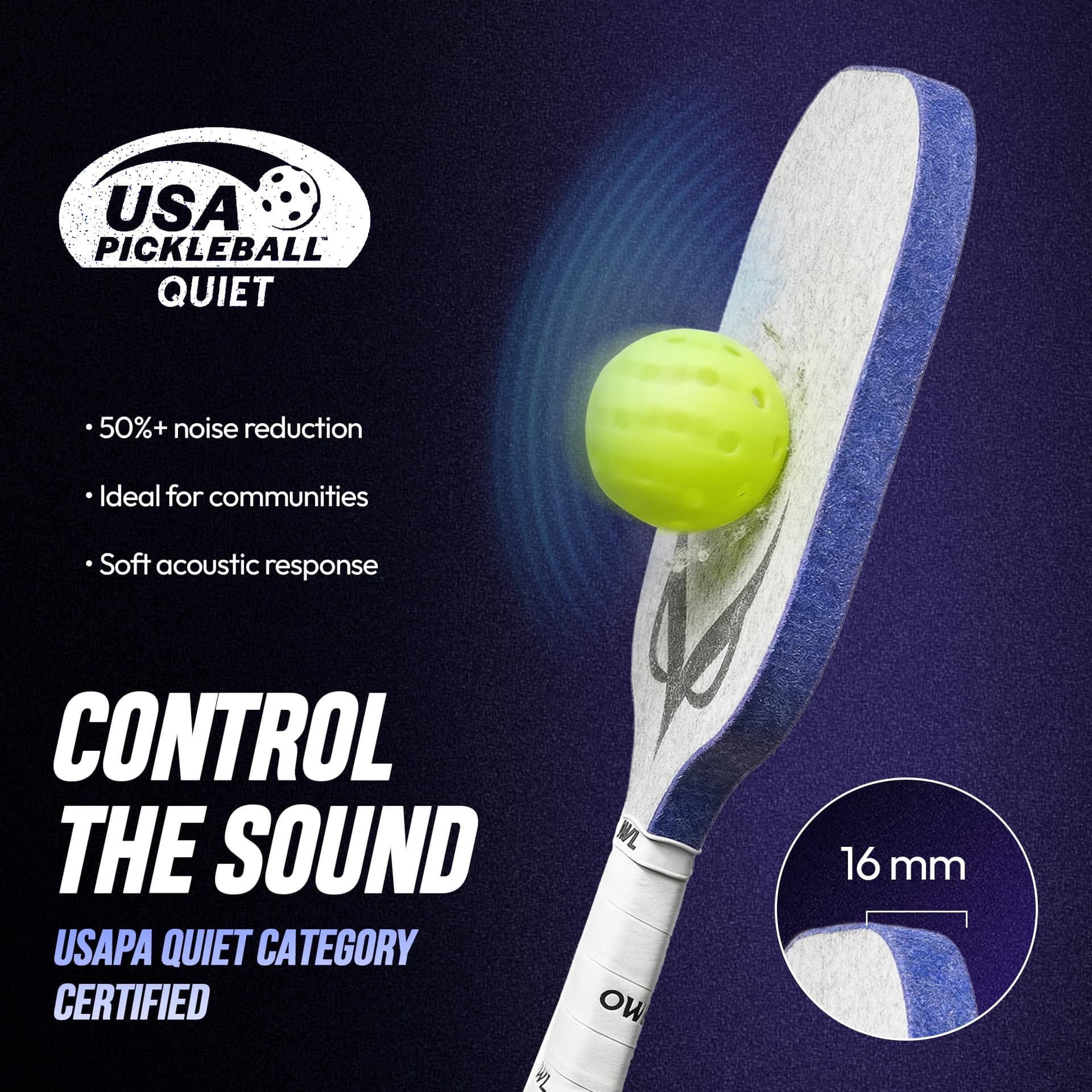
At a retreat weekend, the sound of your paddle can matter almost as much as your third-shot drop. The OWL paddle approval saga has turned into a useful signal for players who book court time around resorts, shared lodging, and neighborhood clubs where one loud session can change the welcome the next day.
Why pickleball’s quiet category exists
USA Pickleball launched its Quiet Category in 2024 to push the sport toward quieter products, not just quieter paddles. The framework now includes paddles, balls, paddle covers, and noise-mitigation screens, which tells you how broad the problem has become when courts sit near local residential communities or within municipalities that are sensitive to sound complaints. USA Pickleball says acoustics matter because the game has to stay accessible and enjoyable for both players and neighbors.
That mission came with a clear practical goal: reduce the chances that noise complaints become restrictive local rules or building codes. Carl Schmits, who leads equipment standards and facilities development for USA Pickleball, has publicly said the organization recognizes that pickleball noise can be disruptive and that it was working on quiet-category equipment and facility materials to make the sport easier on nearby neighbors. For retreat planners, that is not an abstract policy discussion. It is the difference between a court that stays open after dinner and a venue that starts posting curfews.
Where the OWL approval path got unusual
The OWL paddle became the talking point because it sat in a strange place for roughly two and a half years: publicly approved for tournament use, but under a provisional arrangement that was not obvious to most players or much of the industry. The twist is that the paddle’s surface made the normal roughness test hard to apply in the usual way, even though USA Pickleball’s 2025 Equipment Standards Manual still prohibits rough, textured, or sanded surfaces that add spin in competition certification.
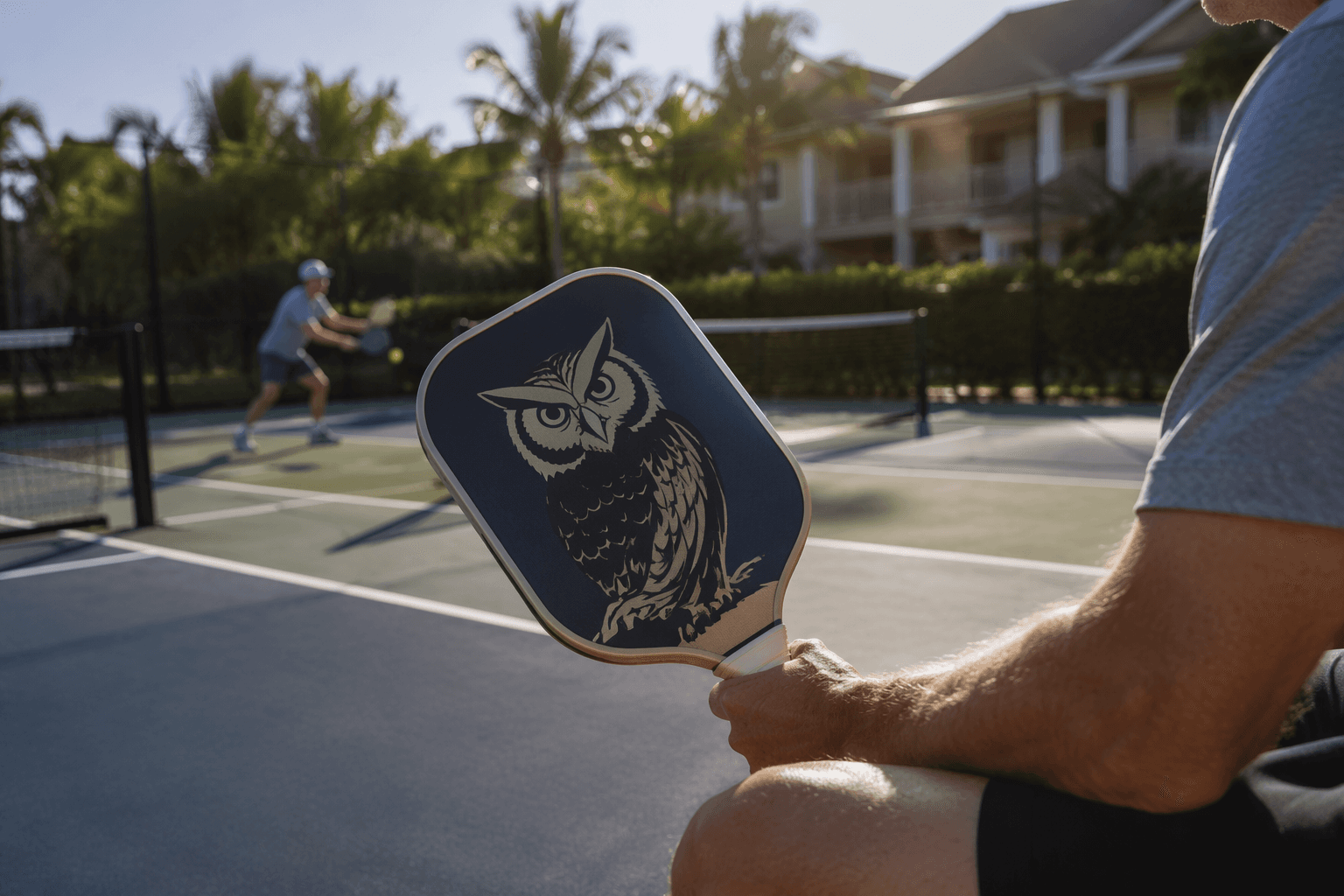
That tension is what makes the OWL story bigger than one brand. USA Pickleball’s June 2024 announcement of the first certified quiet product, the OWL by OWL Sport, said there was specification relief for products solely designed for non-sanctioned events. In the same announcement, USA Pickleball called the OWL the first certified Quiet Category paddle and said it reduced noise by more than 50 percent. The organization also said the paddle measured below 600 hertz and below 80 decibels, compared with industry-standard paddles at roughly 1,100 to 1,200 hertz and 85-plus decibels.
OWL Sport’s certification page adds another piece to the timeline: it says the OWL CX, CXE, PX, PXE and Founder’s Edition models were certified for sanctioned tournaments, leagues, and events as of March 1, 2024. USA Pickleball, which says it has been a trusted leader in equipment testing since 2010, has used the approved-paddle database as the reference point for sanctioned competition. Put together, the record shows how a paddle built for lower sound and strong spin ended up forcing the sport to explain how certification, relief, and sanctioned play fit together.
What to check before you pack for a retreat
For a retreat traveler, the quiet-category debate becomes a packing and booking question. If you are headed to a noise-sensitive resort, a shared condo complex, or a court system near homes, the first thing to confirm is whether the venue follows the approved-paddle database and whether it expects quiet-category gear for certain courts or hours. If your trip includes a sanctioned clinic, league play, or event, the approved list matters most; if it is social play or a non-sanctioned retreat session, the quiet-category framework may open more options.
A few practical checks help before you leave:
- Confirm whether the retreat’s courts sit near residences, patios, or building walls where sound carries.
- Ask whether the venue has separate rules for sanctioned and non-sanctioned play.
- Check whether quiet paddles, balls, or noise screens are already part of the facility setup.
- Make sure your paddle is listed in the approved database if you plan to play in sanctioned settings.
The point is not only to avoid a rules problem. It is to make sure the gear you pack matches the places you want to play, from sunrise sessions at a resort to evening drills in a community complex where neighbors are watching and listening.
The sport is already redesigning around noise
The OWL episode is one slice of a larger shift. USA Pickleball has also added an acoustic-mitigation category, and it later announced PICKLETILE as its Preferred Court Builder and Official Noise Reduction Partner. That pairing shows how the noise conversation is moving beyond the paddle itself and into court design, screening, and surface planning.
For retreat operators and facility owners, that matters because quieter gear can expand where pickleball fits. A court that would have been too loud for a hotel wing, a townhouse cluster, or a municipal park with sound complaints may become workable if the equipment and the venue are designed together. But the approval process has to be clear enough that manufacturers understand which standards apply, when relief exists, and how a paddle earns its place on the sanctioned list.
The OWL story lands right where a retreat player feels it most: on the first morning when the courts are nearly ready, the neighbors are still asleep, and you are deciding whether the gear in your bag belongs in the quietest part of the property.
This article was produced by Prism’s automated news system from verified source data, official records, and press releases, then run through automated quality and moderation checks before publishing. The system is built and supervised by the people who set the standards it runs under. Read our full AI policy.
Did this article answer your question?