Pickleball basics for beginners: what you need to start fast
Three pieces of gear are enough, but the fastest path is a paddle that fits, an easy court finder and one kitchen rule that keeps beginners from looking lost.
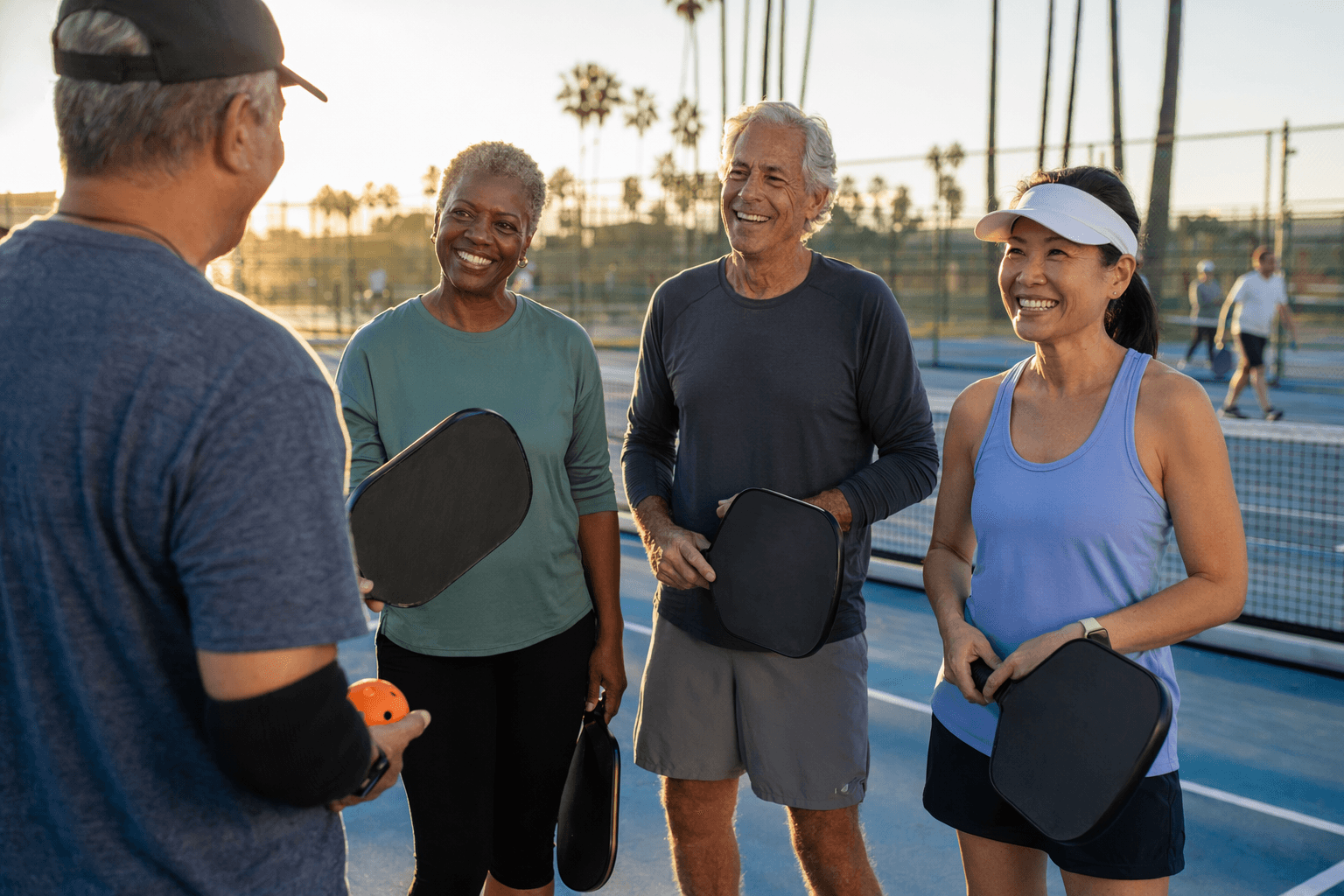
Pickleball rewards speed to court more than gear perfection. Technically, you only need a paddle, a ball and a court to start, and that simplicity is a big reason the sport keeps pulling in new players. The real question in the first 72 hours is not whether you have everything, but which small choices make it easiest to show up, rally and leave with a point on the board.
What actually gets you on court fastest
The shortest route from curiosity to your first game is refreshingly plain: pick up a usable paddle, find the nearest court with open play and learn just enough rules to keep the game moving. A beginner can often get a first real point within an hour, which is a very different entry curve from many racquet sports. That quick payoff matters because pickleball is built to be approachable without being simplistic, and that is exactly what a first-time player needs.
The sport’s scale says the same thing. What started in the summer of 1965 on Bainbridge Island, Washington, with Joel Pritchard, Bill Bell and Barney McCallum has grown into a national community with 104,828 USA Pickleball members, 1,864 ambassadors and 144 sanctioned tournaments in 2025, including 18 Golden Ticket events. At the 2025 National Championships, the youngest player was 11 and the oldest was 87. That range is the best share hook in the sport: this is not a niche that demands a certain age, background or athletic history before you can walk onto a court.
Buy the paddle that disappears in your hand
For a beginner, the paddle decision should be boring in the best possible way. A mid-range paddle in the roughly $60 to $100 range is enough to start, and you do not need to chase premium materials before you have a feel for the game. Grip size matters more than material at this stage, because an awkward grip makes every shot feel harder than it should.
That is the practical test to use in a shop or at a retreat demo session: does the paddle feel like an extension of your hand, or like something you have to fight? If it feels wrong on the handle, it will distract you every time you block a volley or try to dink. Beginners often obsess over surface tech and flashy specs, but the first win is comfort, not complexity.
Indoor and outdoor balls matter too, and this is where a little attention saves you embarrassment later. Bring the right ball for the venue, because indoor and outdoor play do not behave the same way. If you are playing at a retreat, a club or a resort with different court surfaces, asking which ball is used is one of the easiest ways to sound like you already know the game.
Find the easiest court first
The simplest way to get started is to stop treating court access like a project. Use the easiest nearby option, whether that is a public court, a resort court or a court-finder database that points you to open play. Pickleheads added 4,000 new locations in 2024, bringing its count to 15,910 court locations nationwide, and its broader database listed 68,458 known courts after 18,455 new courts were added that year. That means the court problem is usually not lack of supply, but not knowing where to look.
If you are planning where to play outdoors, the official guidance is practical: courts should be oriented north-south to reduce sun glare during morning and late-afternoon play. That detail sounds small until you spend an hour squinting into the sun and missing easy balls. For retreat planners and players alike, the lesson is clear: easy access and comfortable conditions are worth more than fancy branding.
Retreat-style setups make the court search even easier. Sandals Resorts and Beaches Resorts were named USA Pickleball’s official all-inclusive resort partners, with approved coaches on resort, lessons, events and pickleball vacation packages built into the experience. Hilton has highlighted The Woodlands Resort in Texas, which has more than 21 pickleball courts and certified instructors, while JW Marriott Phoenix Desert Ridge Resort & Spa says its Pickleball Center has 17 lighted courts and offers hourly court time plus one-on-one and group instruction. For a beginner, that kind of built-in structure removes the hardest part of starting: figuring out where to go, who to play with and how to get a lesson without making it a whole project.
Learn the two rules that keep you from looking lost
If you know only one rule, make it the kitchen. USA Pickleball’s standard court is 20 feet by 44 feet, and the non-volley zone sits 7 feet from the net on each side. That area matters because you cannot volley there, and new players who forget it usually learn the lesson in front of everyone.
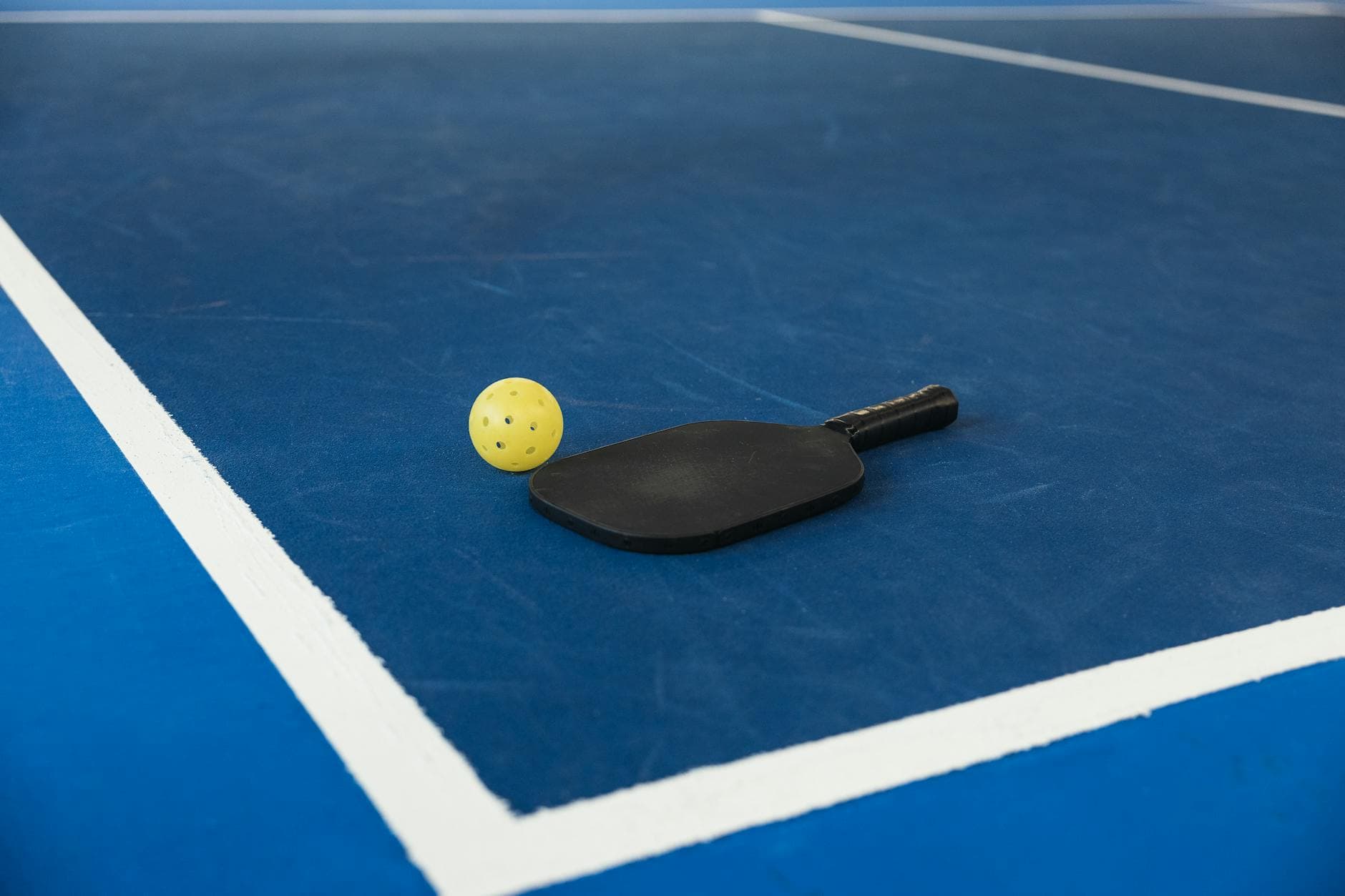
The second rule that saves embarrassment is the serve itself. Keep it simple, keep it legal and keep it under control. The official rulebook, first published in 1984 and updated at the beginning of each year, keeps the game standardized, so you do not need to guess whether you are playing by house rules or real rules. When in doubt, slow down, reset and ask before the point starts. That is far better than hitting a shot that looks confident and turns out to be wrong.
Pickleball’s appeal is that the rules are clear enough to learn quickly, but deep enough to reward repeat play. USA Pickleball describes it as a paddle sport that blends badminton, table tennis and tennis, which explains why the game feels familiar fast. You are not learning a completely foreign motion; you are borrowing pieces from sports most people already understand.
What the first 72 hours should cost and feel like
Here is the cheapest, simplest path from curiosity to playing this week:
- Paddle: plan on roughly $60 to $100 for a mid-range starter model. Fit matters more than finish, so prioritize grip size.
- Ball: choose the correct indoor or outdoor ball for the court you are using. Do not overthink the rest.
- Court access: use a nearby public court, a court-finder database or a retreat package with built-in play. This is the biggest friction reducer.
- Rules: learn the kitchen and the basic court shape, 20 feet by 44 feet, before your first game.
- Time: give yourself one hour for the first session. That is enough time to get a feel for contact, movement and scoring.
The cost story is what makes pickleball such a strong entry sport. You do not need a huge equipment investment, and you do not need months of technical training before the game becomes fun. A beginner who gets the paddle fit right, finds an easy court and avoids the kitchen mistake is already most of the way to a repeatable habit.
Why pickleball retreats are becoming the easiest on-ramp
This is where the retreat model makes sense. It is not just a vacation add-on anymore, it is a clean way to lower the barrier to entry. A beginner who wants structure can arrive at a place with courts, coaches and organized sessions already in place, which removes the two biggest sources of hesitation: not knowing what to buy and not knowing where to play.
That is why pickleball keeps expanding so quickly. It offers a fast first game, a low-cost starter path and a social setting that works for nearly every age group. From a Bainbridge Island backyard in 1965 to resorts with lighted courts and certified instructors, the sport has turned “just three things” into a very real invitation: show up, learn the kitchen and get your first point.
This article was produced by Prism’s automated news system from verified source data, official records, and press releases, then run through automated quality and moderation checks before publishing. The system is built and supervised by the people who set the standards it runs under. Read our full AI policy.
Did this article answer your question?