Pickleball speed-ups win by timing, not power at the kitchen line
The best kitchen-line speed-ups are won with timing and a short motion, not a bigger swing. Read the opening, attack only the right balls, and recover fast.

The real edge at the kitchen line is timing
The biggest myth about speed-ups is that they come from trying harder. The cleaner truth is simpler: the best kitchen-line attacks are built on timing, compact mechanics, and a sharp read of the rally, not brute force. When you choose the right ball and stay short through contact, you turn a small opening into control of the point.
That shift matters immediately for doubles play, especially in the patient dink exchanges that define higher-level kitchen work. A speed-up is not meant to be a default response or a show of power. It is a decision to break rhythm at exactly the moment the other team is vulnerable.
When the attack is actually on
The first filter is the ball itself. A speed-up makes sense when a dink sits just a little above net height, when an opponent is leaning forward or reaching, or when the ball lands in your strike zone in front of your body. Those are the windows that give you a real chance to attack without handing over an easy counter.
If those conditions are not there, forcing the shot usually helps the other team more than you. A rushed swing at a low ball or a ball that is drifting away from your body tends to create a softer, more readable attack. That is exactly the kind of ball skilled opponents want, because it lets them reset, block, or counter with control.
For recreational players, this is the most useful takeaway to test in the very next session: do not ask whether you can speed up every time the ball crosses the kitchen line. Ask whether the ball is high enough, close enough, and awkward enough for the other side to feel pressure before you commit.
Keep the motion compact, not big
The mechanics of a good speed-up look more like a punch or a flick than a full swing. The article’s central point is that the shot should stay compact, with minimal backswing and a clean contact point out in front of the body. That kind of motion helps you stay on time and keeps the attack from telegraphing too early.
This is especially important at the kitchen line, where a bigger takeback can slow everything down and open the door for a counter. A compact motion lets you react quickly, stay balanced, and keep the ball from climbing too high off your paddle. In practical terms, you want the attack to feel crisp and efficient, not whipped and inflated.
If you are heading into a clinic or open play session, one easy adjustment is to focus on contact in front of your body rather than trying to generate extra pace with your arm. The shot should feel short, direct, and controlled. That is where speed-ups start to look advanced without becoming reckless.
Three real kitchen-line situations that call for it
The most common live-ball trigger is a dink that sits a little above net height. That ball tempts players into overhitting, but the better answer is a compact attack that changes the pace without losing shape. When the dink is floating just enough, the window is there.
A second trigger is visible body language from the opponent. If the player across from you is leaning forward or reaching, they are already moving into a compromised position, and that is the moment a quick attack can steal the rally. You are not just hitting into space; you are making them answer from a stretched posture.
The third trigger is the strike zone in front of your body. When the ball arrives in that comfortable out-front space, you can contact it cleanly and keep the speed-up direct. If the ball gets too close to your torso or too low near your feet, the attack usually loses quality and invites a counter.
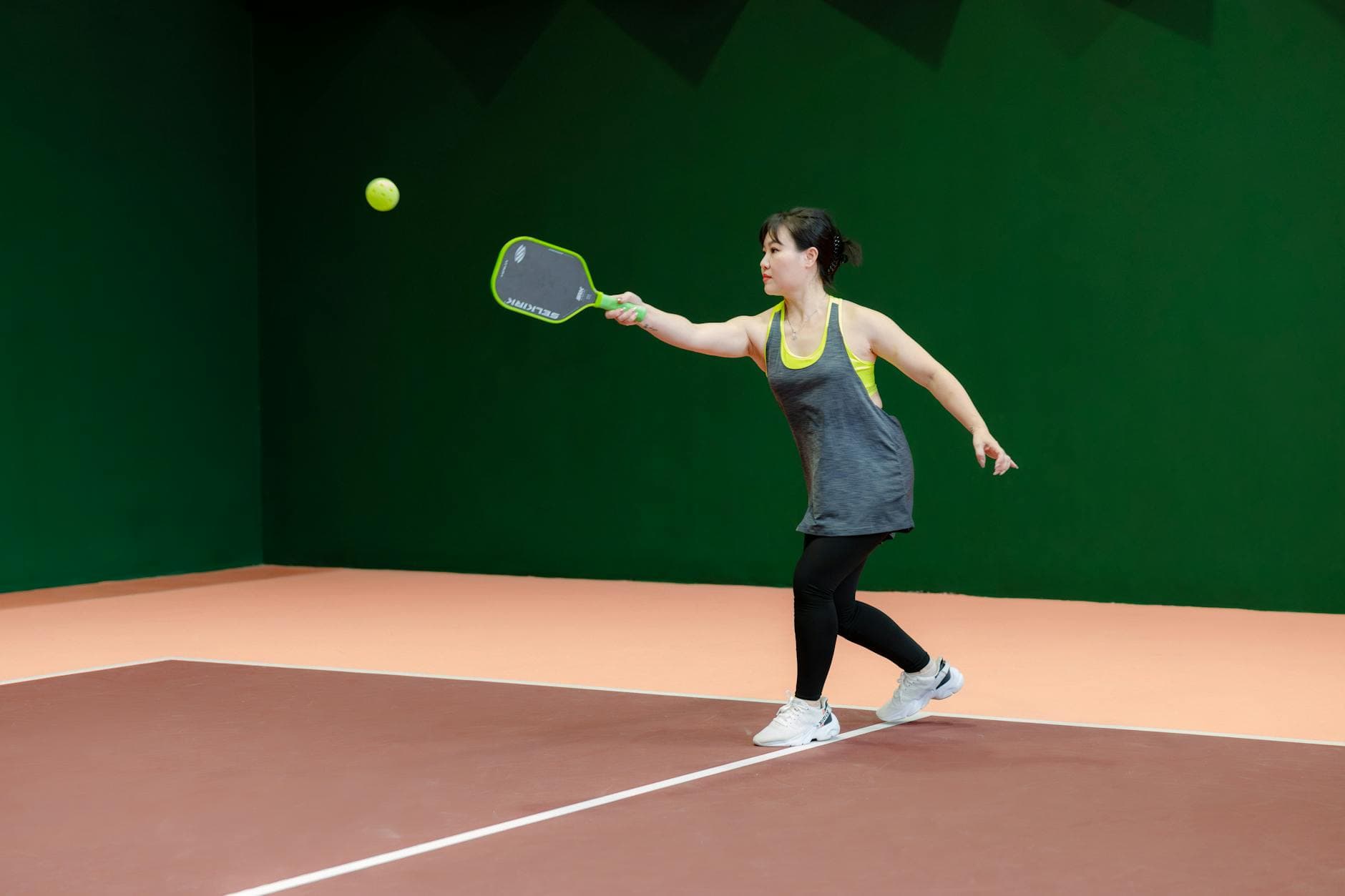
These are the kinds of situations you can spot within a few points. Once you start looking for them, speed-ups become less about impulse and more about reading the rally one ball ahead.
Pick targets that create pressure, not just highlight shots
Target selection is part of the skill, and it is where many players leave value on the court. The article recommends aiming at the opponent’s body, paddle shoulder, or the space between partners rather than always chasing lines. Those targets are useful because they compress reaction time and force awkward contact.
Body speed-ups work because they remove options. Paddle-shoulder attacks create awkward defending angles. Shots into the middle between partners can cause hesitation, especially when both defenders expect the other to take responsibility.
This is another immediate clinic-level lesson: a smart speed-up does not have to be flashy to be effective. In many doubles points, the most damaging attack is the one that simply makes the defense uncomfortable enough to float the next ball back.
The goal is rhythm disruption, not constant aggression
A great speed-up breaks a patient dinking exchange. It should not become a constant habit every time you touch a ball near the kitchen. If you attack too often, the other team adjusts, settles in, and starts waiting for the pattern instead of fearing the surprise.
That is why the article frames the shot as a change of rhythm. The point is to interrupt a rally that has become too calm and predictable, then force the other side to react under pressure. Used well, a speed-up creates uncertainty. Used constantly, it becomes noise.
For players working through this in a retreat clinic or a live drill block, the simplest standard is this: if the exchange is still stable and the ball is not presenting a real window, keep dinking. If the ball lifts, the defender leans, or your contact point opens up in front, then the attack becomes worth the risk.
Recover as if the shot is coming back
The final part of the equation is recovery. Many advanced speed-ups come back, so the point is not over when the attack leaves your paddle. You need to be ready for the next ball, because a well-placed block or counter can erase a good-looking speed-up instantly.
That means the shot should be paired with quick reset positioning and balanced feet. After the attack, your job is to regain control of the kitchen line as fast as possible and prepare for the reply. In doubles, the difference between a smart speed-up and a wasted one is often what happens in the next half-second.
The practical payoff is clear: better timing, tighter mechanics, smarter targets, and disciplined recovery make kitchen-line speed-ups look and feel less like hero shots and more like a dependable tactical weapon. Once you stop chasing power for its own sake, the attack becomes cleaner, more repeatable, and far harder to defend.
This article was produced by Prism’s automated news system from verified source data, official records, and press releases, then run through automated quality and moderation checks before publishing. The system is built and supervised by the people who set the standards it runs under. Read our full AI policy.
Did this article answer your question?