Pickleball Warehouse bets on open play and community in Pittsburgh
Pickleball Warehouse is betting that open play, not luxury extras, will win over Pittsburgh players looking for more court time and a ready-made community.
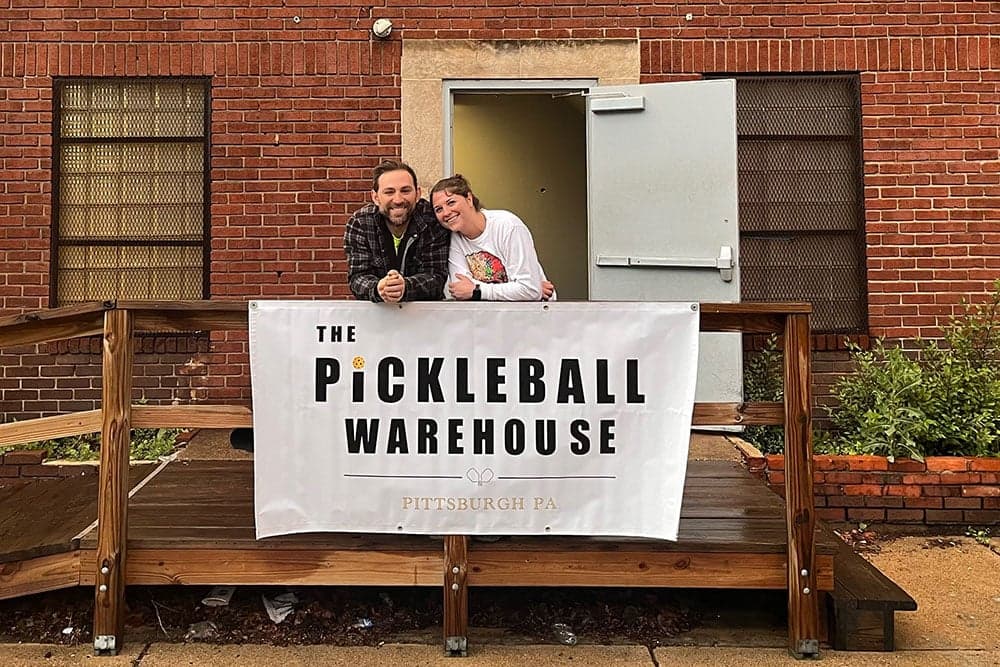
Pickleball Warehouse is making a plainspoken bet in Pittsburgh: players on a trip may care more about constant open play than cocktail bars, lounge walls, or resort-style packaging. Set inside an 80,000-square-foot former bike park warehouse in Homewood, the club is built around the court first. That puts it in the middle of a bigger question for pickleball travelers: what actually matters more, polished amenities or a place where games are always going?
A warehouse built around the game
The club sits on Hamilton Avenue at the former Wheel Mill indoor bike park site, and the setting tells you a lot before you ever step inside. Instead of trying to disguise the building’s industrial bones, Pickleball Warehouse leans into them, turning a century-old warehouse into a serious indoor pickleball home base. Bryan Wigginton and Alexa Gervasi, the married couple behind the project, have described it as a place built from their own love of the sport and meant to anchor Pittsburgh’s scattered pickleball scene.
That community mission matters as much as the square footage. Wigginton and Gervasi have said they wanted the space to feel inclusive and approachable for everyone from beginners to pros, which is not the language of an exclusive club guarding its courts. It is the language of a local hangout that expects players to come back again and again, not just book one polished weekend.
Open play is the pitch
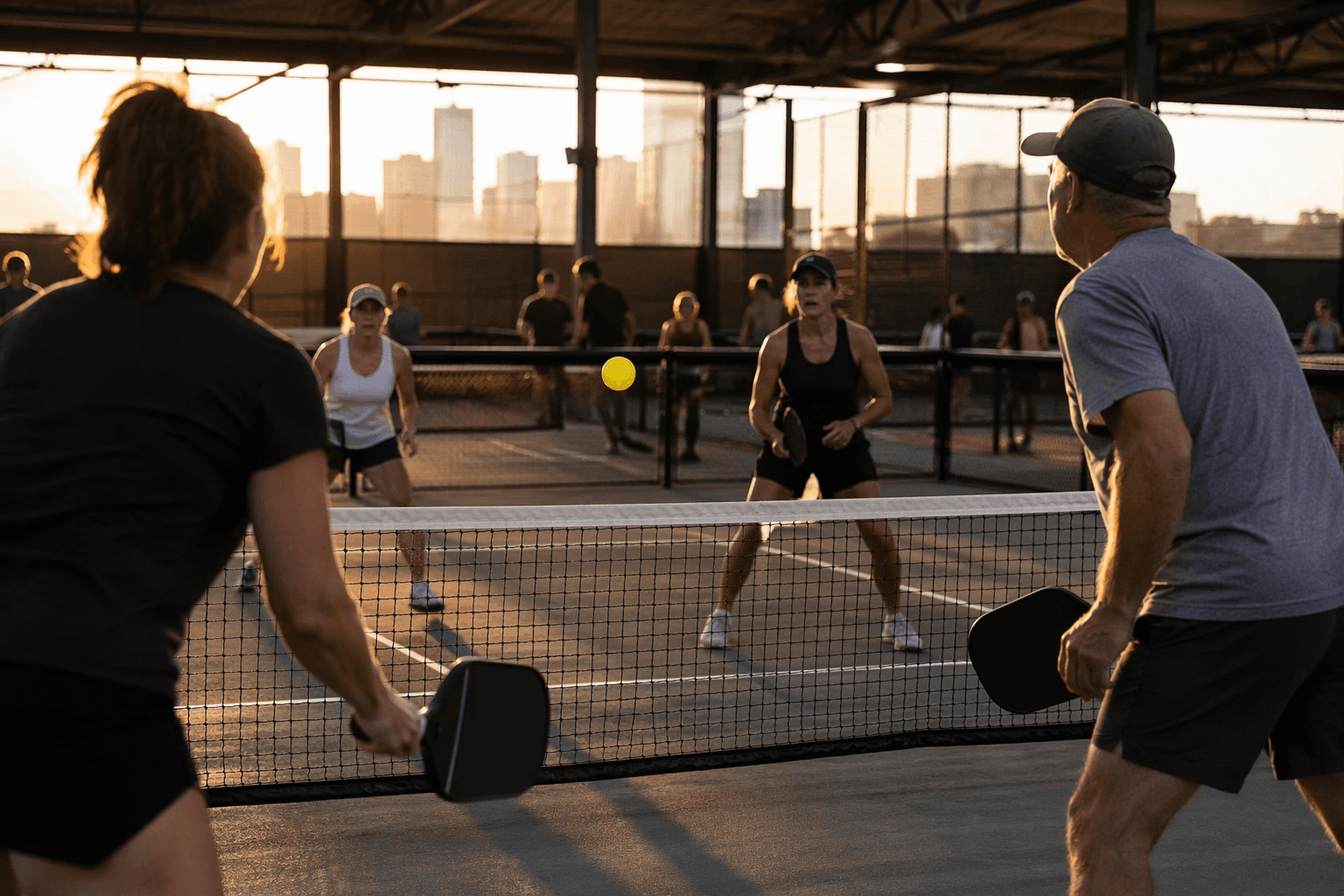
Pickleball Warehouse’s defining move is its open-play model. The club says open play runs all day, every day, because the owners believe pickleball is most fun when a strong mix of players is rotating through the same courts. Wigginton put that idea bluntly: “Everybody has to play with everybody,” he said. “We want to make it approachable so that anyone can come in find a game and play.”
That philosophy changes the experience for anyone traveling through Pittsburgh. You do not need to assemble a foursome before you arrive, and you do not need the kind of planning that usually comes with a destination club wrapped in spa language or private-club polish. Drop in, rotate in, and keep playing. For a visitor whose real goal is court time, that can be a stronger promise than a fancier lobby.
The facility’s court setup backs up that promise. The club’s site describes 19 indoor courts, with 10-foot netting, professional-style tensioned nets, and a pro shop stocked with everything a pickleball player would need. Local coverage also described the layout as 16 full-sized courts and two skinny courts, which points to the same basic idea, a large, flexible indoor footprint built to keep games moving. This is not a venue trying to compete on chandeliers. It is competing on how easily it can get people onto a court.
The amenities are there, but they are not the main character
Pickleball Warehouse has also been linked to a broader amenity package, including a pro shop, coffee bar, lounge area, event space, and eventually a restaurant and bar. Food-truck and beer-truck access were part of the early vision as well, along with lessons and paddle rentals. Those pieces matter, especially for group outings and longer stays, but the public identity of the club keeps circling back to the same thing: the sport itself is the main attraction.
That is what makes the place interesting in the retreat conversation. A lot of the newest pickleball venues try to win travelers with food-and-beverage concepts, entertainment add-ons, and digital bells and whistles. Pickleball Warehouse argues for a simpler formula, one where the best amenity is still another game waiting on the next court. For players who measure a trip by how many hours they spend hitting dinks, resets, and third shots, that argument is easy to understand.
Why this model fits the moment
The timing is right for a facility like this because pickleball’s growth has been so fast that court supply is still catching up. Industry reporting tied to SFIA and Pickleheads said participation grew 223.5% over three years. Another SFIA and Pickleheads report put U.S. participation at 19.8 million players in 2024, up 45.8% from 2023. That is the kind of growth that makes it possible for a no-frills, court-heavy facility to thrive, because the core demand is still simple: more places to play.
It also explains why open play has such strong appeal. When the sport is spreading across age groups and regions, the winning formula is often the one that lets strangers become doubles partners without much friction. Pickleball Warehouse seems built for that reality, with a steady stream of games rather than a velvet-rope experience.
Pittsburgh already had a community-first pickleball story
The Pittsburgh region had already shown signs that this was the direction the sport was going. Local demand helped push Gamma Sports to convert multiple tennis courts on Washington’s Landing into 10 new pickleball courts, and other community-minded efforts have tried to widen access for children, people with disabilities, and Black women players. Side’aht and Sistas Who Pickleball both fit that broader pattern of inclusion, access, and shared court time.
That backdrop makes Pickleball Warehouse feel less like a novelty and more like a natural next step. Pittsburgh has been building a pickleball culture that values participation as much as spectacle, and the warehouse model fits that rhythm. It is a place that assumes the player base is hungry, social, and ready to rotate through games instead of waiting for a boutique experience to start.
For traveling players deciding whether the best stop is the one with the flashiest packaging or the one with the most consistent action, Pickleball Warehouse makes a clear case. If the luxury is a full day of open play, easy access, and a roomful of people willing to mix into the next game, then a warehouse in Homewood can be more appealing than a retreat built around the lobby. In Pittsburgh, the court is still the main attraction, and that may be the strongest amenity of all.
This article was produced by Prism’s automated news system from verified source data, official records, and press releases, then run through automated quality and moderation checks before publishing. The system is built and supervised by the people who set the standards it runs under. Read our full AI policy.
Did this article answer your question?