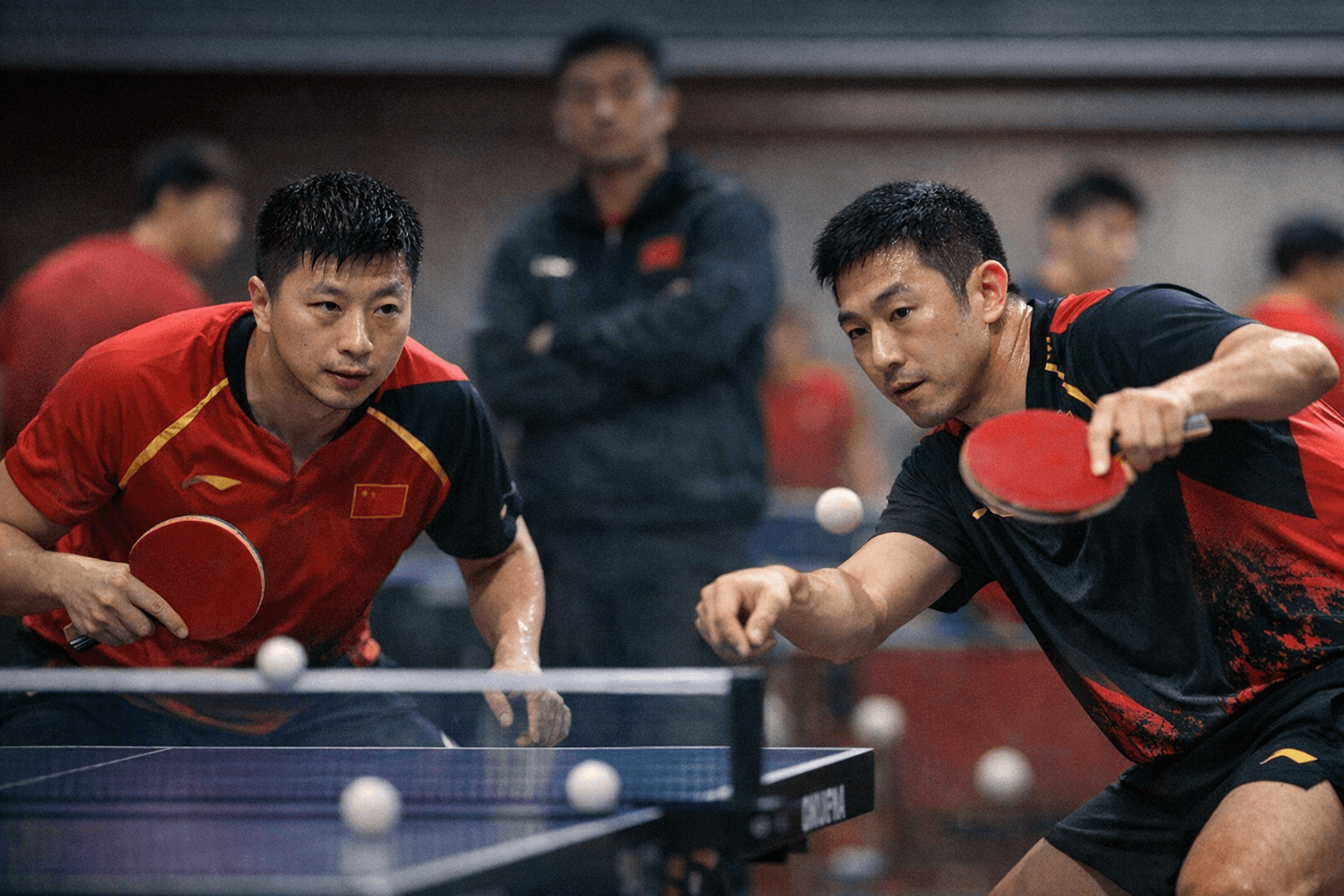
1971 Ping-Pong Diplomacy player returns to China, urges love and understanding
Judy Hoarfrost returned to China 55 years after the breakthrough that changed U.S.-China ties, calling for love and understanding.
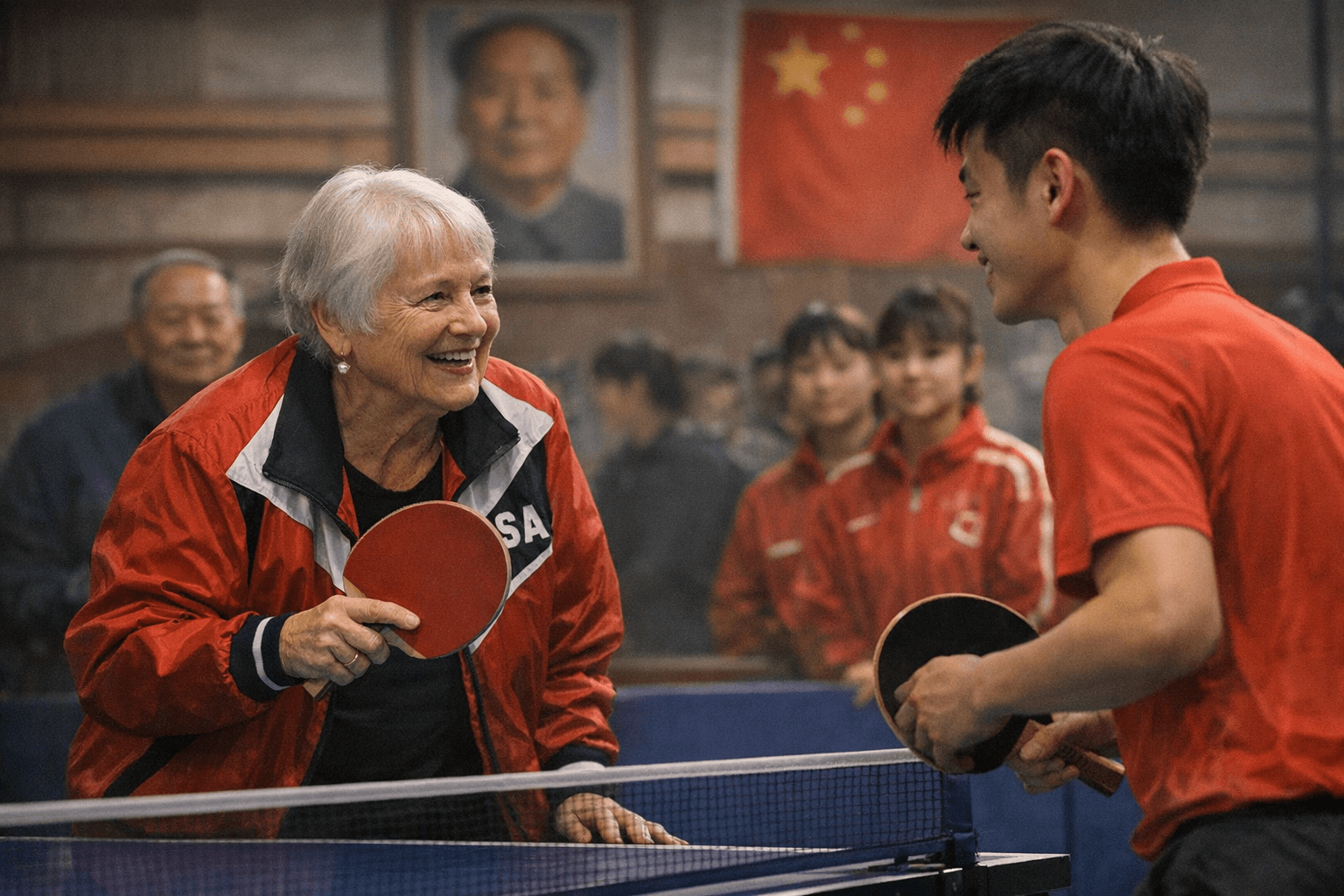
Judy Hoarfrost came back to China with the same small ball that once helped alter the course of U.S.-China relations, and her message was plain: "I hope we can all love each other." Fifty-five years after she joined the 1971 American table tennis team at age 15, Hoarfrost returned for a reunion that tied personal memory to one of the sport’s most famous moments of diplomacy.
The commemoration took place April 10, 2026, at Beijing’s Capital Indoor Stadium, as China marked the 55th anniversary of Ping-Pong Diplomacy with an event jointly organized by the Chinese People’s Association for Friendship with Foreign Countries, the General Administration of Sport of China, and China Media Group. Chinese President Xi Jinping sent a congratulatory letter, saying the "small ball" reopened the door to friendly exchanges and stressing that China-U.S. relations are grounded in people-to-people ties and that the future lies with youth.
Hoarfrost was reunited in China with fellow original U.S. team members Connie Sweeris, Olga Soltesez, and Dell Sweeris, along with former Chinese players Zheng Minzhi and Liang Geliang. The scene carried unusual weight because the 1971 trip had been the first by an American group invited to China since the founding of the People’s Republic of China in 1949. It began in Nagoya, Japan, when Glenn Cowan missed his bus and boarded one carrying the Chinese team. Zhuang Zedong greeted him and gave him a gift, a gesture that helped spark the invitation that followed.
That exchange did far more than fill a sports page. The 1971 U.S. visit opened the way for reciprocal Chinese table tennis trips to the United States and, in February 1972, Richard Nixon’s trip to China. In the decades since, the episode has remained a shorthand for how a sport built on quick reflexes and close contact can still carry political meaning when formal channels are frozen.
Hoarfrost said she never expected ping-pong to become a symbol of China-U.S. friendship for 55 years, and she urged young people to communicate, learn from each other, and tackle global challenges together. During the trip, she also visited the Juyongguan Great Wall. The 2026 delegation included younger USA Table Tennis athletes as well, underscoring that China framed the anniversary not only as a remembrance, but as a launch point for new youth exchanges.
That broader push was visible beyond Beijing, with related anniversary events in places such as Shanghai and Las Vegas, along with friendship matches, cultural presentations, and the documentary The Silver Ball: A Journey Beyond. In a far more tense era between Washington and Beijing, the return of the 1971 players showed that ping-pong still has cultural power, not because it solves diplomacy by itself, but because it can still make room for it.
Know something we missed? Have a correction or additional information?
Submit a Tip